By State
๐ŸŒด Florida โญ Texas ๐ŸŽท Louisiana ๐ŸŒŠ Mississippi ๐Ÿ–๏ธ Alabama ๐Ÿ‘ Georgia ๐ŸŒด South Carolina ๐Ÿ”๏ธ North Carolina ๐Ÿฆ… Virginia ๐Ÿฆ€ Maryland ๐Ÿ—ฝ New Jersey ๐ŸŒ† New York ๐Ÿฆž Massachusetts
Shutter Types
๐Ÿช— Accordion โฌ‡๏ธ Roll-Down ๐ŸŒบ Bahama ๐Ÿ›๏ธ Colonial ๐Ÿ›ก๏ธ Storm Panels ๐Ÿ•ธ๏ธ Hurricane Screens ๐ŸชŸ Impact Windows โ†” Accordion vs Roll-Down โ†” Shutters vs Windows
Guides
๐Ÿงฎ Cost Calculator ๐Ÿค– AI Pricing ๐Ÿ“‹ The Process ๐Ÿ”จ DIY Shutters ๐Ÿชต Plywood Guide ๐Ÿ”ง Maintenance ๐Ÿ›’ Supplies ๐Ÿท๏ธ AirTags & Security ๐Ÿ“‹ Family Emergency Plan
After the Storm
๐Ÿ†˜ Disaster Help Hub ๐Ÿ›ก๏ธ Post-Storm Safety ๐ŸŒก๏ธ Heat Safety ๐Ÿพ Pets & Livestock ๐Ÿ  Roof Tarping ๐Ÿ’ง Water Damage ๐ŸŒณ Tree Removal Florida Recovery Texas Recovery NC Recovery
Verify Contractor
Florida Texas Georgia North Carolina Virginia New Jersey New York Massachusetts
Free Estimate โ†’
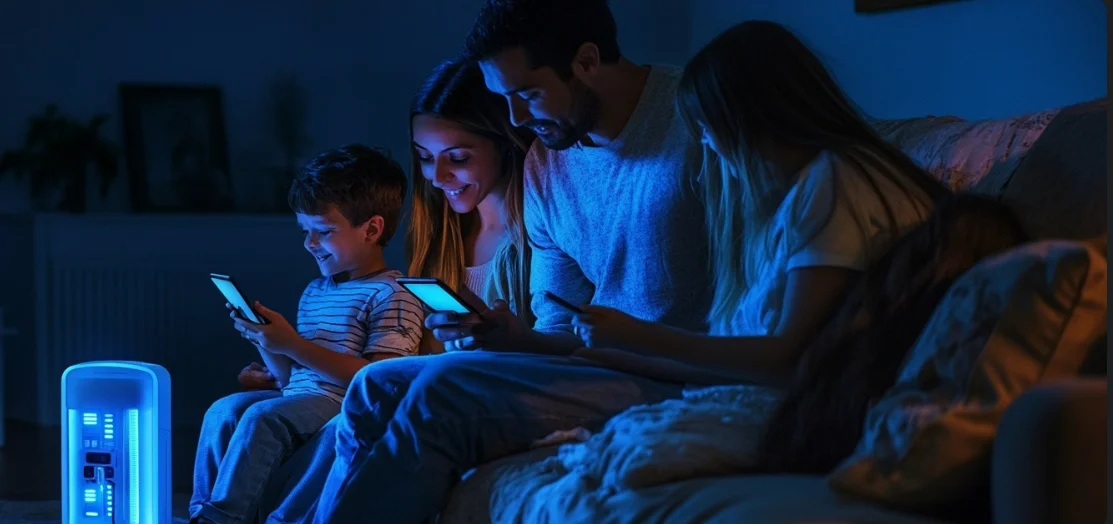
Family charging devices on power station during outage
๐Ÿ“ป Hurricane Recovery ยท Staying Connected

Staying Connected
When the Internet Is Gone

Your phone is at 12%. The WiFi died with the power. The cell towers are overwhelmed. You don't know when power is coming back, which roads are open, or if your relatives across the state are okay. Here is what actually works.

๐Ÿ“ก
What Fails First โ€” And What Doesn't

โš ๏ธ The Communication Failure Sequence

WiFi: Gone immediately when power fails โ€” no modem, no router.
VoIP landlines: Most modern landlines require power and fail with it.
Cellular data: Heavily congested or towers down โ€” often unusable for hours.
Voice calls: Frequently fail due to tower damage and overwhelming simultaneous usage.
Television: Gone with power unless battery or generator powered.

โœ“ What Still Works

Battery-powered AM/FM radio ยท NOAA weather radio (dedicated receiver) ยท SMS text messages ยท Walkie-talkies and CB radio ยท Your car radio ยท Pre-planned family communication protocols that remove the need to figure things out in the chaos.

๐Ÿ“ The Lesson Learned After Too Many Storms

After living through multiple extended Florida power outages, a pattern becomes clear: the families who handle the communication loss best are the ones who had a plan before the storm, not the ones scrambling to figure it out after. A pre-planned family check-in protocol, a NOAA weather radio already in the house, and a full power bank ready to go โ€” these turn a communication crisis into a manageable inconvenience.

๐Ÿ“ป
Your Information Sources โ€” Ranked by Reliability
1

NOAA Weather Radio โ€” The Gold Standard

A dedicated NOAA weather radio receiver is the single most reliable source of official emergency information during and after a hurricane. These broadcasts run on backup power and continue through extended outages. Modern units have battery backup, public alert capability, and many charge via solar or hand-crank. Every Florida household should own one โ€” not borrow one, own one โ€” and keep it charged before each storm season.

2

AM Radio โ€” Surprisingly Robust and Underrated

AM radio waves travel farther and penetrate structures better than FM. Most major Florida markets have emergency-designated AM stations that switch to 24-hour disaster coverage after major storms. A battery-powered AM/FM radio costs under $20 and is among the highest-value items in your hurricane kit. The news you get from a trusted local emergency AM station is more accurate and useful than anything on social media.

3

Text Messages Over Voice Calls

In the immediate aftermath of a major storm, cell networks are overwhelmed with simultaneous voice calls. Text messages use a fraction of the bandwidth and reliably get through when calls fail completely. For checking in with family: send short texts, not calls. Update your status in a family group text rather than calling each family member individually. Keep messages under 160 characters for best delivery probability on congested networks.

4

Your Car โ€” The Mobile Resource Center

Your car radio continues working as long as the battery does. The car is also a phone charging station, a source of air conditioning, and a connection to the wider world through the radio. A 30-minute drive once daily โ€” or simply sitting in the car with the engine running โ€” charges phones, provides climate relief, and delivers radio news. This is why the parking lots of intact gas stations become community gathering points within 24 hours of every major Florida storm.

5

Walkie-Talkies for Block-Level Communication

For immediate neighbor-to-neighbor communication during and after the storm, a pair of FRS walkie-talkies is far more reliable than cell phones. They require only AA batteries, have zero dependence on any infrastructure, and work effectively at 1โ€“2 miles in suburban conditions. Buy a two-pack before hurricane season and establish which channel you will monitor with nearby neighbors.

๐Ÿ”‹
Keeping Your Phone Alive for Days

Battery Conservation โ€” What Actually Moves the Needle

Turn off WiFi and Bluetooth โ€” each continuously drains battery searching for signals that don't exist.
Disable location services โ€” GPS radio is a significant power draw.
Screen brightness to minimum โ€” the display is the largest single battery drain on most phones.
Airplane mode except when actively using โ€” cellular radio searching for a tower in a damaged network drains battery at an alarming rate.
Close all background apps โ€” on Android especially, background refresh is significant.
Applied consistently, these measures can extend battery life by 3โ€“4x compared to normal use settings.

Charging Sources Without Grid Power

Solar charger panels: Florida's post-hurricane sun is abundant. A quality 20W solar panel charges most phones in 2โ€“3 hours of direct sun. This is the cleanest long-term solution โ€” unlimited charging as long as the sun shines.

Power banks: A fully charged 20,000mAh power bank charges most smartphones 4โ€“6 times. Keep all power banks fully charged before each storm season โ€” this is a discipline, not a one-time task.

Car charging: A USB car charger is cheap and gives access to the car battery. Run the engine 30 minutes for a meaningful charge. Do not drain the car battery with the engine off.

Neighbor's generator: If anyone on your block has generator power, ask to charge devices during their available windows. Most people with generators are happy to share this.

๐Ÿ‘จโ€๐Ÿ‘ฉโ€๐Ÿ‘ง
The Family Communication Plan โ€” Build It Before You Need It

๐Ÿ’ก The Single Most Valuable Pre-Storm Communication Step

Establish a family communication protocol before hurricane season: who contacts whom, in what order, through what channel, and what message means "we are safe and do not need help." Designate an out-of-state family member as the communication hub โ€” everyone checks in with that person, who relays status to others. Long-distance communication is typically less congested than local communication within a storm-affected area. This takes 15 minutes to establish and removes enormous stress during the actual event.

โ“
Frequently Asked Questions
Does texting really work better than calling during a disaster?
Yes, and the difference is significant. The FCC has confirmed this after multiple major disasters. Voice calls require a continuous two-way connection that is extremely difficult to establish on congested or partially damaged networks. SMS texts are queued and delivered when network capacity allows, and they often get through when calls fail completely. Keep messages short โ€” under 160 characters โ€” for best delivery probability.
My phone shows full bars but I can't get through. Why?
Cellular signal bars indicate your connection to a tower, not the tower's connection to the rest of the network. After major storms, towers may be physically intact and broadcasting signal but have damaged backhaul connections โ€” the fiber or microwave links that connect them to the broader network. Full bars with no service is a classic post-hurricane communication symptom. In this situation, try texting, try WiFi calling if you can find any generator-powered WiFi, and wait โ€” backhaul connections are typically restored before power is.
What if I need to reach 911 and can't get through?
911 calls receive network priority over standard calls in most carrier systems. If you have a genuine emergency and cannot get through on the first attempt, keep trying โ€” 911 priority access typically clears faster than standard calls during congestion. If your cell carrier is completely non-functional, any charged phone (even without an active plan) can dial 911 for free in the United States.