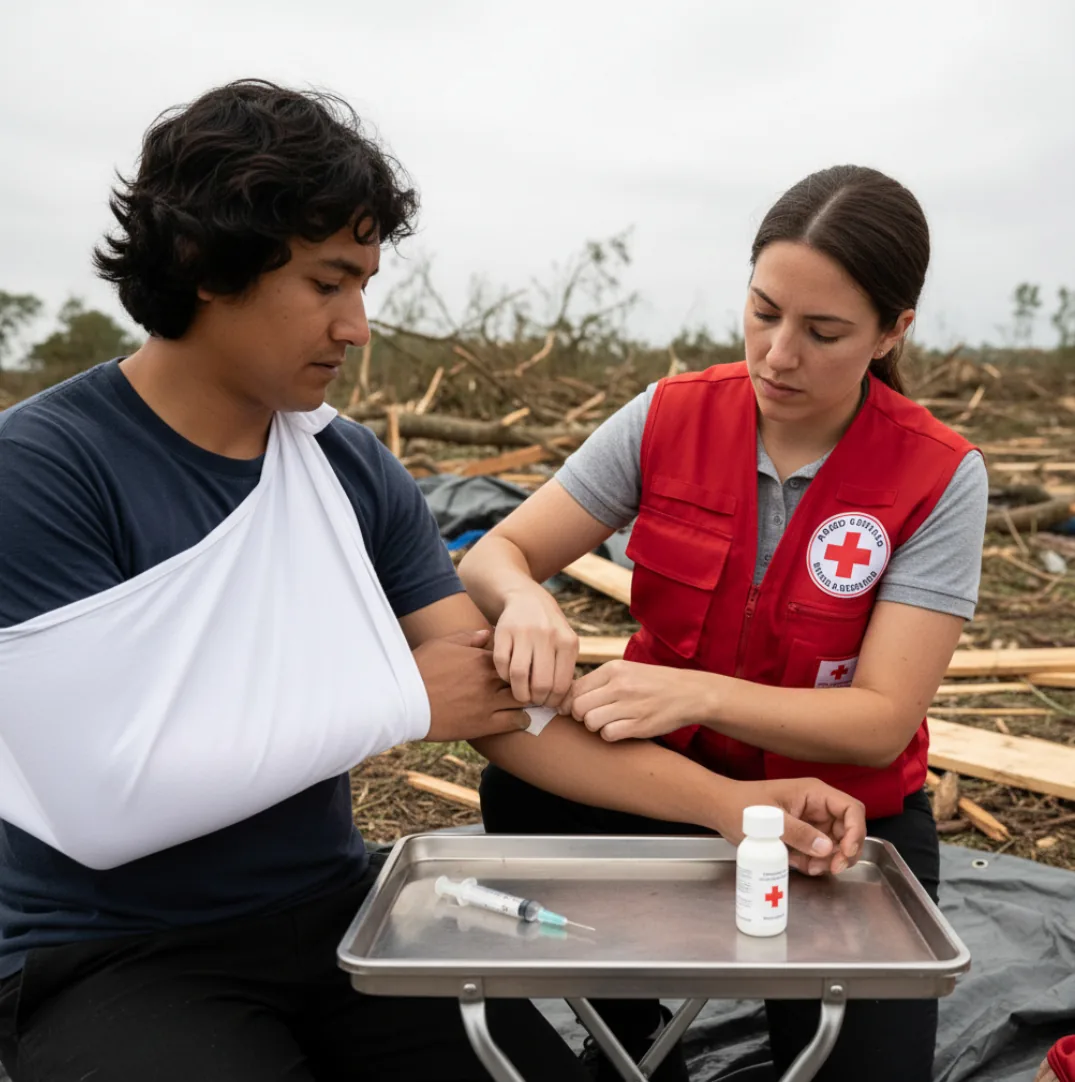
The cut you got moving debris. The scratch from sheet metal. The blister from wet boots. After a hurricane, minor wounds can become life-threatening within hours. Here is what your state's health department and the CDC say you need to know — backed by sources.
Of the 149 confirmed deaths attributed to Hurricane Ian, more than 40 occurred in the weeks following the storm — not during it. Vibrio vulnificus infections, drowning in floodwater, and untreated wounds were among the leading post-storm causes. Florida health officials issued emergency warnings specifically about wound contact with floodwater within days of Ian making landfall.
Floodwater after a hurricane is not water. It is a toxic soup of seawater, sewage overflow, agricultural runoff, gasoline and motor oil, industrial chemicals, dead animal matter, and naturally occurring coastal bacteria — all mixed at concentrations that would never occur in normal conditions. Any break in the skin — a scratch, a blister, a small cut, even an existing skin condition — is an entry point for pathogens that the body has never been conditioned to fight at those concentrations.
The second factor is access. After a major hurricane, hospitals are overwhelmed, urgent care clinics may be closed, roads are blocked, and ambulance response times are measured in hours. A wound that would be easily treated in normal conditions can progress to sepsis before medical care is available.
Vibrio vulnificus is a naturally occurring bacterium found in warm saltwater environments along the Gulf of Mexico and Atlantic coast. Under normal conditions it causes an average of 80 confirmed cases per year in the United States. After a major hurricane, that number spikes dramatically as floodwater mixes concentrated Vibrio from coastal waters with inland areas, creating exposure for populations who would never normally encounter it.
It enters through any skin break. You do not have to swallow floodwater. A scratch from sheet metal roofing, a blister from wet boots, a pre-existing skin abrasion — any of these are sufficient entry points. Once in the bloodstream, Vibrio can cause necrotizing fasciitis (rapid tissue destruction) and septicemia (blood poisoning). The speed of progression distinguishes it from most other infections — symptoms can go from "something is wrong with this wound" to critical in under 24 hours.
Who is at highest risk: People with liver disease (including those who drink alcohol heavily), diabetes, kidney disease, or any immune-compromising condition are at dramatically elevated risk of fatal Vibrio infection. The CDC specifically advises these individuals to avoid any floodwater contact whatsoever.
📎 CDC — Vibrio vulnificus 📎 Florida DOH — VibriosisTetanus (lockjaw) is caused by the bacterium Clostridium tetani, which lives in soil, dust, and on metal surfaces — all of which are ubiquitous in hurricane debris environments. It enters through puncture wounds, lacerations, and even minor cuts contaminated with soil or rust. Unlike most bacterial infections, tetanus is not treated with antibiotics alone — once symptoms develop, it requires intensive care hospitalization and is fatal in 10–20% of cases even with treatment.
The critical window for prevention is now. If you have had a puncture wound from debris and haven't had a tetanus booster in 5 years — go today. Symptoms begin 3–21 days after exposure and include muscle stiffness, jaw cramping, and eventually full-body spasms. Once symptoms appear, the infection is already serious. A booster shot at any urgent care or pharmacy takes 5 minutes and costs under $50 without insurance.
Tetanus boosters are available at CVS, Walgreens, Walmart pharmacies, urgent care clinics, and emergency rooms. You do not need an appointment at most pharmacy clinics. If you have had any wound from storm debris and your last booster was more than 5 years ago — go now. This is the most completely preventable disease on this list.
MRSA is a strain of Staphylococcus aureus bacteria that has developed resistance to most standard antibiotics, making it significantly harder and more dangerous to treat than ordinary staph infections. It is commonly present in floodwater because it lives naturally on human skin and in the nasal passages — and sewage overflow from flooded treatment plants and septic systems concentrates it dramatically.
MRSA skin infections start as what looks like a pimple, boil, or spider bite — red, swollen, painful, and warm to the touch. They can develop rapidly into abscesses requiring surgical drainage, or progress to life-threatening bloodstream infections. The danger post-hurricane is that people dismiss what looks like a minor skin irritation until it has progressed significantly.
Leptospirosis is caused by bacteria spread through the urine of infected animals — particularly rats, raccoons, and cattle — which contaminate floodwater. After a hurricane, flooding displaces large rodent populations from their habitats and concentrates their urine-contaminated water across wide areas. The bacteria enters through skin breaks, eyes, nose, or mouth.
Leptospirosis is one of the most commonly reported post-hurricane diseases in tropical and subtropical regions. After Hurricane Katrina, leptospirosis cases spiked significantly across Louisiana and Mississippi. After Hurricane Maria in Puerto Rico (2017), health authorities declared a leptospirosis emergency with dozens of confirmed cases and deaths. The disease is treatable with antibiotics when caught early — the danger is that early symptoms mimic the flu and are often dismissed.
Leptospirosis is frequently misdiagnosed as flu because the early symptoms are identical. If you had any contact with floodwater and develop flu-like symptoms within 30 days — tell your doctor specifically about the floodwater exposure. This single piece of information changes the diagnostic approach and treatment immediately.
Eastern Equine Encephalitis is a viral brain infection transmitted by the Culiseta melanura mosquito — a species that breeds specifically in freshwater swamp habitats of the Eastern US and Gulf Coast. After a hurricane creates widespread standing water, mosquito populations explode within 7–14 days, dramatically increasing EEE transmission risk across all affected areas.
EEE is the most lethal mosquito-borne disease in the United States. Approximately one-third of people who develop EEE neurological illness die. Of those who survive, the majority suffer permanent neurological damage including intellectual disability, personality changes, seizures, and paralysis. There is no specific treatment or antiviral — care is supportive only. Prevention is the only option.
There is no licensed human vaccine for EEE. DEET-based insect repellent applied every time you go outdoors, long sleeves and pants, and eliminating standing water on your property are your only defenses. Do not go outside at dawn or dusk — peak Culiseta feeding times — without full coverage. This is not optional advice after a hurricane in the Southeast.
West Nile Virus is transmitted by the Culex mosquito species and is now present in all 48 contiguous US states. Most infected people (about 80%) show no symptoms. However, approximately 1 in 150 infected people develop severe neurological illness — West Nile encephalitis or meningitis — with elderly people and immunocompromised individuals at dramatically elevated risk of the severe form.
Post-hurricane standing water accelerates West Nile transmission. The CDC reports significantly elevated West Nile activity in the weeks following major flooding events in the Gulf Coast and Southeast. There is no vaccine and no specific antiviral treatment — again, prevention is everything.
After flooding, mold begins growing on saturated drywall, wood framing, carpet, and insulation within 24–48 hours in Florida's heat and humidity. Stachybotrys chartarum (black mold) and Aspergillus species produce mycotoxins — compounds that cause respiratory illness, neurological symptoms, and in cases of prolonged heavy exposure, hemorrhagic conditions. People with asthma, COPD, allergies, or any immunocompromise are at significantly elevated risk.
The CDC notes that mold exposure can cause nasal and sinus congestion, eye irritation, wheezing, skin irritation, and — in people with lung disease — serious respiratory infections. Mold spores become airborne when disturbed, which means cleanup without an N95 respirator and eye protection is a direct exposure event. Never use a bleach spray as the primary mold control method on large areas without also having adequate ventilation — bleach fumes in an enclosed space have sent cleanup workers to the ER.
Dengue fever is transmitted by the Aedes aegypti mosquito — a species that breeds in small containers of standing water, not large water bodies. This makes post-hurricane environments particularly conducive to Dengue transmission — every bottle cap, tire, blocked gutter, and pool cover holds enough water for Aedes breeding. Local dengue transmission has been documented in Miami-Dade and Broward counties in Florida, and the Texas Gulf Coast.
Dengue causes severe flu-like illness with intense joint and muscle pain (sometimes called "breakbone fever"). Most people recover in 1–2 weeks. However, Dengue hemorrhagic fever — a more severe complication — can be life-threatening and has no specific treatment beyond supportive care. A second Dengue infection with a different strain carries higher hemorrhagic fever risk than a first infection.
Risk levels vary by state based on coastal exposure, water temperature, wildlife populations, and endemic disease presence. Use this as your starting point — then click the state health department link for current post-storm advisories.
| State | Vibrio | Tetanus | MRSA | Leptospirosis | EEE | West Nile | Dengue | State Health Dept |
|---|---|---|---|---|---|---|---|---|
| 🌴 Florida | CRITICAL | HIGH | HIGH | HIGH | CRITICAL | HIGH | HIGH (S.FL) | FloridaHealth.gov → |
| ⭐ Texas | CRITICAL | HIGH | HIGH | HIGH | MOD | HIGH | HIGH (S.TX) | DSHS Texas → |
| 🎷 Louisiana | CRITICAL | HIGH | HIGH | CRITICAL | HIGH | HIGH | MOD | LDH Louisiana → |
| 🌊 Mississippi | CRITICAL | HIGH | HIGH | HIGH | HIGH | HIGH | LOW | MSDH.ms.gov → |
| 🏖️ Alabama | HIGH | HIGH | HIGH | HIGH | HIGH | HIGH | LOW | ADPH Alabama → |
| 🍑 Georgia | HIGH | HIGH | HIGH | MOD | HIGH | HIGH | LOW | DPH Georgia → |
| 🌴 South Carolina | HIGH | HIGH | HIGH | MOD | HIGH | HIGH | LOW | SCDHEC → |
| 🏔️ North Carolina | HIGH | HIGH | HIGH | MOD | HIGH | HIGH | LOW | NCDHHS → |
| 🦅 Virginia | MOD | HIGH | HIGH | MOD | HIGH | HIGH | LOW | VDH Virginia → |
| 🦀 Maryland | MOD | HIGH | HIGH | MOD | HIGH | HIGH | LOW | PHPA Maryland → |
| 🗽 New Jersey | MOD | HIGH | HIGH | MOD | HIGH | HIGH | LOW | NJDOH → |
| 🌆 New York | MOD | HIGH | HIGH | MOD | CRITICAL | HIGH | LOW | NYSDOH → |
| 🦞 Massachusetts | MOD | HIGH | HIGH | LOW | CRITICAL | HIGH | LOW | MDPH Mass → |
Both New York and Massachusetts have experienced significant EEE outbreaks in recent years unrelated to hurricanes. New York saw its worst EEE season in decades in 2019. Massachusetts declared a public health emergency for EEE in 2019 with 12 human cases and 6 deaths. A major hurricane causing widespread flooding in either state would create conditions for explosive EEE transmission well beyond the baseline critical risk already present.
Vibrio vulnificus enters through skin breaks too small to see clearly. MRSA lives in floodwater. Rusty nails and sheet metal are everywhere. The difference between a minor cleanup inconvenience and a life-threatening infection is often nothing more than whether you were wearing the right gear. These are not optional accessories — they are life safety equipment. Put them on before you step outside. Every single time.
Hands are the #1 site of post-hurricane injuries. You reach into debris, grab metal roofing, move broken glass, clear branches with nails embedded in them. A single puncture wound to the hand that contacts floodwater is a potential Vibrio or tetanus exposure. Leather gloves for heavy debris, nitrile for floodwater, chemical-resistant rubber for anything involving sewage or chemicals. Keep multiple pairs — change them when they tear or get soaked through.
Post-hurricane debris fields are carpeted with roofing nails, broken glass, metal sheeting, and wood splinters — often hidden under standing water or debris. Standard sneakers provide zero puncture resistance. A nail through the sole of a shoe into the bottom of the foot, with that foot standing in floodwater, is one of the highest-risk infection scenarios after a hurricane. Steel toe and puncture-resistant midsole are both required — not one or the other.
Post-storm air carries mold spores (growing within 48 hours), silica dust from broken concrete and drywall, asbestos fibers from older home materials, fiberglass insulation particles, chainsaw exhaust, and generator fumes. A surgical mask filters none of these effectively. An N95 filters 95% of airborne particles including mold spores and most dust. A P100 half-mask respirator filters 99.97% and is the professional standard for mold remediation. Wear it every time you enter a damaged structure. Every time.
Chainsaw operation, debris removal, and mold cleanup all generate flying particles that cause serious eye injuries. Floodwater splash to the eyes is also a Leptospirosis exposure route. Standard sunglasses do not meet ANSI Z87.1 impact resistance — they provide minimal protection and can shatter into eye-damaging fragments on impact. Use rated safety glasses for general work and sealed goggles for any chainsaw operation, spraying chemicals, or mold removal.
Chainsaw lacerations are among the most severe and fastest-bleeding wounds in emergency medicine. The chain moves at over 60 mph — a contact injury severs muscle and bone in under a second. Chainsaw protective chaps (also called chainsaw pants) are filled with cut-resistant Kevlar fibers that jam the chainsaw drive sprocket on contact, stopping the chain before it penetrates the leg. Every professional logger, arborist, and utility crew member wears them. After a hurricane when every homeowner picks up a chainsaw, the ER fills up with people who didn't.
Chainsaw chaps or pants ✓ Chainsaw helmet with face shield ✓ Ear protection ✓ Chainsaw gloves ✓ Steel toe logging boots ✓ N95 respirator ✓ Safety glasses under the face shield ✓. If any item is missing — do not start the chainsaw. A second trip to get gear takes 5 minutes. A chainsaw injury takes months of recovery and can be permanent.
The instinct after a hurricane is to push through. There is too much to do, the cut doesn't look serious, you'll clean it up later. This mindset has sent people to the ICU and killed others. A wound that is cleaned, treated, and dressed within 15 minutes of occurring is a dramatically different medical situation than the same wound cleaned 4 hours later after repeated floodwater exposure. Stop. Go inside. Clean it now.
Before touching the wound with your hands, remove contaminated gloves from the outside (don't touch the outer surface with bare skin), wash hands with soap and clean water for at least 20 seconds, or use an alcohol-based hand sanitizer. Treating a wound with contaminated hands defeats the purpose.
Use a wound irrigation syringe or squeeze bottle to flush the wound with clean water under pressure for at least 5 full minutes. This is not a gentle rinse — you are physically removing contaminated material. Tap water is fine if it has not been under a boil water notice. Bottled water if tap is contaminated. The volume and pressure of the flush matters more than the fluid used.
Apply povidone-iodine solution to the wound after irrigation. This is more effective than hydrogen peroxide for contaminated wounds — hydrogen peroxide damages tissue and slows healing. Do not close puncture wounds with adhesive strips — they need to drain. Apply to the wound margins and surrounding skin.
Apply a thin layer of bacitracin or triple antibiotic ointment (Neosporin) to the wound. Cover with a sterile non-stick gauze pad and secure with medical tape or a self-adhesive bandage. For puncture wounds, use a simple sterile pad — do not pack or seal the wound closed.
Use a permanent marker to draw a circle around any redness at the wound edge. Check at 12 hours — if the redness extends beyond your circle, the infection is spreading. Photograph with your phone so you have a timestamped record. Any spreading redness, increasing pain, fever, red streaks, or pus — stop working and seek emergency care immediately. Do not wait until the next day.
Before beginning any post-hurricane cleanup, set up a dedicated wound care station at your staging point — clean water in a sealed container, the irrigation syringe, Betadine, antibiotic ointment, gauze pads, tape, permanent marker, and a thermometer. Make it visible and accessible. When someone gets cut — and someone will get cut — you want to treat the wound in under 5 minutes, not spend 20 minutes searching for supplies. This preparation is what separates a minor injury from a hospital admission.
Field wound care buys you time — it does not replace medical care for serious wounds. Go directly to an emergency room for: any laceration longer than 1 inch or deeper than you can see the bottom of, any puncture wound to the hand or foot, any wound where you cannot stop the bleeding with 10 minutes of direct pressure, any wound that has had significant floodwater exposure, or any wound where you cannot clean out visible debris. Tell the ER staff you have had floodwater exposure — this changes treatment immediately.
A healthy 35-year-old exposed to Vibrio vulnificus through a minor cut has a roughly 25% chance of a fatal outcome if untreated. An elderly person over 70 with diabetes, liver disease, or any immunocompromising condition faces a mortality rate that emergency physicians describe as approaching a coin flip. A child under 5 whose immune system is still developing faces a similarly elevated threat. The same wound, the same bacteria, a completely different medical outcome based solely on the strength of the immune response. This is not fearmongering — it is immunology.
Immunosenescence — the gradual decline of the immune system with age — is well documented in medical literature. By age 65, the immune system produces fewer white blood cells, responds more slowly to new pathogens, and generates a less robust antibody response. This means the same bacterial load that a younger immune system contains and defeats may overwhelm an elderly person's defenses entirely.
After a hurricane, the elderly face this immune disadvantage while simultaneously being exposed to the highest concentration of dangerous pathogens in their environment — floodwater bacteria, mold spores, contaminated debris — often without adequate protective gear because they didn't expect to be doing cleanup work.
Debris-covered floors, slippery wet surfaces, uneven terrain from uprooted roots and displaced concrete, poor lighting without power, and disorientation in a changed environment dramatically increase fall risk for elderly people. Falls are the leading cause of injury-related death in adults over 65 in normal conditions. After a hurricane — with all these factors combined — the risk multiplies. A hip fracture in a 78-year-old, 3 miles from an overwhelmed hospital, is a life-threatening situation. Keep elderly family members away from cleanup areas entirely. If they must move through the home, clear and light their path before they move.
Compromised ceiling sections, hanging light fixtures, weakened roof areas, and unstable tree limbs often give little warning before failing. Younger people with better reflexes and hearing may detect and respond to the sound of a structure shifting. Elderly people with diminished hearing and slower reaction times may not. Hard hats are essential for any elderly person who must be in or near a damaged structure — and the most protective approach is to keep them out entirely until professional structural assessment is complete.
Many common elderly medications suppress the immune response and mask classic infection symptoms. Corticosteroids (prednisone) suppress inflammation — meaning the redness and swelling that signal an infected wound may not appear even when the infection is advancing. NSAIDs mask fever. Beta-blockers mask elevated heart rate. An elderly person on these medications may have a rapidly progressing Vibrio or MRSA infection with none of the warning signs a caregiver would normally look for. Check wounds twice daily visually regardless of whether symptoms are present.
Diabetic neuropathy and age-related reduced sensory sensitivity mean elderly people frequently don't feel minor cuts, punctures, or blisters — particularly on the feet. A diabetic elderly person can walk on a nail puncture wound, through floodwater, for hours before noticing. Inspect feet and hands of elderly family members daily after any post-hurricane cleanup activity, even if they report no pain.
Children under 5 have immature immune systems that are still developing their ability to recognize and respond to novel pathogens. This is not the same as the elderly immune system — it is a different kind of vulnerability. A child's immune system has encountered far fewer pathogens than an adult's and has developed far fewer trained responses. Novel bacteria like Vibrio and drug-resistant MRSA strains are completely foreign to a young immune system, which may fail to mount an adequate response before the infection becomes systemic.
Beyond the immune system, children under 5 face unique post-hurricane environmental risks that adults often overlook because they are focused on adult-scale hazards.
Young children explore their environment by touching and then putting hands near their mouth, nose, and eyes. In a post-hurricane environment saturated with floodwater bacteria, mold spores, and contaminated debris, a child crawling on a wet floor or touching debris and then touching their face is a direct exposure event. Keep children completely away from any flood-affected area until it has been cleaned, dried, and treated. This is non-negotiable.
Children can drown in as little as 2 inches of water. Post-hurricane standing water in yards, ditches, low spots, and pooled areas presents a drowning risk for any child under 5 — not just a disease exposure risk. Never leave a child under 5 unattended outdoors after a hurricane. The combination of disoriented parents, changed landscape, and the child's natural curiosity about standing water is a dangerous combination that has claimed children's lives after every major Florida storm.
Sheet metal roofing, exposed nail ends, broken glass, and sharp debris edges are often at child eye and face height in post-hurricane debris fields — the same height an adult steps over without noticing. A child running through an area that an adult walked through safely can encounter a face-level sharp edge that the adult never saw. Keep children inside or in a fully cleared, supervised outdoor area only. Debris fields are not environments for children under any circumstances.
Children's respiratory systems are still developing and are significantly more sensitive to mold spore exposure than adult lungs. The CDC specifically notes that children with existing asthma or respiratory conditions face elevated risk of serious illness from post-flood mold exposure. Keep children out of any mold-affected area entirely. Change clothes and shower immediately after any adult who was in a mold-affected area returns — mold spores transfer on clothing and hair.
Send them away before the cleanup starts — to a family member's home, a hotel outside the affected area, or a shelter. An elderly person or a young child has no role in post-hurricane cleanup. Every hour they are in a contaminated, debris-filled, heat-stressed environment is an hour of unnecessary risk. The cleanup will get done. The people you love need to be somewhere safe while it happens. This is not overprotection — it is exactly what every emergency management professional recommends.
For elderly persons: any wound that doesn't hurt as much as you'd expect, any fever above 99°F (lower threshold than healthy adults), any wound that looks different today than yesterday, any confusion or behavioral change (early sepsis sign), any sign of respiratory distress after mold exposure. For children under 5: any fever above 100.4°F with known floodwater exposure, any wound that appears red or swollen, any breathing difficulty after mold exposure, any sign of skin rash after floodwater contact. When in doubt — go. The cost of an unnecessary ER visit is infinitely lower than the cost of waiting too long.
Apply pressure to stop bleeding. Then clean the wound thoroughly with clean water and soap for at least 5 minutes — this is not a gentle rinse. You are physically trying to remove contaminated material from the wound. Use a syringe or squeeze bottle to irrigate with pressure if available. This single step is the most effective post-hurricane wound care action you can take.
Apply povidone-iodine (Betadine) or chlorhexidine solution to the wound after cleaning. Standard hydrogen peroxide is not recommended for deep wounds as it damages tissue. Do not close puncture wounds with adhesive strips — puncture wounds need to drain. Apply a sterile dressing and change it twice daily minimum.
If you haven't had a booster in 5 years and received any wound from debris, soil, or metal — seek a booster immediately. Do not rationalize this away. Urgent care clinics have had tetanus boosters in stock post-hurricane — call ahead to confirm. Cost without insurance: typically $30–$60.
Check for spreading redness, warmth beyond the wound edge, increasing pain (wounds should hurt less each day, not more), any red streaks extending from the wound, swelling, or fever. Photograph the wound and draw a circle around any redness with a permanent marker — this lets you see quickly whether the redness is spreading. If spreading — seek emergency care. Do not wait.
If you seek medical care for any reason after floodwater contact — a wound, a rash, flu-like symptoms, or anything else — tell the treating clinician specifically that you had floodwater exposure. This changes the diagnostic workup significantly and puts Vibrio, Leptospirosis, and MRSA on the differential immediately. This one statement has saved lives.
Povidone-iodine solution (Betadine), sterile gauze pads, medical tape, elastic bandage, wound irrigation syringe, permanent marker (to circle wound redness), digital thermometer, nitrile gloves, and a comprehensive first aid manual. Keep these accessible before storm season — not stored in an area that may flood.
Hurricane shutters reduce structural damage and floodwater intrusion — keeping the hazards outside where they belong. Get your free estimate today.
Free Shutter Estimate → Post-Storm Safety Guide →