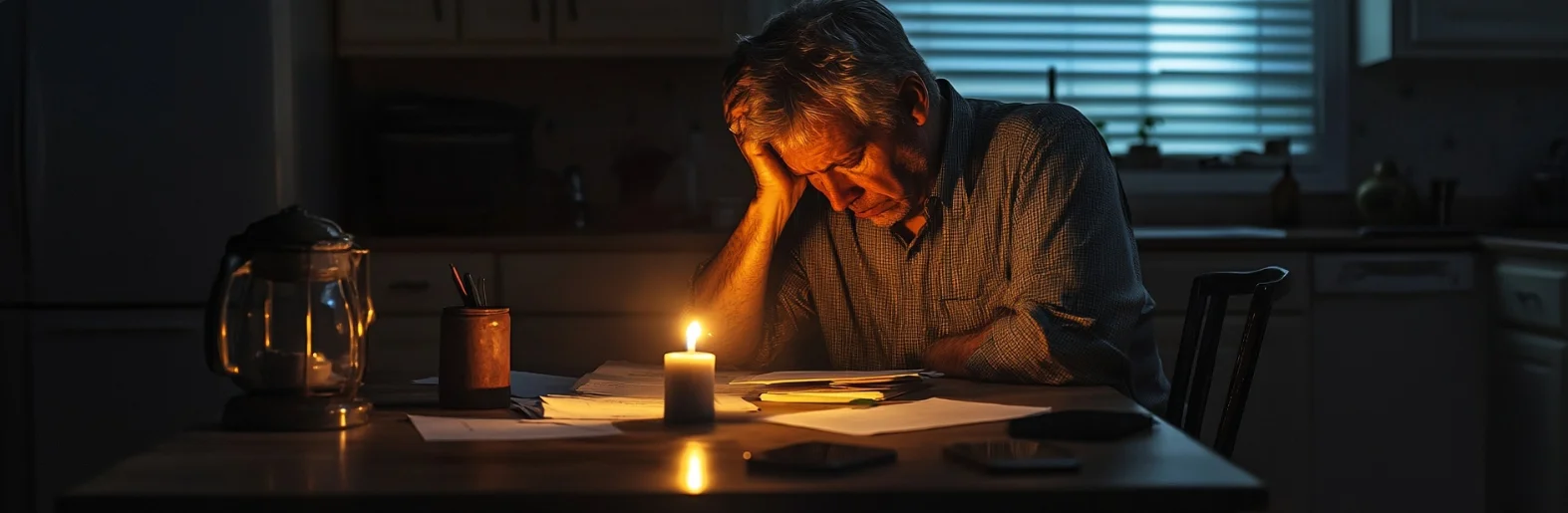
📍 The Adult Nobody Checks On
There is a particular exhaustion that comes from being the responsible adult during a disaster. You tracked the storm for a week. You stocked the supplies, put up the shutters, made sure everyone had water. During the storm you were calm. After the storm, you assessed the damage, organized the cleanup, reassured the children, arranged for the elderly neighbor's care, managed the insurance calls.
And then day four arrives. No air conditioning. The insurance adjuster has not returned your calls. The generator is eating through gas at $80 a tank. The kids are getting on each other's nerves. Your partner is exhausted and irritable. The neighbor's generator runs at 11pm. And there is nobody asking if you are okay.
This is the normal Florida hurricane experience for the adult in charge. It is also unsustainable without intention. What follows is not self-help theater — it is what makes continued effective caregiving possible over days and weeks.
What Prolonged Low-Grade Stress Actually Does
Extended moderate stress — the kind that comes from managing a household through a week-long power outage — produces measurable physiological effects: elevated cortisol levels, disrupted sleep architecture, impaired prefrontal decision-making, increased irritability, and reduced emotional regulation capacity. The same adults who were patient and resourceful on day one often find themselves short-tempered and cognitively foggy by day five. This is not a character failure. It is a predictable biological response to sustained stress without adequate recovery periods.
1. Name What You're Feeling — Out Loud if Necessary
Research on affect labeling — simply naming your emotional state — consistently shows that the act of naming reduces the physiological intensity of the emotion being named. "I am frustrated and exhausted and overwhelmed right now" said out loud, or written in a notebook, or said to your partner, is not complaining. It is neurological regulation. You do not have to perform calm competence at every moment to actually be competent. Acknowledging the weight is part of carrying it.
2. Protect One Hour Per Day That Belongs Only to You
Early morning before anyone wakes. The hour after kids fall asleep. Whenever it is for your household, protect one daily hour that is genuinely, non-negotiably yours. Not for productive hurricane recovery activities. Not for logistics planning. For reading, for sitting on the porch, for walking, for whatever restores you as a specific person rather than a crisis manager. Tell your partner or household explicitly that this hour is not negotiable. This is not selfish — it is what makes the other 23 hours possible at adequate quality.
3. Physical Movement Every Day — Even Twenty Minutes
A 20-minute walk has better peer-reviewed evidence for acute stress reduction than almost any other single behavioral intervention available without a prescription. It regulates cortisol, provides a reset for decision fatigue, gives mild cardiovascular stimulation, and creates literal physical distance from the immediate stressors. If you cannot leave the property, walk around the perimeter ten times. Walk the block. The mode matters less than doing it daily.
4. Make Specific Requests for Help — Not Open Invitations
The person managing everything rarely asks for help because asking feels like admitting defeat or burdening people who are already stressed. This is a trap that leads to unnecessary solo suffering. People around you want to help and genuinely do not know how unless told specifically. "Could you take the kids to the neighbor's for two hours while I handle the adjuster?" gets a yes. "Let me know if you need anything" gets nothing. Specific, bounded, time-limited requests are easy for people to say yes to. Practice making them.
5. Control Your Information Diet
Constant consumption of post-hurricane news — changing damage reports, utility restoration estimates that move daily, tracking systems forming in the Atlantic — maintains your cortisol at elevated levels even when you are not actively doing anything useful with the information. Set two specific times to check news (morning and evening) and stay away from it otherwise. Information that is not immediately actionable is not helping you; it is just keeping the stress response active. This requires genuine discipline and is genuinely worth it.
6. Explicitly Lower the Standards for This Week
Crackers and peanut butter is a fine dinner this week. Kids watching a downloaded movie on a laptop battery for two hours is fine. The dishes not being done is fine. The lawn is definitely fine. Consciously and explicitly articulating to yourself and your family that "the standard for this week is lower and that is deliberate and appropriate" removes an enormous secondary source of stress — the gap between what you think things should be and what they actually are. Fighting to maintain normal standards during abnormal circumstances is exhausting and unnecessary. Give yourself explicit permission to let things go.
What Extended Crisis Does to Couples
Disaster research consistently shows elevated relationship conflict rates beginning at approximately 72 hours of sustained household disruption. The causes are predictable and not personal failures: different stress response styles (one partner activates and takes action, one withdraws and goes quiet — both are valid), disagreements about priorities (repairs first vs. finances first vs. the kids first), and the simple reality that exhaustion removes the emotional buffer that ordinarily keeps minor friction from escalating into real arguments.
Knowing this pattern is coming does not prevent it, but it helps enormously to not interpret normal stress-amplified friction as a relationship crisis. It is a storm-week stress response, and it passes when the circumstances that caused it change.
✓ Two Commitments That Make the Biggest Difference
No major decisions during the acute phase. Property repair decisions, contractor choices, insurance strategy, and financial planning all wait until you are both rested and in normal cognitive function. Decisions made in exhaustion and stress are reliably worse than decisions made in recovery.
Ten minutes of real connection daily. Not logistics management. Not stress comparison. Not problem-solving. Ten minutes of "how are you actually doing" conversation with your partner. This sounds small. The research on relationship satisfaction during crises says it is disproportionately important.
Sleeping Without Air Conditioning in Florida
Sleep quality in Florida summer heat without air conditioning deteriorates significantly and compounds all other stress effects. Practical strategies that genuinely help: wet sheets placed in the freezer for 20 minutes before bed; a battery-operated fan positioned to move air across the sleeping surface; sleeping on the floor rather than a mattress (heat rises, and foam mattresses trap body heat); windows open at opposite ends of the house to create cross-ventilation; cold water on wrists and neck immediately before lying down.
The goal is not comfortable sleep — that may not be available. The goal is adequate sleep, which remains possible with management even in significant heat.