HomeShutter TypesRoll-Down vs Bahama Shutters
2026 Comparison · All Coastal States

Roll-Down vs Bahama Shutters

Roll-down shutters and Bahama shutters both fold away neatly — but they protect differently, cost differently, and look completely different on your home.

Get My Free Estimate → AI Pricing Tool
$45–100
Roll-down per sq ft
$20–35
Bahama per sq ft
Cat 5
Roll-down wind rating
Cat 3
Bahama wind rating
At a glance

Head-to-Head Comparison

Roll-down shutters and Bahama shutters are both popular in coastal Florida for their clean appearance — but they serve different purposes. Roll-downs are serious hurricane protection that disappear into a housing box. Bahama shutters are permanent architectural features that provide partial storm protection, shade, and style. Choosing between them depends on whether you need full Category 5 protection or a combined shade-and-storm solution.

CategoryRoll-Down ShuttersBahama ShuttersWinner
Full-home installed cost$12,000–$28,000$4,000–$9,000 ✓Bahama
Cost per sq ft$45–$100/sq ft$20–$35/sq ft ✓Bahama
Hurricane protectionCategory 5 ✓Category 2–3 onlyRoll-Down
FL insurance discount15–30% ✓5–15%Roll-Down
Deployment methodButton press (motorized) ✓Propped open — always thereBoth
Shade & ventilationOnly when closedYear-round shade ✓Bahama
Appearance openInvisible in housing box ✓Architectural — always visiblePreference
HOA complianceYes ✓Yes ✓Tie
Energy savingsNone when openReduces AC load year-round ✓Bahama
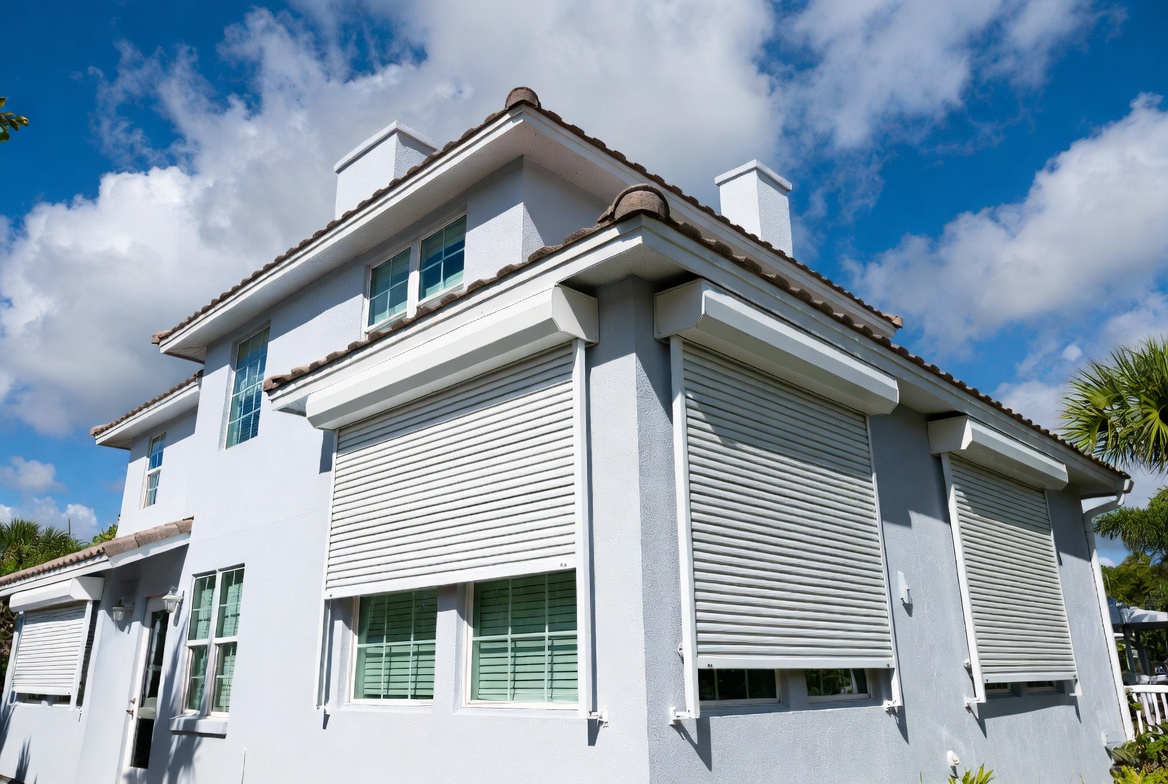
Roll-down hurricane shutters on Florida coastal home — fully deployed
Motorized roll-down shutters close in seconds — the housing box disappears into the fascia when open
Cost

Cost Breakdown — What You're Actually Paying For

Bahama shutters win on upfront cost: $4,000–$9,000 for a full home versus $12,000–$28,000 for motorized roll-downs. The difference reflects what you're getting — Bahama shutters are fixed architectural panels. Motorized roll-downs are mechanical systems with motors, housing boxes, and precision installation.

Manual roll-downs cost significantly less than motorized
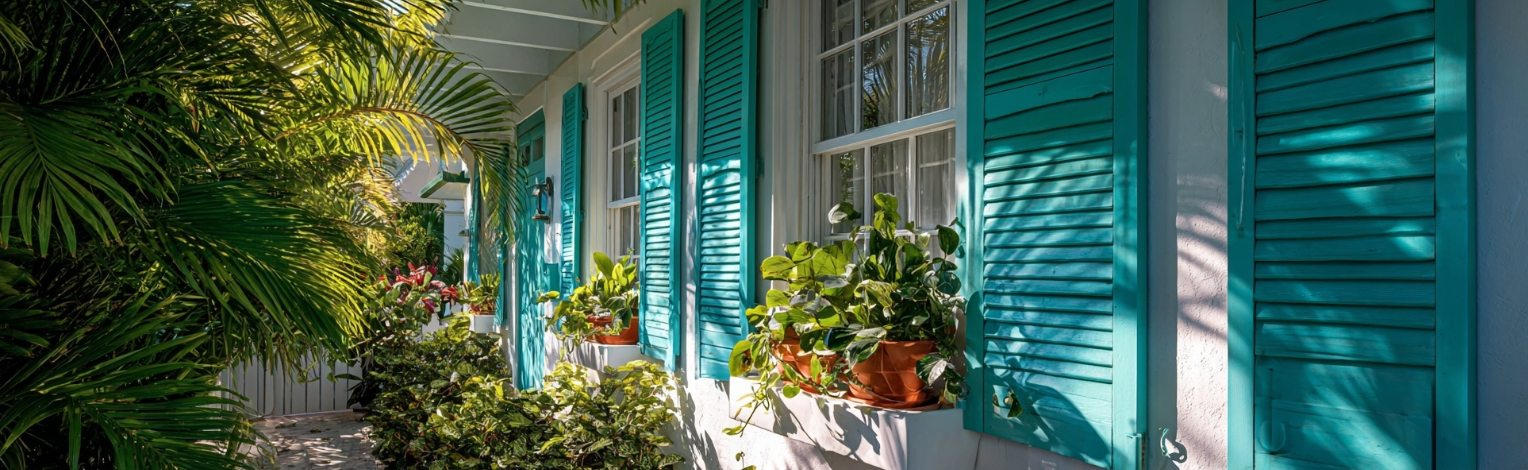
Key West style home with Bahama hurricane shutters adding tropical character
Bahama shutters are as much a design choice as a protection choice — they define the look of Florida coastal architecture
— closer to $8,000–$18,000 for a full home — but sacrifice the convenience that makes roll-downs worth the premium. Most Florida homeowners who choose roll-downs choose motorized.

Roll-Down Shutters — What You Pay For

$12K–$28K motorized. Housing box above every window. One-button deployment. Full Category 5 protection. Maximum insurance discount. Invisible when open.

Bahama Shutters — What You Pay For

$4K–$9K installed. Permanent architectural panels that prop open at 45°. Year-round shade and partial storm protection. Lower insurance discount. Always visible — part of the home's look.

Protection

Hurricane Protection — This Is Where They Diverge Significantly

This is the most important difference
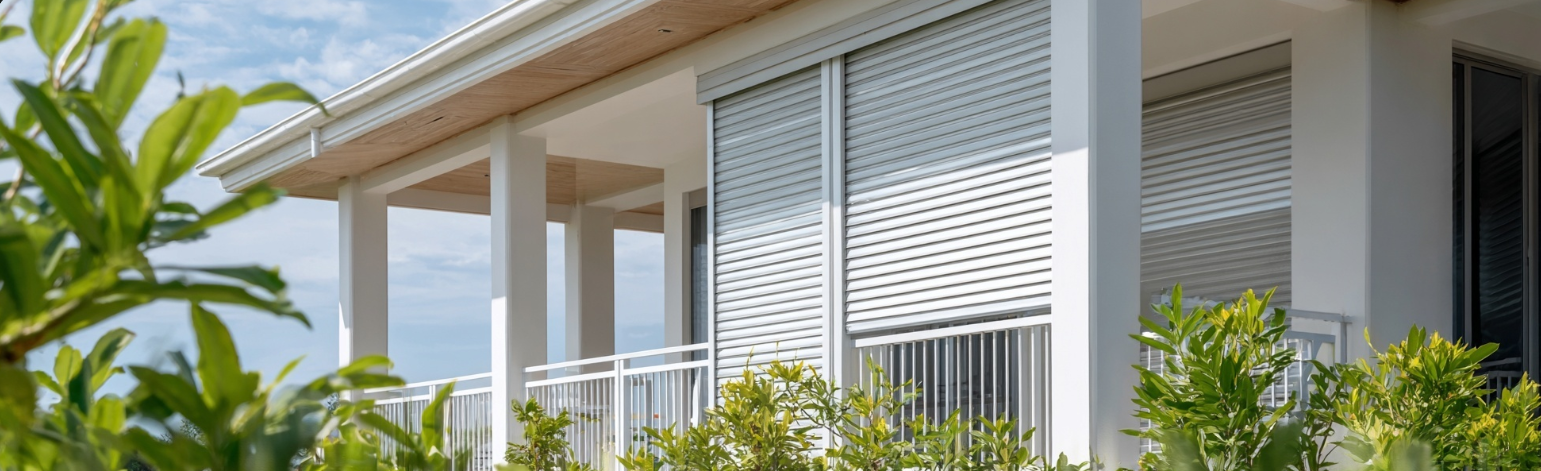
Roll-down hurricane shutters protecting a second-floor balcony on a Florida home
Roll-down shutters protect every opening — including large balcony doors and second-floor windows that Bahama shutters can't cover
between these two options. Roll-down shutters — motorized or manual — provide full Category 5 hurricane protection and qualify for Florida's maximum wind mitigation insurance discounts of 15–30%.

Bahama shutters are rated for Category 2–3 storms and provide partial wind protection. They do not meet the Florida Building Code requirements for full opening protection, meaning they don't qualify for the highest insurance discounts. In a major hurricane, Bahama shutters alone are not sufficient protection for many coastal Florida locations.

⚠️ If you're in a high-risk wind zone (Zone D or E in Florida), Bahama shutters alone are not adequate. Roll-downs or a supplemental shutter type is required.
Ease of use

Daily Living and Deployment

Motorized roll-downs win on storm deployment: one button closes everything. This is their signature advantage — hurricane protection in seconds with no physical effort, reachable from your phone if you're not home when a storm approaches.

Bahama shutters are always deployed in the sense that they're always there — propped open at a 45° angle. They provide constant shade and partial wind protection without any action. Before a major storm, they're lowered and latched to provide their maximum (Category 2–3) protection level.

For year-round living, Bahama shutters actually provide more daily value: shade that reduces air conditioning costs, privacy, and a distinctive look that complements Florida architecture.

Appearance

Appearance — Two Very Different Aesthetics

Roll-down shutters are invisible when open — the aluminum slats retract entirely into a compact housing box above each window. The only visible element is the housing box itself, which can be concealed with a fascia cover in many installations. When you want your home to look completely normal, roll-downs deliver that.

Bahama shutters are a permanent, visible architectural element — and for many Florida homes, that's the point. Propped open at 45°, they create a distinctive tropical character associated with Key West and coastal Florida architecture. They come in dozens of colors. They're a design choice, not just a protection choice.

On a Key West-style cottage or a beachfront bungalow, Bahama shutters look exactly right. On a modern stucco home or a formal Mediterranean-style property, roll-downs typically integrate better.

Verdict

Which is right for your home?

Roll-downs and Bahama shutters serve genuinely different purposes — they're not really direct competitors. If your primary need is maximum hurricane protection with full insurance qualification, roll-downs are the only choice. If you want architectural character, year-round shade, and moderate storm protection at lower cost, Bahama shutters deliver that.

The most common approach in coastal Florida : Bahama shutters on the front-facing windows for curb appeal, with accordion or roll-down shutters on the sides and back for full protection. Both are permitted together.

Choose Roll-Down Shutters if…

  • You need Cat 5 protection
  • Maximizing insurance discount
  • You want one-button convenience
  • Modern or formal home exterior
  • No shade needed — you have trees

Choose Bahama Shutters if…

  • Florida Keys / tropical aesthetic
  • Year-round shade is a priority
  • Lower upfront budget
  • Category 2-3 zone or supplemental use
  • Curb appeal is the primary goal
Common questions

FAQ

Can Bahama shutters replace roll-down shutters for hurricane protection?
Not in most coastal Florida locations. Bahama shutters provide Category 2–3 protection and don't qualify for full wind mitigation insurance credits. In high-wind zones, they should be supplemented with accordion or roll-down shutters on exposed openings.
Do Bahama shutters qualify for Florida insurance discounts?
Yes, but at lower rates. Bahama shutters typically qualify for 5–15% wind mitigation discounts versus 15–30% for roll-down or accordion shutters. Your insurance savings will be lower with Bahama shutters alone.
Can I mix Bahama shutters and roll-downs on the same home?
Absolutely — it's a common Florida approach. Bahama shutters on street-facing windows for curb appeal, roll-downs on sides and back for full protection. Both can be permitted together.
How long do Bahama shutters last compared to roll-downs?
Well-maintained Bahama shutters last 20–30 years. Roll-down motors typically last 15–20 years before needing replacement; the slat housing can last 30+ years. Both require annual maintenance in Florida's salt air environment.
Are motorized roll-downs worth the extra cost over manual?
For most homeowners, yes. Manual roll-downs require cranking each shutter closed — fine for one or two openings, but tedious for a full home. Motorized roll-downs close everything simultaneously with one switch. The convenience premium is typically $2,000–$5,000 for a full home.
The correct way to compare these

They solve different problems

Roll-down shutters are a storm protection system. Bahama shutters are an architectural element that also provides some storm protection. Most homeowners who use Bahama shutters also use roll-down or accordion shutters on larger openings.

Use caseRoll-downBahama
Full Cat 5 protectionYesNo — Cat 2 to 3 only
Large openings over 6 ftIdealLimited
Sliding glass doorsExcellentNot applicable
Standard windowsGood but expensiveIdeal size range
Daily shade and privacyYesYes — adjustable angle
Insurance discount15 to 30 percent5 to 15 percent
💡 Use both — they are not alternatives

The most common correct approach is Bahama shutters on street-facing windows for curb appeal, and roll-down or accordion shutters on large openings and sliding doors. This hybrid gives you architectural character plus full insurance discounts.

The second home scenario

Which works better when you're not there

The most overlooked difference between roll-down and Bahama shutters isn't cost or wind rating — it's how each performs when the owner is away from the property. Florida's second-home and vacation rental market means a significant percentage of coastal homes are unoccupied when storms develop.

Motorized roll-down shutters are the clear winner for unoccupied properties. With Somfy, Lutron, or Z-Wave integration, shutters can be deployed remotely from anywhere in the world via a smartphone. A property manager or neighbor can operate them with a wall switch. Some systems support wind-speed-triggered automatic deployment. For a vacation home in Siesta Key or a rental property in Naples, this capability is worth the premium over any manual system.

Bahama shutters, being manual prop-arm systems, require physical presence to close. The storm closure process — lowering the panel and securing the side bolts — cannot be done remotely. For a second home, Bahama shutters provide decorative value and partial wind protection for smaller storms, but are not a viable primary protection strategy for a property that may be unoccupied when a significant storm develops.

The practical recommendation for second-home owners: motorized roll-down or accordion shutters for all primary openings (sliding doors, large windows, main floor), and Bahama shutters for aesthetic effect on smaller secondary windows where visual appearance matters more than maximum protection. This hybrid approach maximizes both curb appeal and operational reliability.

Remote access is a real feature now

Ask your roll-down shutter contractor specifically about smart home integration options. Somfy myLink is the most widely compatible — it works with Alexa, Google Home, and direct smartphone control. Budget an additional $300 to $600 for the hub and app integration on top of the shutter installation cost. For a property you can't always get to before a storm, it's worth every dollar.

Know what you should pay before calling a contractor

Free calculator — real county-level pricing in 60 seconds.

Open the Free Calculator →