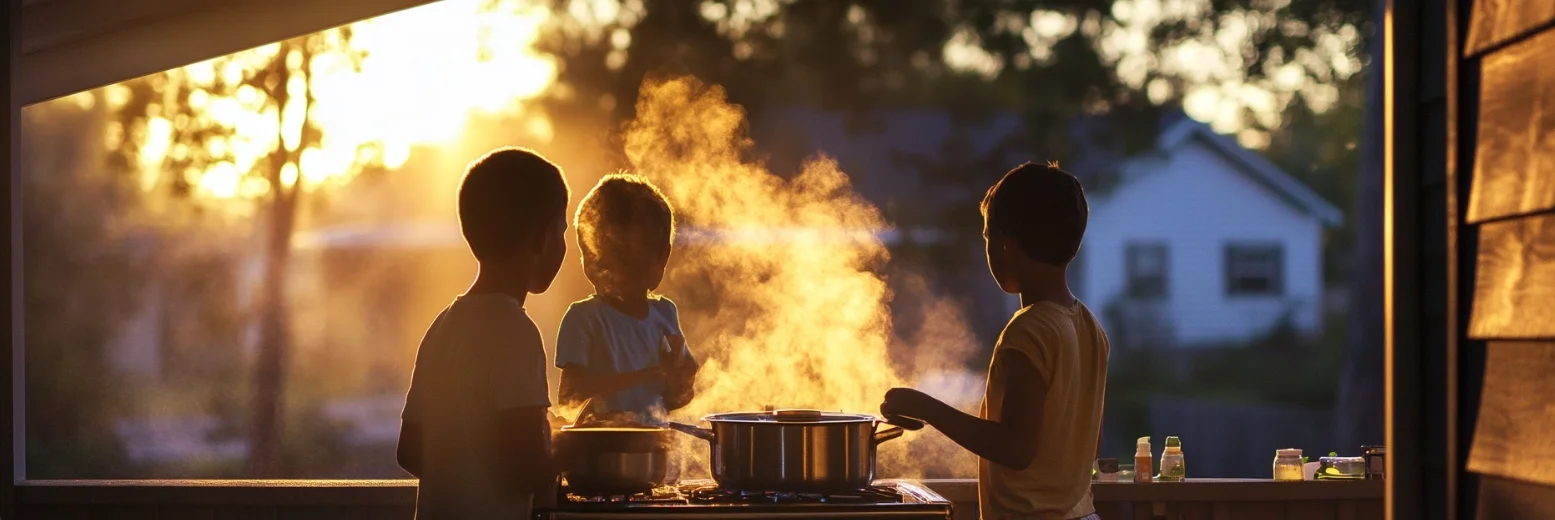
Canned beans and crackers for two weeks does not have to be your story. Florida families who have been through multiple extended outages have developed real cooking skills for real food without electricity. Here is everything they have learned.
Food held between 40ยฐF and 140ยฐF for more than two hours should be discarded. Your refrigerator stays cold for about four hours if kept closed. A full freezer holds temperature for 48 hours; a half-full freezer for 24 hours. When in doubt, throw it out. Post-hurricane food poisoning with no air conditioning and limited medical access is a serious threat.
The refrigerator panic hits on day two. You open it one too many times. After multiple extended outages, you learn: plan for the loss. Day one, cook everything fresh that needs cooking โ eggs, meat, dairy. Make it a feast. Then transition to shelf-stable and make that food good too. The grill becomes your kitchen. The camp stove becomes your range. Neighbors share what they have. You eat better some nights than you did with electricity โ because you're actually cooking together.
If you have a propane grill, you have a full cooking range. Cast iron pans on the grill work exactly as they do on a stove โ you can sautรฉ, fry, simmer, and bake in a covered grill. Always use outdoors only. Keep an extra propane tank filled before hurricane season.
A two-burner propane camp stove is the best power-outage cooking tool. Stable, controllable, works in the garage or on the porch, runs all your regular pots and pans. A 1-pound propane canister lasts about an hour of cooking; a 20-pound tank lasts weeks.
A cast iron Dutch oven over charcoal or a camp stove produces genuinely excellent food: stews, braised meats, cornbread, even simple cakes. Dutch oven cooking has been a staple of off-grid living for centuries. Florida camping culture knows it well.
Your freezer is full. Use it. Grill every piece of meat that would otherwise go bad. Make scrambled eggs with every egg in the house. Cook fresh vegetables. Invite neighbors. Day one after a hurricane with a working grill can actually be one of the best cookouts of the year โ if you lean into it rather than mourning the power.
Breakfast: Instant oatmeal heated on the camp stove. Peanut butter on crackers. Granola bars and canned fruit.
Lunch: Canned beans on rice. Tuna salad from cans. Peanut butter and honey wraps.
Dinner: This is where you invest the propane. One-pot camp stove meals: pasta with canned tomato sauce and canned sausage; rice and black beans with canned chicken; ramen upgraded with canned vegetables and a soft-boiled egg.
Almost every satisfying power-outage dinner follows this pattern: protein (canned chicken, beans, or day-one cooked meat kept in a cooler) + starch (rice, pasta, or tortillas) + flavor (canned tomatoes, hot sauce, soy sauce, olive oil, garlic powder) + vegetable (canned corn, beans, or onions which keep without refrigeration).
The secret is seasoning. People who eat badly during outages usually have food but no spices. A kit with salt, pepper, garlic powder, cumin, Italian seasoning, and hot sauce transforms canned ingredients into something worth eating.
The drink cooler gets opened 20 times a day, ruining your ice. The food cooler should open twice daily maximum. Keep them separate and labeled. This single rule doubles your ice life.
Freeze water in large containers before the storm โ gallon milk jugs, large plastic bins. These frozen blocks keep a cooler cold for 3โ4 days versus 1โ2 days for bags of cubed ice.
A cooler in direct Florida sun loses ice twice as fast. Shade it in a garage, under a canopy, or wrap in a moving blanket. This simple step dramatically extends your ice supply.