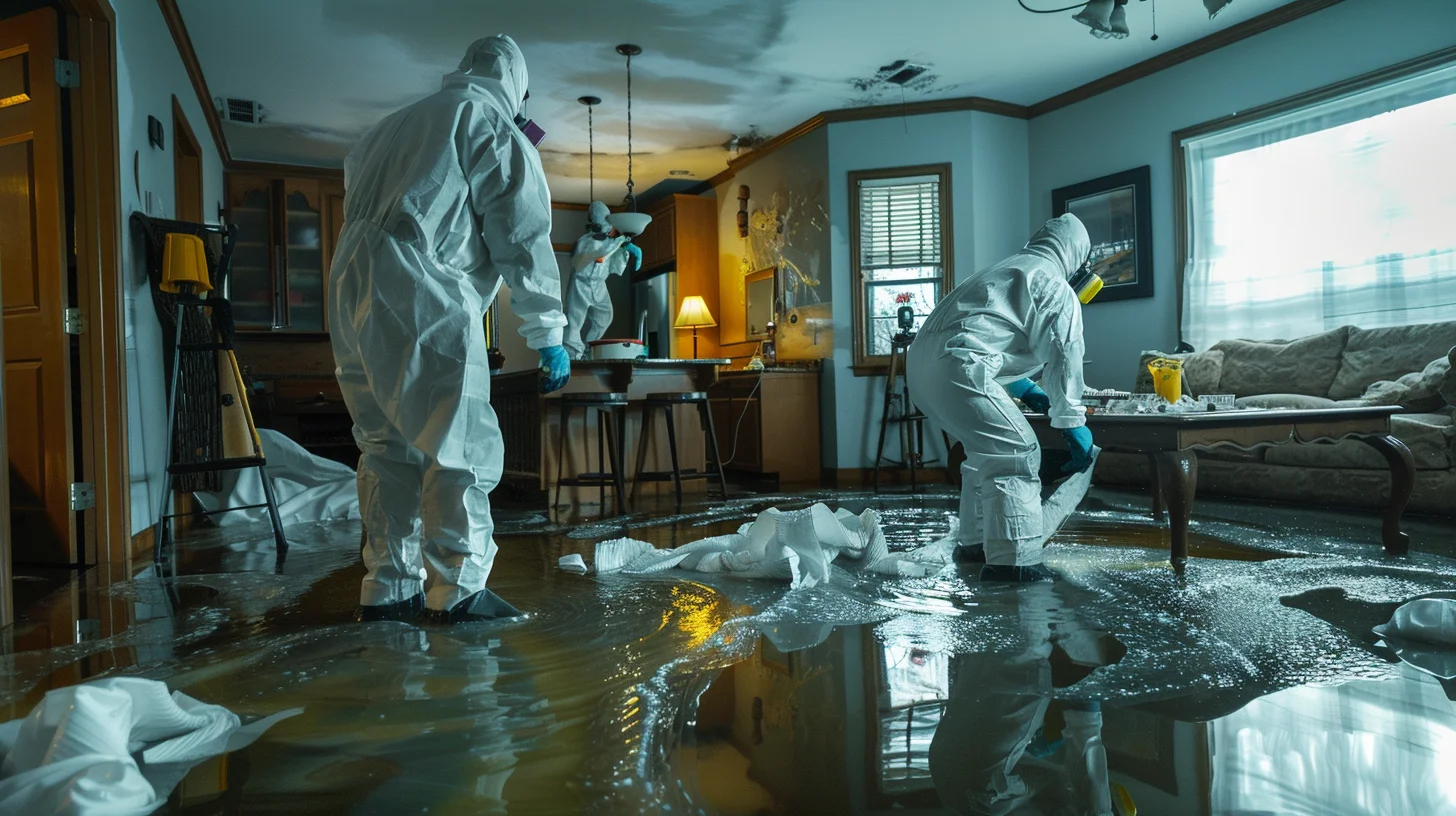
Floodwater from storm surge, river overflow, or sewer backup is classified as Category 3 black water — the most hazardous category of water contamination. It contains sewage pathogens including E. coli, Hepatitis A, norovirus, Salmonella, Cryptosporidium, and chemical contaminants. It cannot be made safe by drying, cleaning, or disinfecting porous materials. It can only be removed.
What Hurricane Floodwater and Sewage Backup Actually Contains
- Fecal coliform bacteria including E. coli — causes severe gastrointestinal illness; can be fatal in immunocompromised individuals
- Hepatitis A virus — transmitted through fecal-oral route; causes acute liver infection; preventable with vaccination
- Norovirus — highly contagious; causes severe vomiting and diarrhea; survives on surfaces for days
- Cryptosporidium and Giardia — parasites resistant to chlorine; causes prolonged gastrointestinal illness
- Leptospira bacteria — from animal urine concentrated in floodwater; causes leptospirosis
- Chemical contaminants — pesticides, petroleum products, heavy metals from industrial sites, cleaning products from flooded homes
- Vibrio vulnificus — in coastal floodwater; dangerous through wound exposure
What Cannot Be Saved After Sewage Backup or Black Water Flooding
The following materials cannot be adequately disinfected after Category 3 water contact and should be removed and discarded:
- ❌ All drywall — porous, will harbor mold and pathogens; must be cut out 12 inches above water line
- ❌ All insulation — absorbs contaminated water and cannot be cleaned
- ❌ Carpet and carpet padding — cannot be adequately cleaned; should be removed entirely
- ❌ Upholstered furniture — foam, fabric, and padding absorb contamination; cannot be cleaned
- ❌ Mattresses and pillows — cannot be cleaned after sewage contact
- ❌ Hardwood flooring — if submerged in Category 3 water; pathogens penetrate wood grain
- ❌ Particle board and OSB — swells, delaminate, and harbor contamination
- ❌ Books, paper, cardboard — cannot be cleaned; photograph important documents before discarding
- ❌ Stuffed animals and children's soft toys — cannot be adequately disinfected
What may potentially be saved:
- ✅ Hard, non-porous surfaces (metal, glass, ceramic tile, solid plastic) — cleaned and disinfected with EPA-registered disinfectant
- ✅ Appliances with metal or hard plastic interiors — cleaned, disinfected, inspected by technician before use
- ✅ Solid wood furniture — if cleaned immediately, disinfected, and dried thoroughly (not guaranteed)
Required Personal Protective Equipment for Sewage Cleanup
- ✅ N95 respirator minimum — protects against airborne biological particles; P100 preferred for heavy contamination
- ✅ Nitrile gloves (mil-rated, not food-service) — at least 6-mil thickness; double-glove for heavy contamination
- ✅ Waterproof boots — no open-toed shoes or sneakers
- ✅ Tyvek suit or dedicated work clothes — clothing that has been in sewage water should not be worn out of the work area
- ✅ Safety glasses or goggles — splashing during cleanup can carry pathogens to mucous membranes
- ✅ Waterproof dressing on all wounds — no exceptions
The Correct Sewage Cleanup Protocol
- Ventilate first — open windows and doors before entering; allow fresh air to circulate for 30 minutes
- Document before touching anything — photograph and video every room
- Remove all porous materials — bag in heavy contractor bags (6 mil minimum) immediately; seal bags before moving
- Remove standing water — wet/dry vacuum, pumps, or professional water extraction
- Clean hard surfaces — remove visible debris and dirt before disinfecting; disinfectant cannot penetrate through soil
- Disinfect — EPA-registered disinfectant (not just bleach) applied to all hard surfaces; follow contact time on label
- Dry thoroughly — industrial fans and dehumidifiers; moisture readings below 15% before rebuilding
- Decontaminate yourself — remove PPE carefully (gloves last), bag work clothes, shower immediately
When to hire professionals: If your home had more than 2 inches of Category 3 water, if you have vulnerable household members, if sewage backup came from municipal lines (rather than your own system), or if you are not able to complete proper PPE and decontamination procedures — hire a licensed water damage restoration contractor. Verify they are IICRC-certified (Institute of Inspection, Cleaning and Restoration Certification).
Frequently Asked Questions
Does my insurance cover sewage backup?
Standard homeowner's insurance typically excludes sewer backup unless you have a specific sewer backup rider. NFIP flood insurance covers direct flood damage but categorizes sewage-related damage differently. Document everything and contact both your homeowner's insurer and your flood insurer — coverage depends on the source of the backup (flood vs. blocked pipe vs. municipal system overflow). A public adjuster can help maximize your claim.
How long is sewage contamination dangerous?
Fecal pathogens can remain viable on surfaces and in materials for weeks to months. Hepatitis A can survive on surfaces for up to a month in the right conditions. Assume contaminated materials remain hazardous until properly removed and disposed of. Do not allow children or pets to access areas that had Category 3 water contact until professional remediation is complete.
Should I get vaccinated before doing sewage cleanup?
Hepatitis A vaccination is strongly recommended for anyone doing hurricane sewage cleanup. The vaccine requires two doses for full protection, but even a single dose provides significant protection. Typhoid vaccination may be warranted if returning to areas with compromised municipal water systems. Consider consulting your physician or visiting a travel health clinic.