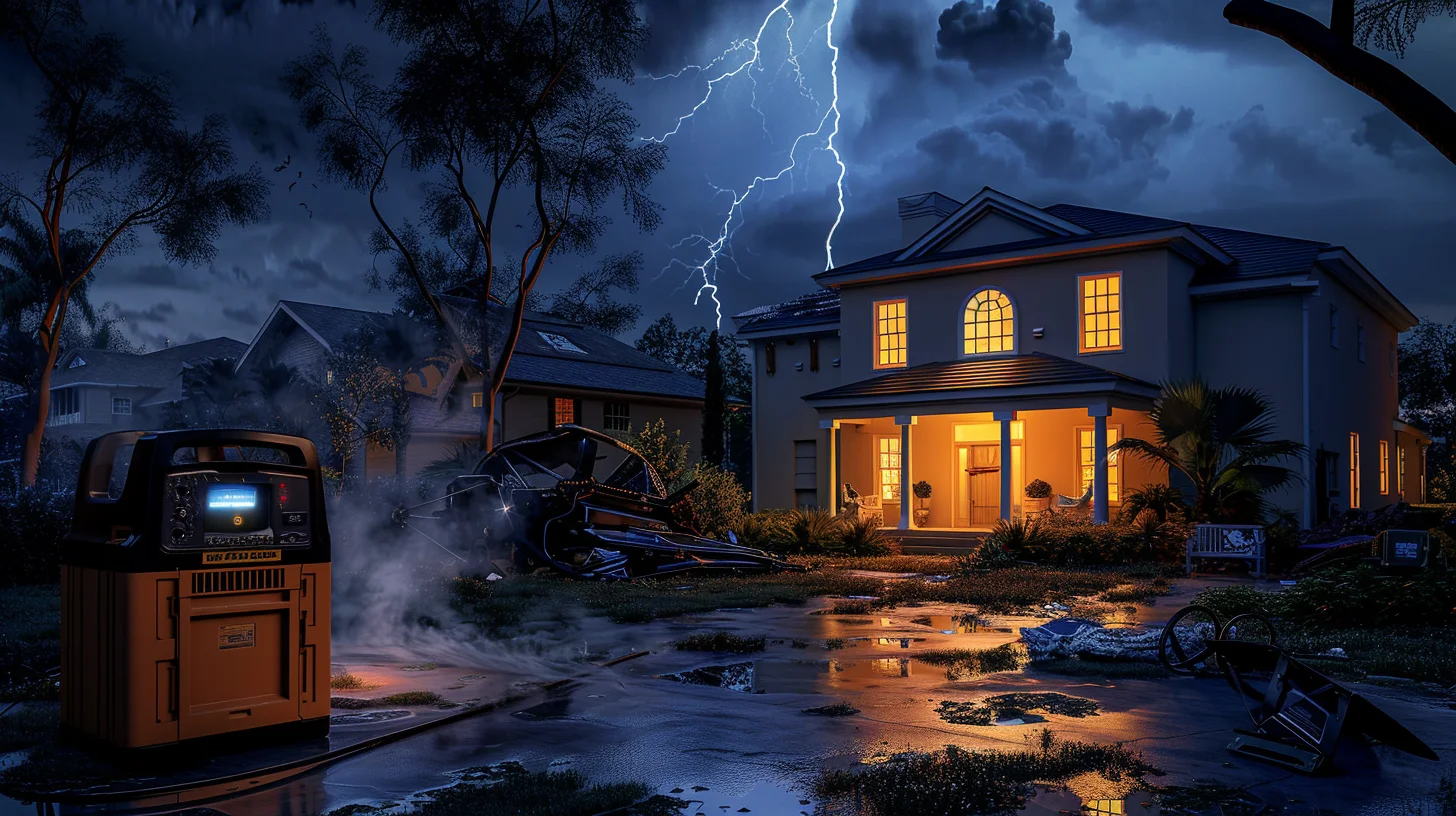
In some years, carbon monoxide poisoning from generators kills more Americans in the days after a hurricane than the storm itself killed during landfall. This is an entirely preventable category of hurricane fatality — and it keeps happening because people do not understand how quickly CO concentrations become dangerous in enclosed or semi-enclosed spaces.
Carbon Monoxide — Why It Kills Without Warning
Carbon monoxide (CO) is produced by any combustion engine or fuel-burning device: generators, gas ranges, charcoal grills, camp stoves, kerosene heaters, and gasoline or propane-powered equipment. It is:
- Colorless — completely invisible
- Odorless — you cannot smell it
- Tasteless — you cannot detect it
- Fast-acting — symptoms begin within minutes at high concentrations
- Deceptive — early symptoms (headache, dizziness, nausea) are easily attributed to fatigue or stress
CO works by binding to hemoglobin in your blood, preventing it from carrying oxygen. At high concentrations, unconsciousness occurs before a person can recognize what is happening. Death follows within minutes to hours depending on concentration and exposure duration.
| CO Level (ppm) | Effect | Time to Onset |
|---|---|---|
| 35 ppm | Headache after 6–8 hours | OSHA permissible limit |
| 200 ppm | Headache, dizziness, nausea | 2–3 hours |
| 400 ppm | Life-threatening after 3 hours | Frontal headache within 1–2 hours |
| 800 ppm | Dizziness, nausea, convulsions | 45 minutes; death within 2–3 hours |
| 1600 ppm | Headache, dizziness, nausea | 20 minutes; death within 1 hour |
Generator Safety — The Rules That Are Not Optional
- ❌ NEVER run a generator indoors — including garages, even with the door open
- ❌ NEVER run a generator on a covered porch or carport — semi-enclosed spaces accumulate CO
- ❌ NEVER run a generator near a window, door, or vent — exhaust enters the living space
- ✅ Run generators outdoors only — minimum 20 feet from any opening in the structure
- ✅ Point exhaust away from the home — not toward windows or doors
- ✅ Install battery-operated CO detectors — on every level of the home, including near sleeping areas
- ✅ Test CO detectors before hurricane season — replace batteries annually
- ✅ If alarm sounds, evacuate immediately — do not stop to investigate; call 911 from outside
Propane Safety After a Hurricane
- ✅ Turn off propane tanks before evacuating — close the main valve on every tank
- ✅ Inspect tanks and connections after returning — look for damage, dents, or displaced regulators
- ✅ Check for leaks before using — apply soapy water to all connections; bubbles indicate a leak
- ✅ Have a professional inspect the system if tanks moved, lines were in floodwater, or damage is visible
- ❌ Never use propane grills or camp stoves indoors — CO and fire risk
- ❌ Never use a propane torch near debris — fire risk is extreme in dry post-hurricane conditions
- ❌ Never smoke near propane equipment — check for leaks first
Natural Gas Line Safety After a Hurricane
Hurricane winds and floodwater can damage natural gas service lines, meters, and interior piping. Before restoring gas service after a hurricane:
- Do not enter a structure if you smell gas — evacuate immediately, do not use light switches or phones inside
- Call your gas utility from outside — or from a neighbor's phone
- If you turned off your gas before the storm — have your gas utility restore service; do not turn it back on yourself
- If your meter was flooded — the utility must inspect before reconnection
- Inspect appliances before relighting pilots — gas appliances that were flooded must be inspected by a qualified technician before use
Natural gas smell: Gas utilities add mercaptan (a sulfur compound) to natural gas specifically so leaks can be detected. If you smell rotten eggs or sulfur, that is a gas leak. Get out and call your utility or 911.
Frequently Asked Questions
Can I run a generator in my garage with the door fully open?
No. This is one of the most common and deadly misconceptions. An open garage door does not provide sufficient ventilation to prevent dangerous CO accumulation. CO can still enter the living space through the door connecting the garage to the house. The generator must be 20 feet from the structure outdoors, with the exhaust pointed away from any openings.
My CO detector went off but I don't smell anything. Is it a false alarm?
CO has no smell — you will never detect it without a detector. If your CO alarm sounds, evacuate immediately. Call 911. Do not re-enter until emergency responders have confirmed the building is safe and the CO source has been identified and eliminated. Do not assume it is a false alarm.
Can I use my gas range to heat my home after the storm?
No. Gas ranges are not designed for space heating and produce CO during extended use. Running a gas range for heating can produce fatal CO concentrations within hours in a closed or minimally ventilated home. Never use a gas range, oven, or camp stove for space heating.