🌀 Hurricane season is activeprotect your Louisiana home  ·  Get protected now →
By State
🌴 Florida⭐ Texas🎷 Louisiana🌊 Mississippi🏖️ Alabama🍑 Georgia🌴 S. Carolina🏔️ N. Carolina🦅 Virginia🦀 Maryland🗽 New Jersey🌆 New York🦞 Massachusetts
Explore
🛡️ Shutter Types🧮 Guides & Calculator🆘 After the Storm✅ Verify a ContractorFree Estimate →💰 Insurance Savings📋 Find an Installer🌀 Storm Alerts
Hurricane Mosquitoes & Standing Water — Disease Risk After the Storm
Hurricane Health Series · Vector Disease Prevention

Hurricane Mosquitoes & Standing Water — Disease Risks After the Storm

Standing water after a hurricane breeds mosquitoes carrying West Nile, Zika, dengue, and Eastern Equine Encephalitis. Learn the exact timelines and what actually works.

397 mi
Coastline
Cat 4
Peak risk
Available
Wind credits
$15–100
Per sq ft
ⓘ General Awareness Notice: This page is provided for general informational purposes only and is not medical, legal, or professional safety advice. In any emergency, call 911 and follow directives from local authorities, FEMA, CDC, and your healthcare provider. Always consult a licensed professional before acting on any information presented here. Full disclaimer →
⚠️ Tales of Caution

When the Storm Passed — The Insects Arrived

Drawn from CDC arboviral disease surveillance reports, Florida Department of Health mosquito-borne illness records, and state public health emergency documentation.

Lee County, Florida — West Nile After Ian

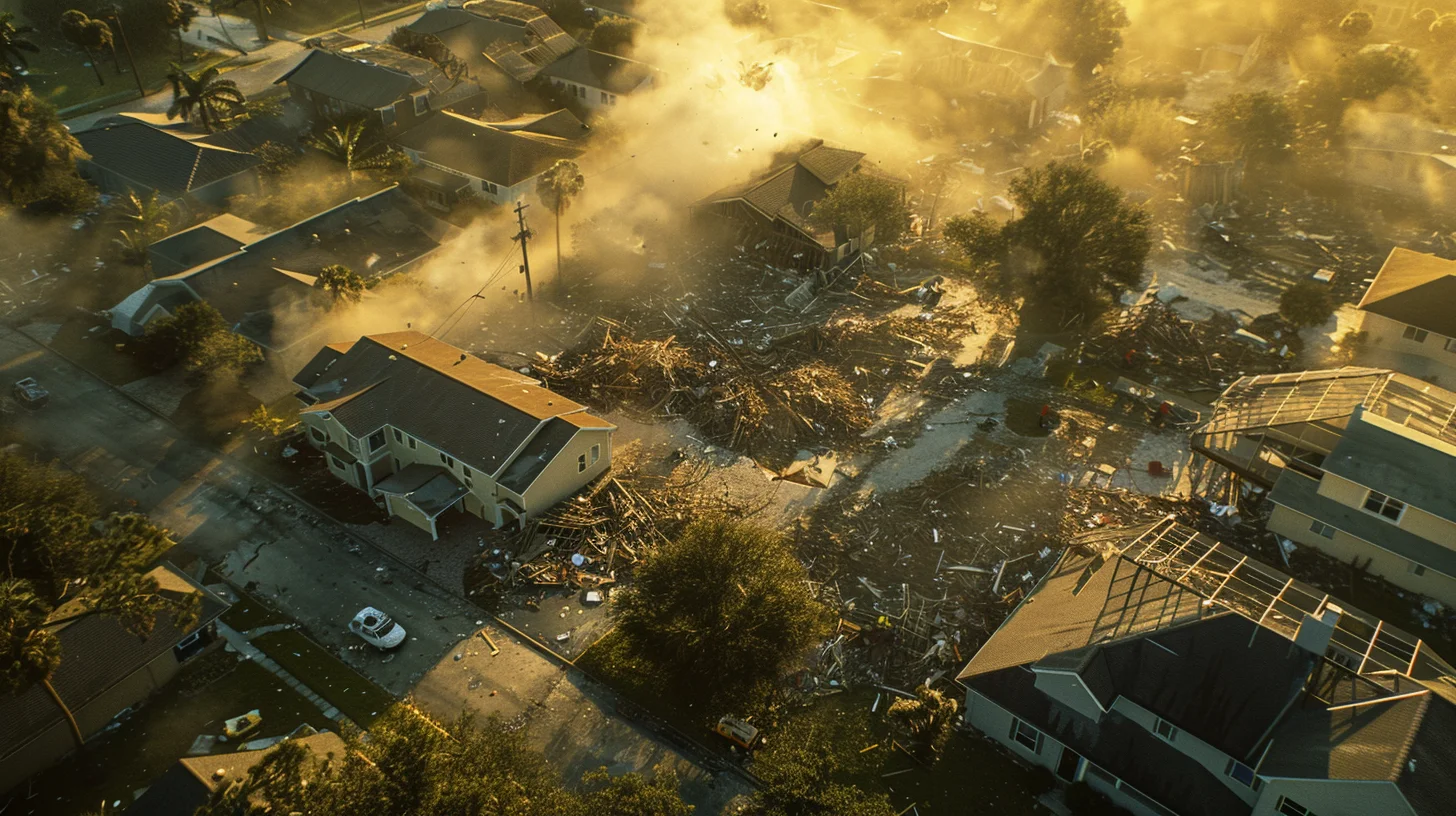
In the weeks following Hurricane Ian's landfall in September 2022, Lee County mosquito control reported trap counts 400% above seasonal baseline. Standing water from Ian's storm surge and rainfall created ideal breeding conditions across thousands of acres — in swimming pools left uncovered during evacuation, in overturned boats, in the debris fields that covered large sections of Fort Myers Beach and Cape Coral.

Florida Department of Health confirmed West Nile Virus cases in Lee County in the weeks following the storm. Cleanup workers spending long hours outdoors in the debris fields were at highest risk — many working without repellent in the chaos of immediate post-storm recovery. One case involved a 58-year-old volunteer from out of state who had never encountered Florida's mosquito populations and was unaware of the post-hurricane surge risk. He developed neuroinvasive West Nile disease requiring hospitalization.

What this means for your home: Post-hurricane mosquito populations are not a nuisance — they are a disease vector emergency. Anyone working outdoors in the weeks after a Gulf or Atlantic hurricane landfall should treat exposed skin and clothing with DEET or permethrin, wear long sleeves during dawn and dusk hours, and eliminate standing water on their property within 48 hours of returning.

Harris County, Texas — The Pool That Became a Breeding Ground

After Hurricane Harvey in 2017, Thomas evacuated his Houston-area home and did not return for three weeks due to road closures and ongoing flooding. His backyard swimming pool — which he had forgotten to treat before leaving — had filled with rainwater and debris during the storm. By the time he returned, it had become what Harris County Mosquito Control later described as "a significant breeding site" — larvae visible throughout the pool.

Thomas and his neighbors spent the following weeks dealing with mosquito populations that the county acknowledged were directly linked to untreated post-Harvey standing water. Two neighbors in his immediate area were later treated for suspected mosquito-borne illness, though confirmed species identification was not completed. "Nobody warned us that the pool would turn into this," Thomas told his neighborhood association. "We were thinking about the flooring and the furniture. Not the pool."

What this means for your home: Before you evacuate for a hurricane, take five minutes to treat your pool with chlorine tablets, cover it if possible, and tip or drain any containers that could collect water. A neglected pool can produce thousands of adult mosquitoes per day within two weeks. If you return to an untreated pool, contact your county mosquito control for larvicide — do not wait.

Sources: CDC Arboviral Diseases Branch surveillance data; Florida Department of Health disease reporting; Harris County Public Health mosquito surveillance records; Lee County Mosquito Control post-Ian reports.

The timeline that matters

Mosquitoes can complete their life cycle — from egg to biting adult — in as little as 7 to 10 days in warm conditions. After a Gulf Coast hurricane in summer, standing water can produce the first wave of new adult mosquitoes within one week of the storm passing. Post-hurricane mosquito populations in affected areas can reach 10 to 100 times normal seasonal levels.

How Fast Mosquitoes Breed

The Mosquito Breeding Timeline After a Hurricane

Days After Storm Mosquito Life Stage Risk Level
Day 1–2Eggs laid in standing waterLow — no biting adults yet
Day 2–4Larvae (wrigglers) in waterWindow to treat water with larvicide
Day 4–7Pupae formingLast window to eliminate before adults emerge
Day 7–10Adult mosquitoes emergeHigh — biting adults, disease transmission possible
Week 2–4Population explosion, multiple generationsPeak risk — populations can reach 100x normal
Diseases They Carry

Mosquito-Borne Diseases Active in Hurricane Zones

  • West Nile Virus — Present in all continental US states. Most infections are mild or asymptomatic, but 1 in 150 develop neuroinvasive disease (encephalitis, meningitis). No vaccine or specific treatment. Elderly and immunocompromised at highest risk of severe outcomes.
  • Eastern Equine Encephalitis (EEE) — Rare but severe. Fatality rate 30–70% in humans who develop encephalitis. Concentrated in Atlantic and Gulf coastal states, particularly Florida, where post-hurricane flooding creates ideal conditions. No vaccine available.
  • Dengue Fever — Transmitted by Aedes aegypti, the same mosquito that breeds in small containers. Active in Florida, Texas border regions, and US territories. Can cause severe flu-like illness; repeat infection with a different strain can cause life-threatening dengue hemorrhagic fever.
  • Zika Virus — Primarily dangerous for pregnant women due to risk of microcephaly in infants. Active in Florida and Gulf states during warm months. Aedes mosquitoes breed in very small amounts of water — a bottle cap is sufficient.
  • St. Louis Encephalitis — Present across the southern and central US. Most infections mild, but elderly at higher risk of encephalitis. Culex mosquitoes that carry it breed prolifically in standing water after floods.
What Actually Works

Protection That Works — and What Doesn't

What works:

  • DEET 20–30% — The gold standard. EPA-registered, proven effective. Reapply every 4–6 hours. Safe for children over 2 months old at concentrations up to 30%.
  • Picaridin 20% — As effective as DEET, odorless, less greasy. Good alternative for those sensitive to DEET. Reapply every 8–12 hours.
  • Permethrin on clothing — Treats fabric, not skin. Kills mosquitoes on contact. Lasts through multiple washes. Essential for cleanup workers spending hours outdoors.
  • Long sleeves and pants at dawn/dusk — Most Culex mosquitoes (West Nile, EEE) are most active at dawn and dusk. Aedes (dengue, Zika) bite all day.

What doesn't work:

  • Citronella candles — minimal effectiveness outdoors in any wind
  • Bug zappers — kill beneficial insects, not mosquitoes
  • Ultrasonic repellers — no scientific evidence of effectiveness
  • Vitamin B12 supplements — studied and found ineffective
  • Dryer sheets — no evidence of repellent properties
Eliminate Standing Water

Standing Water Elimination — The Property Checklist

Within 48 hours of returning to your property, walk every inch and address every water source. Aedes mosquitoes can breed in as little as a teaspoon of water.

  • Flip or drain all containers — flowerpots, buckets, toys, tarps, coolers, anything that holds water
  • Treat or drain swimming pools — shock with chlorine; if draining, ensure no standing water remains
  • Clear gutters — debris-clogged gutters are prime breeding sites
  • Address low spots in yard — fill or grade areas where water pools
  • Treat unmovable standing water — Bti (Bacillus thuringiensis israelensis) larvicide tablets are safe, effective, and available at hardware stores. Brand name: Mosquito Dunks.
  • Contact county mosquito control — most coastal counties have post-hurricane mosquito response programs. Report large breeding sites.
FAQ

Frequently Asked Questions

How long does the post-hurricane mosquito surge last?

Typically 4–8 weeks in areas with significant standing water. Populations peak around weeks 2–3 after the storm and decline as standing water evaporates or is treated. Coordinated county-level aerial larvicide and adulticide programs can significantly shorten the surge period.

Is it safe to let my kids play outside after a hurricane?

With appropriate precautions, yes — but apply EPA-registered repellent (DEET or Picaridin) to any child over 2 months, avoid outdoor activity at dawn and dusk when Culex mosquitoes are most active, and eliminate standing water from your property first. Infants should be kept under mosquito netting outdoors.

Are mosquito foggers safe to use?

County-operated foggers use EPA-registered adulticides and are operated according to strict protocols. Residential foggers are less regulated and have variable effectiveness. If using a residential fogger, follow label directions, keep pets and people indoors during application, and do not apply near water bodies. Fogging kills adult mosquitoes but does not prevent new generations from emerging from untreated standing water.

City guide

Louisiana coastal hurricane shutter guides

Find the guide for your Louisiana city or county.

AbbevilleGulf
Local hurricane shutter guide
View guide →
Baton RougeGulf
Local hurricane shutter guide
View guide →
Cameron ParishGulf
Local hurricane shutter guide
View guide →
ChalmetteGulf
Local hurricane shutter guide
View guide →
CovingtonGulf
Local hurricane shutter guide
View guide →
Golden MeadowGulf
Local hurricane shutter guide
View guide →
GretnaGulf
Local hurricane shutter guide
View guide →
HoumaGulf
Local hurricane shutter guide
View guide →
Iberia ParishGulf
Local hurricane shutter guide
View guide →
KennerGulf
Local hurricane shutter guide
View guide →
Lake CharlesGulf
Local hurricane shutter guide
View guide →
MandevilleGulf
Local hurricane shutter guide
View guide →
MetairieGulf
Local hurricane shutter guide
View guide →
Morgan CityGulf
Local hurricane shutter guide
View guide →
New OrleansGulf
Local hurricane shutter guide
View guide →
Plaquemines ParishGulf
Local hurricane shutter guide
View guide →
SlidellGulf
Local hurricane shutter guide
View guide →
St. Bernard ParishGulf
Local hurricane shutter guide
View guide →
St. Charles ParishGulf
Local hurricane shutter guide
View guide →
ThibodauxGulf
Local hurricane shutter guide
View guide →
💡 Confirm your local wind rating before ordering

Louisiana coastal areas require storm protection rated for local design wind speeds. Verify the rating for your city or county before you buy.

Contractor tips

How to hire a hurricane shutter contractor in Louisiana

Louisiana requires a state contractor license for most work. These steps protect you, especially after a storm.

⚠️ Post-storm contractor flood

After every named storm, out-of-state crews arrive in Louisiana. The state requires a contractor license — verify with the LSLBC before signing anything.

🎒 When You Have to Leave — Go Bag Guides

Shutters protect your home. Your go bag protects your family. We've built the most complete go bag guides online — for every family member and pet, around the 5–7 day Gulf Coast reality.

☣️ Public Health Warning — After Any Hurricane

Waste bags at the curb spread E. coli, Leptospirosis, and Norovirus across entire neighborhoods through rainwater runoff, animal vectors, and children near debris piles. Double-bag all waste. Label it BIOHAZARD. Keep all children and pets away from every curb pile on your street — not just your own.

Full disease prevention guide — all 13 states →
FAQ

Questions Louisiana homeowners ask most

The questions we hear most from Louisiana coastal homeowners.

How much do hurricane shutters cost in Louisiana in 2026?
Louisiana shutter costs run $15–$100 per square foot by type. Storm panels are most affordable; impact windows and roll-downs are highest.
Does Louisiana have a building code for storm protection?
Yes. The statewide Louisiana State Uniform Construction Code (LSUCC) sets elevated wind and flood requirements across coastal parishes. Confirm products meet your parish's wind rating.
What is the hurricane history of Louisiana?
Katrina (2005) caused catastrophic levee failure in New Orleans. Ida (2021) and Laura (2020) were Category 4 landfalls, and Betsy and Audrey devastated earlier generations.
How long does shutter installation take in Louisiana?
From first call to finished install is typically 4–10 weeks. Plan ahead before hurricane season, since demand spikes after every Gulf threat.
Louisiana-specific rules

Louisiana coastal codes, building rules, and insurance — what homeowners must know

Louisiana has about 397 miles of intricate Gulf coastline. Construction follows the statewide LSUCC with elevated design wind speeds and flood elevation rules across coastal parishes.

Louisiana Citizens Property Insurance backs homes that cannot get standard coverage. The Strengthen Louisiana Homes program funds FORTIFIED upgrades, and documented protection can support lower wind premiums.

Key Coastal Counties

Orleans (New Orleans), Jefferson, Plaquemines, St. Bernard, Lafourche, Terrebonne, St. Tammany, Calcasieu (Lake Charles), Cameron, St. Charles

Code & Product Approval

Louisiana builds to the statewide LSUCC, based on the International Residential and Building Codes, with elevated wind and flood requirements across the coastal parishes.

Contractor Licensing

Verify any contractor with the Louisiana State Licensing Board for Contractors (LSLBC). Louisiana requires a state license for most residential and commercial work.

Storm history

Louisiana's hurricane history — Katrina changed everything

Hurricane Katrina (2005) overwhelmed New Orleans' levees and flooded most of the city, becoming one of the costliest and deadliest disasters in US history. It reshaped flood and wind standards across Louisiana.

Hurricane Ida (2021, Cat 4) and Laura (2020, Cat 4) hammered the coast with extreme wind. From Cameron to St. Bernard, no part of the Louisiana coast is safe.

⚠️ Major Louisiana hurricanes

Katrina (2005, ~$125B, levee failure), Ida (2021, Cat 4, ~$75B), Laura (2020, Cat 4, Lake Charles), Rita (2005), Betsy (1965), Audrey (1957)

Protect your Louisiana home

Free estimate · No signup · Results in 60 seconds

Calculate my cost →

General Information Disclaimer: Content on this page is provided for general educational purposes only and is not a substitute for advice from licensed professionals or official emergency management authorities. In any emergency, follow directives from your local emergency management officials and the NOAA National Hurricane Center. Statistical figures reflect published research and industry data; individual results vary. HurricaneShutterCalc.com and Franklyns Bay LLC assume no liability for decisions made based on information on this site. Full disclaimer →