By State
🌴 Florida ⭐ Texas 🎷 Louisiana 🌊 Mississippi 🏖️ Alabama 🍑 Georgia 🌴 South Carolina 🏔️ North Carolina 🦅 Virginia 🦀 Maryland 🗽 New Jersey 🌆 New York 🦞 Massachusetts
Shutter Types
🪗 Accordion ⬇️ Roll-Down 🌺 Bahama 🏛️ Colonial 🛡️ Storm Panels 🕸️ Hurricane Screens 🪟 Impact Windows ↔ Accordion vs Roll-Down ↔ Shutters vs Windows
Guides
🧮 Cost Calculator 🤖 AI Pricing 📋 The Process 🔨 DIY Shutters 🪵 Plywood Guide 🔧 Maintenance 🛒 Supplies 🏷️ AirTags & Security 📋 Family Emergency Plan 🎒 Go Bag Guides
After the Storm
🆘 Disaster Help Hub 🛡️ Post-Storm Safety 🌡️ Heat Safety 🐾 Pets & Livestock 🏠 Roof Tarping 💧 Water Damage 🔌 CPAP & Medical Power 💊 Refrigerated Meds 🌡️ Elderly Heat Safety ⚡ Generator Security 🔍 Find a Lost Pet 🧠 Dementia & Wandering 🌳 Tree Removal Florida Recovery Texas Recovery NC Recovery
Verify Contractor
Florida Texas Georgia North Carolina Virginia New Jersey New York Massachusetts
Free Estimate →
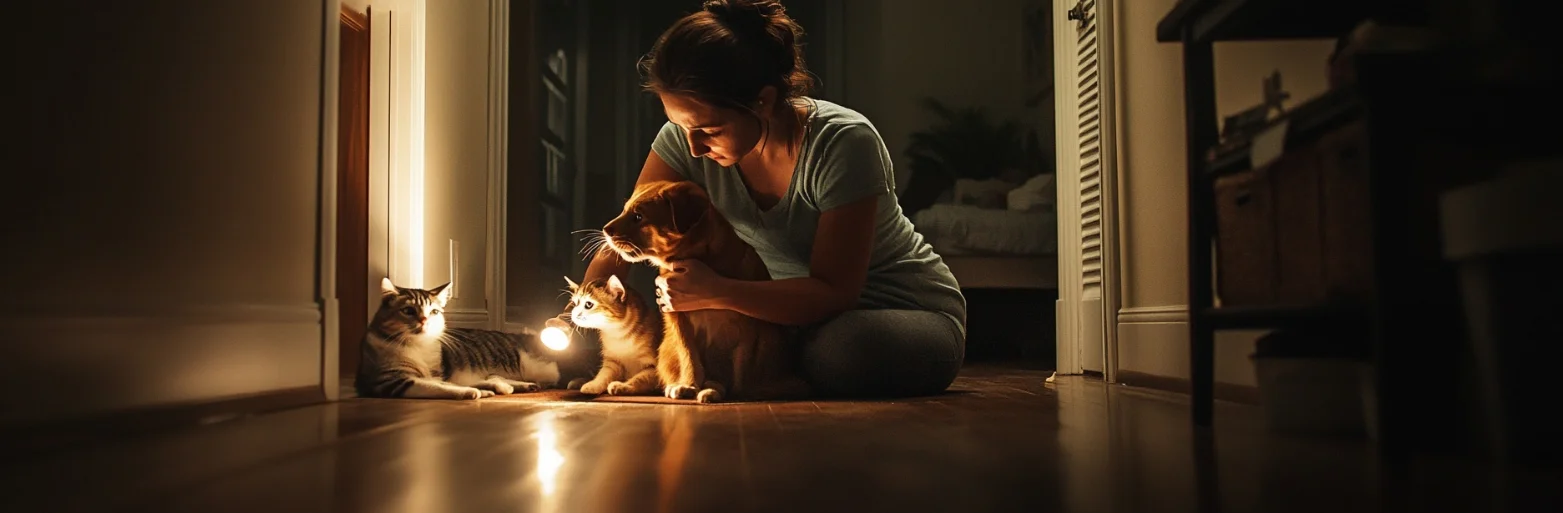
Pet owner keeping a dog and cats close during a hurricane power outage
🐾 Hurricane Prep · Pet Safety

How to Find a Lost Pet
After a Hurricane

More pets are lost in the days around a hurricane than at any other time of year. The noise panics them, fences fail, doors are left open in the rush to evacuate, and floodwater wipes out the scent trails they use to find their way home. Here is how to make sure yours can always be found — and exactly what to do the moment they go missing.

🐾
Why So Many Pets Get Lost in a Storm
The days around a hurricane are the most dangerous of the year for a pet

The wind is howling, the power is out, and in the scramble to get everyone into the car the side gate has been standing open for who knows how long. By the time you notice, your dog is gone — into a flooded, unrecognizable neighborhood. It happens to careful owners every single storm.

Animals experience a hurricane very differently than we do. The drop in barometric pressure, the roar of the wind, and the thunder all trigger blind panic — and a panicked dog or cat runs. Fences blow down, gates swing open, screens tear, and in the rush to evacuate, doors get left open. Once outside, a pet is in unfamiliar, transformed surroundings: the floodwater has washed away the scent trails they normally use to navigate home, and familiar landmarks are gone.

That is why local shelters fill with displaced strays within days of every major storm. The good news is that reunions are common — if the pet can be identified or located. The owners who get their animals back are almost always the ones who set up identification and tracking before the storm, not after.

⚠️ Set this up before storm season — not when a storm is forming

A tracker you order the day a hurricane is named will not arrive in time, and a microchip with an out-of-date phone number is useless. The work of getting your pet home is done in calm weather, weeks ahead. Three layers — a tracker for location, a microchip for permanent ID, and a tag for an instant phone number — cover every way a pet can be found.

🏷️
AirTags & GPS Trackers for Pets
Two different tools — know which one you actually need

An Apple AirTag on the collar is cheap, has no monthly fee, and locates your pet through Apple's Find My network whenever any iPhone passes within Bluetooth range. In a populated Florida neighborhood that is excellent coverage. Its limitation is that it is not live GPS — in a remote or flooded area with few phones around, updates can be sparse.

A cellular GPS tracker solves that: it reports its own real-time location anywhere with cell signal and can send a geofence alert the instant your pet leaves the yard. The trade-off is a monthly subscription and a battery that needs regular charging. For most suburban owners an AirTag is enough; for escape-artist dogs or rural properties, the GPS tracker is worth the fee. Whichever you choose, put it in a waterproof collar holder — your pet will be in rain and floodwater.

← See the complete AirTag & tracking guide for the whole family

OptionRough costMonthly feeBest for
Apple AirTag~$30 (4-pack ~$99)NoneMost suburban pets; no-fee location
Cellular GPS tracker~$30–60~$5–15Escape artists and rural homes — live location

If you do nothing else: clip a ~$30 AirTag in a waterproof holder onto the collar today. It costs less than one night at the boarding kennel — and it is the difference between watching a dot move across a map and stapling flyers to telephone poles.

💉
Microchip & Physical ID — The Reunion Layer
The tracker finds them; the chip and tag get them handed back to you

A microchip is the single most important reunion tool there is, because every shelter and vet scans for one the moment a stray comes in. But a chip only works if the registration is current — a chip pointing at a phone number you had three moves ago reunites no one. Log in to your registry today and confirm your name, phone, and a backup contact are right. Microchipping is done at a vet or low-cost clinic, not online.

Back the chip with physical ID: a collar tag with your cell number gets your pet home in minutes if a neighbor finds them, no scanner required. Add a tag with a second contact in case you are unreachable during the storm. Chip, tag, and tracker together cover every path a lost pet can take back to you.

🔍
If Your Pet Is Already Lost
Move fast and work every channel at once

The first 72 hours matter most. Do these in parallel, not one at a time:

✅ Lost-pet recovery checklist

1. Check the tracker. Open Find My or your GPS app first — you may already have a location.
2. Call and visit every shelter and rescue within 30 miles. Go in person with a photo; staff are overwhelmed and a face-to-face beats a phone log. Re-check daily.
3. Flag the microchip as missing in your registry so any scan triggers an alert.
4. Post everywhere with a clear photo — neighborhood groups, lost-pet networks, and local social media. Include where last seen and your number.
5. Search at dawn and dusk, when frightened animals move and it is quiet. Bring familiar smells and a calm voice.
6. Put up flyers at the search area, vets, and shelters.

Most reunions happen at a shelter within the first week — which is exactly why a current microchip and a tracker are worth setting up long before you ever need them.

🎒
Don't Forget the Pet Go-Bag
Tracking gets them back; the go-bag keeps them safe in the meantime

A pet that is sheltered, fed, and carried safely is far less likely to bolt in the first place. Pack a dedicated pet kit — carrier, several days of food and water, meds, a leash, vaccination records, and a recent photo for identification — and keep it with your own evacuation bag.

We have full, species-by-species packing lists here: Pet & family go-bag guides →

🛒
What to Buy
The three layers that get a pet home, in one place

Buy before storm season. A tracker, a current microchip, and a physical tag cover every way your pet can be found.

As an Amazon Associate we earn from qualifying purchases, at no extra cost to you.
Frequently Asked Questions
Lost pets and pet tracking, answered
How do I find my pet after a hurricane?
Check any tracker first, then contact and visit every local shelter and rescue in person, flag your microchip as missing, post everywhere with a clear photo, and search at dawn and dusk. Most reunions happen at a shelter within the first week.
Do AirTags work on pets?
Yes, on a collar in a waterproof holder. An AirTag locates your pet through Apple's Find My network whenever any iPhone passes nearby. It is not live GPS, so in a remote area a cellular GPS tracker is more reliable for real-time location.
Is a microchip enough to find a lost pet?
A microchip is the most important reunion tool because shelters and vets scan for it — but only if the registration is current, and it gives no location. Pair it with a tracker for location and a tag for an instant phone number.
My pet isn't chipped — what now?
Get a collar ID tag on them today and add an AirTag or GPS tracker, then schedule a microchip at your vet or a low-cost clinic. Until the chip is in, the tag and tracker are doing all the work.
How do pets get lost during a hurricane?
Noise and pressure changes panic them, fences and gates fail, doors are left open during evacuation, and floodwater erases the scent trails they use to navigate home. Shelters fill with strays within days of a major storm.