🌀 Hurricane season is activeprotect your Louisiana home  ·  Get protected now →
By State
🌴 Florida⭐ Texas🎷 Louisiana🌊 Mississippi🏖️ Alabama🍑 Georgia🌴 S. Carolina🏔️ N. Carolina🦅 Virginia🦀 Maryland🗽 New Jersey🌆 New York🦞 Massachusetts
Explore
🛡️ Shutter Types🧮 Guides & Calculator🆘 After the Storm✅ Verify a ContractorFree Estimate →💰 Insurance Savings📋 Find an Installer🌀 Storm Alerts
Hurricane Sewage Backup Cleanup — The Hazard Most Homeowners Ignore
Hurricane Health Series · Sewage & Contamination

Hurricane Sewage Backup — What's In It, What to Toss, and How to Clean It

Sewage backup after a hurricane is one of the most dangerous cleanup situations homeowners face. Learn what pathogens are present, what cannot be saved, and the correct cleanup protocol.

397 mi
Coastline
Cat 4
Peak risk
Available
Wind credits
$15–100
Per sq ft
ⓘ General Awareness Notice: This page is provided for general informational purposes only and is not medical, legal, or professional safety advice. In any emergency, call 911 and follow directives from local authorities, FEMA, CDC, and your healthcare provider. Always consult a licensed professional before acting on any information presented here. Full disclaimer →
⚠️ Tales of Caution

What Nobody Tells You About the Water Left Behind

Drawn from FEMA post-hurricane health assessments, CDC environmental health records, and state public health department sewage overflow documentation.

Baton Rouge, Louisiana — The Floor That Couldn't Be Saved

When Janet returned to her Baton Rouge home after the 2016 Louisiana flood — a flooding event that FEMA called a "500-year flood" — she found her ground floor had been under approximately 3 feet of water for eight days. The water had receded, and the floors appeared dry. She began planning which belongings to keep and which to discard, and called a contractor about replacing the flooring.

A public health outreach worker from the Louisiana Department of Health knocked on her door during a post-flood community assessment. After learning that the floodwater had been in contact with her septic system — which had backed up during the flood — the worker advised Janet that the category of the water contamination meant everything porous that had been in contact with it needed to be removed: flooring, drywall, insulation, and all soft furnishings. Janet had been planning to keep her hardwood floors and have them refinished. The worker explained that even hardwood floors that appear dry after sewage water exposure harbor pathogens in the wood grain that cleaning cannot fully eliminate.

Janet was devastated. "I thought the floors could be saved. I couldn't afford to replace everything." Her public health advocate helped her document the contamination category for her flood insurance claim, which ultimately covered the flooring replacement. But the lesson — that sewage-contaminated materials cannot be cleaned, only removed — was one she had not heard before the flood.

What this means for your home: Water contamination in hurricane flooding is categorized by health authorities as Category 1 (clean water), Category 2 (gray water with some contamination), or Category 3 (black water — sewage, floodwater from rivers and canals, or any water that has been standing long enough to grow bacteria). If your home flooded from storm surge, river overflow, or sewer backup, assume Category 3. Category 3 materials cannot be cleaned and retained — they should be removed.

Houston, Texas — The Cleanup Worker Who Got Hepatitis A

After Hurricane Harvey, a 34-year-old contractor named Kevin spent two weeks doing residential cleanup work in the Houston area. He wore work gloves but not nitrile gloves specifically rated for biological hazard protection. He wore a dust mask but not a respirator rated for biological particles. He frequently ate lunch on-site, washing his hands with hand sanitizer rather than soap and water.

Six weeks after beginning cleanup work, Kevin was diagnosed with Hepatitis A. His physician determined the exposure had most likely occurred through hand-to-mouth contact during his cleanup work — specifically through inadequate hand decontamination before eating. Harvey's floodwater had contacted the Houston-area sewer system extensively, and the floodwater and mud left in homes he had worked in was heavily contaminated with fecal matter containing Hepatitis A virus.

"I didn't think about hepatitis," Kevin told his county health department contact during contact tracing. "I thought about not stepping in anything or breathing in mold. I didn't think about my hands."

What this means for your home: Hand hygiene during post-hurricane cleanup is not optional. Soap and water — not hand sanitizer alone — is required to remove the fecal pathogens present in sewage-contaminated environments. Do not eat, drink, smoke, or touch your face during cleanup without first washing your hands thoroughly with soap and water. If running water is not available, use hand sanitizer as an interim measure but wash with soap and water at the first opportunity.

Sources: Louisiana Department of Health 2016 flood health assessment; Texas DSHS Hurricane Harvey environmental health reports; CDC Hepatitis A outbreak investigation records.

The contamination category that changes everything

Floodwater from storm surge, river overflow, or sewer backup is classified as Category 3 black water — the most hazardous category of water contamination. It contains sewage pathogens including E. coli, Hepatitis A, norovirus, Salmonella, Cryptosporidium, and chemical contaminants. It cannot be made safe by drying, cleaning, or disinfecting porous materials. It can only be removed.

What's In Sewage Water

What Hurricane Floodwater and Sewage Backup Actually Contains

  • Fecal coliform bacteria including E. coli — causes severe gastrointestinal illness; can be fatal in immunocompromised individuals
  • Hepatitis A virus — transmitted through fecal-oral route; causes acute liver infection; preventable with vaccination
  • Norovirus — highly contagious; causes severe vomiting and diarrhea; survives on surfaces for days
  • Cryptosporidium and Giardia — parasites resistant to chlorine; causes prolonged gastrointestinal illness
  • Leptospira bacteria — from animal urine concentrated in floodwater; causes leptospirosis
  • Chemical contaminants — pesticides, petroleum products, heavy metals from industrial sites, cleaning products from flooded homes
  • Vibrio vulnificus — in coastal floodwater; dangerous through wound exposure
What You Cannot Save

What Cannot Be Saved After Sewage Backup or Black Water Flooding

The following materials cannot be adequately disinfected after Category 3 water contact and should be removed and discarded:

  • All drywall — porous, will harbor mold and pathogens; must be cut out 12 inches above water line
  • All insulation — absorbs contaminated water and cannot be cleaned
  • Carpet and carpet padding — cannot be adequately cleaned; should be removed entirely
  • Upholstered furniture — foam, fabric, and padding absorb contamination; cannot be cleaned
  • Mattresses and pillows — cannot be cleaned after sewage contact
  • Hardwood flooring — if submerged in Category 3 water; pathogens penetrate wood grain
  • Particle board and OSB — swells, delaminate, and harbor contamination
  • Books, paper, cardboard — cannot be cleaned; photograph important documents before discarding
  • Stuffed animals and children's soft toys — cannot be adequately disinfected

What may potentially be saved:

  • ✅ Hard, non-porous surfaces (metal, glass, ceramic tile, solid plastic) — cleaned and disinfected with EPA-registered disinfectant
  • ✅ Appliances with metal or hard plastic interiors — cleaned, disinfected, inspected by technician before use
  • ✅ Solid wood furniture — if cleaned immediately, disinfected, and dried thoroughly (not guaranteed)
Required PPE

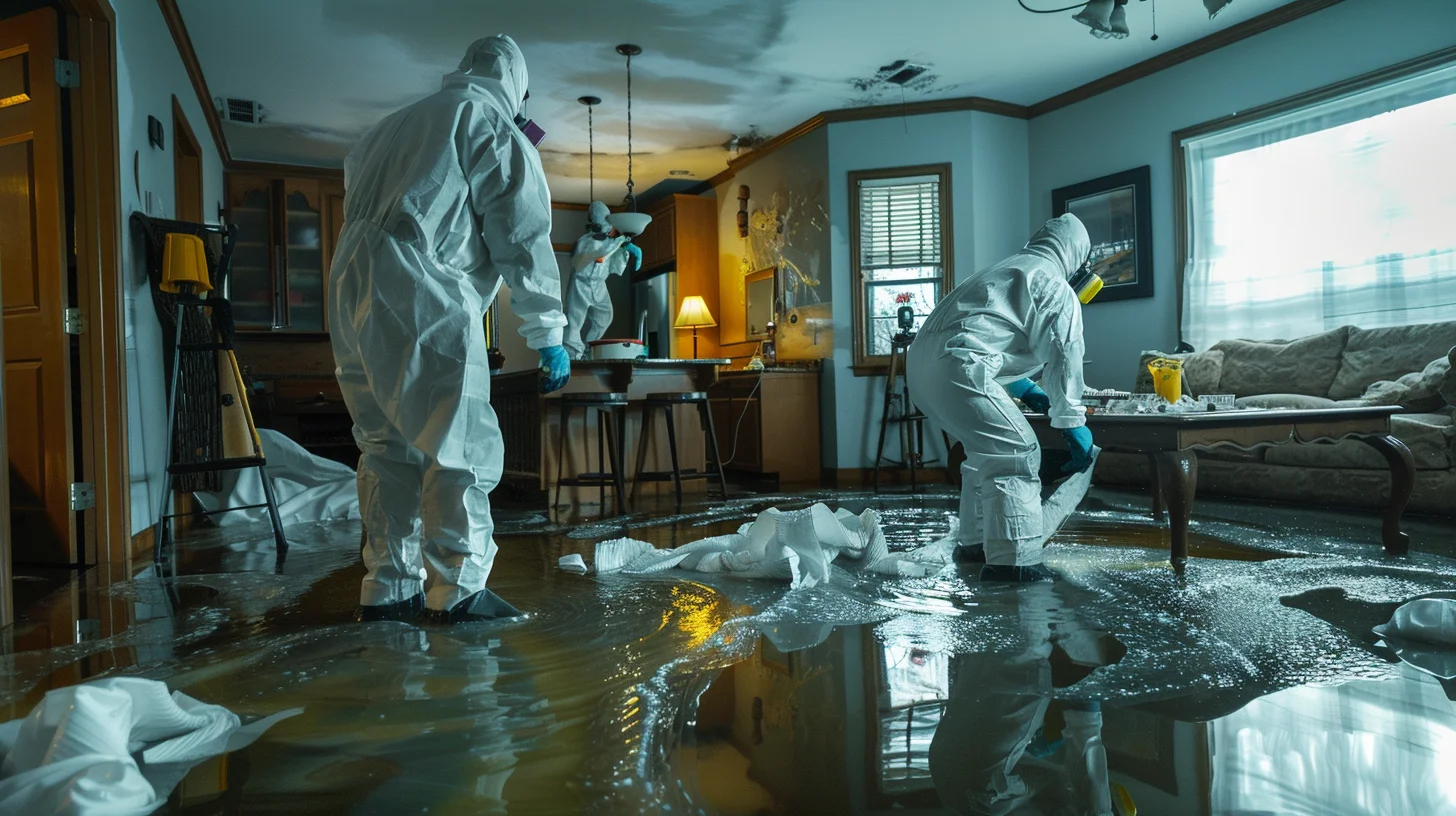
Required Personal Protective Equipment for Sewage Cleanup

  • N95 respirator minimum — protects against airborne biological particles; P100 preferred for heavy contamination
  • Nitrile gloves (mil-rated, not food-service) — at least 6-mil thickness; double-glove for heavy contamination
  • Waterproof boots — no open-toed shoes or sneakers
  • Tyvek suit or dedicated work clothes — clothing that has been in sewage water should not be worn out of the work area
  • Safety glasses or goggles — splashing during cleanup can carry pathogens to mucous membranes
  • Waterproof dressing on all wounds — no exceptions
Cleanup Protocol

The Correct Sewage Cleanup Protocol

  1. Ventilate first — open windows and doors before entering; allow fresh air to circulate for 30 minutes
  2. Document before touching anything — photograph and video every room
  3. Remove all porous materials — bag in heavy contractor bags (6 mil minimum) immediately; seal bags before moving
  4. Remove standing water — wet/dry vacuum, pumps, or professional water extraction
  5. Clean hard surfaces — remove visible debris and dirt before disinfecting; disinfectant cannot penetrate through soil
  6. Disinfect — EPA-registered disinfectant (not just bleach) applied to all hard surfaces; follow contact time on label
  7. Dry thoroughly — industrial fans and dehumidifiers; moisture readings below 15% before rebuilding
  8. Decontaminate yourself — remove PPE carefully (gloves last), bag work clothes, shower immediately

When to hire professionals: If your home had more than 2 inches of Category 3 water, if you have vulnerable household members, if sewage backup came from municipal lines (rather than your own system), or if you are not able to complete proper PPE and decontamination procedures — hire a licensed water damage restoration contractor. Verify they are IICRC-certified (Institute of Inspection, Cleaning and Restoration Certification).

FAQ

Frequently Asked Questions

Does my insurance cover sewage backup?

Standard homeowner's insurance typically excludes sewer backup unless you have a specific sewer backup rider. NFIP flood insurance covers direct flood damage but categorizes sewage-related damage differently. Document everything and contact both your homeowner's insurer and your flood insurer — coverage depends on the source of the backup (flood vs. blocked pipe vs. municipal system overflow). A public adjuster can help maximize your claim.

How long is sewage contamination dangerous?

Fecal pathogens can remain viable on surfaces and in materials for weeks to months. Hepatitis A can survive on surfaces for up to a month in the right conditions. Assume contaminated materials remain hazardous until properly removed and disposed of. Do not allow children or pets to access areas that had Category 3 water contact until professional remediation is complete.

Should I get vaccinated before doing sewage cleanup?

Hepatitis A vaccination is strongly recommended for anyone doing hurricane sewage cleanup. The vaccine requires two doses for full protection, but even a single dose provides significant protection. Typhoid vaccination may be warranted if returning to areas with compromised municipal water systems. Consider consulting your physician or visiting a travel health clinic.

City guide

Louisiana coastal hurricane shutter guides

Find the guide for your Louisiana city or county.

AbbevilleGulf
Local hurricane shutter guide
View guide →
Baton RougeGulf
Local hurricane shutter guide
View guide →
Cameron ParishGulf
Local hurricane shutter guide
View guide →
ChalmetteGulf
Local hurricane shutter guide
View guide →
CovingtonGulf
Local hurricane shutter guide
View guide →
Golden MeadowGulf
Local hurricane shutter guide
View guide →
GretnaGulf
Local hurricane shutter guide
View guide →
HoumaGulf
Local hurricane shutter guide
View guide →
Iberia ParishGulf
Local hurricane shutter guide
View guide →
KennerGulf
Local hurricane shutter guide
View guide →
Lake CharlesGulf
Local hurricane shutter guide
View guide →
MandevilleGulf
Local hurricane shutter guide
View guide →
MetairieGulf
Local hurricane shutter guide
View guide →
Morgan CityGulf
Local hurricane shutter guide
View guide →
New OrleansGulf
Local hurricane shutter guide
View guide →
Plaquemines ParishGulf
Local hurricane shutter guide
View guide →
SlidellGulf
Local hurricane shutter guide
View guide →
St. Bernard ParishGulf
Local hurricane shutter guide
View guide →
St. Charles ParishGulf
Local hurricane shutter guide
View guide →
ThibodauxGulf
Local hurricane shutter guide
View guide →
💡 Confirm your local wind rating before ordering

Louisiana coastal areas require storm protection rated for local design wind speeds. Verify the rating for your city or county before you buy.

Contractor tips

How to hire a hurricane shutter contractor in Louisiana

Louisiana requires a state contractor license for most work. These steps protect you, especially after a storm.

⚠️ Post-storm contractor flood

After every named storm, out-of-state crews arrive in Louisiana. The state requires a contractor license — verify with the LSLBC before signing anything.

🎒 When You Have to Leave — Go Bag Guides

Shutters protect your home. Your go bag protects your family. We've built the most complete go bag guides online — for every family member and pet, around the 5–7 day Gulf Coast reality.

☣️ Public Health Warning — After Any Hurricane

Waste bags at the curb spread E. coli, Leptospirosis, and Norovirus across entire neighborhoods through rainwater runoff, animal vectors, and children near debris piles. Double-bag all waste. Label it BIOHAZARD. Keep all children and pets away from every curb pile on your street — not just your own.

Full disease prevention guide — all 13 states →
FAQ

Questions Louisiana homeowners ask most

The questions we hear most from Louisiana coastal homeowners.

How much do hurricane shutters cost in Louisiana in 2026?
Louisiana shutter costs run $15–$100 per square foot by type. Storm panels are most affordable; impact windows and roll-downs are highest.
Does Louisiana have a building code for storm protection?
Yes. The statewide Louisiana State Uniform Construction Code (LSUCC) sets elevated wind and flood requirements across coastal parishes. Confirm products meet your parish's wind rating.
What is the hurricane history of Louisiana?
Katrina (2005) caused catastrophic levee failure in New Orleans. Ida (2021) and Laura (2020) were Category 4 landfalls, and Betsy and Audrey devastated earlier generations.
How long does shutter installation take in Louisiana?
From first call to finished install is typically 4–10 weeks. Plan ahead before hurricane season, since demand spikes after every Gulf threat.
Louisiana-specific rules

Louisiana coastal codes, building rules, and insurance — what homeowners must know

Louisiana has about 397 miles of intricate Gulf coastline. Construction follows the statewide LSUCC with elevated design wind speeds and flood elevation rules across coastal parishes.

Louisiana Citizens Property Insurance backs homes that cannot get standard coverage. The Strengthen Louisiana Homes program funds FORTIFIED upgrades, and documented protection can support lower wind premiums.

Key Coastal Counties

Orleans (New Orleans), Jefferson, Plaquemines, St. Bernard, Lafourche, Terrebonne, St. Tammany, Calcasieu (Lake Charles), Cameron, St. Charles

Code & Product Approval

Louisiana builds to the statewide LSUCC, based on the International Residential and Building Codes, with elevated wind and flood requirements across the coastal parishes.

Contractor Licensing

Verify any contractor with the Louisiana State Licensing Board for Contractors (LSLBC). Louisiana requires a state license for most residential and commercial work.

Storm history

Louisiana's hurricane history — Katrina changed everything

Hurricane Katrina (2005) overwhelmed New Orleans' levees and flooded most of the city, becoming one of the costliest and deadliest disasters in US history. It reshaped flood and wind standards across Louisiana.

Hurricane Ida (2021, Cat 4) and Laura (2020, Cat 4) hammered the coast with extreme wind. From Cameron to St. Bernard, no part of the Louisiana coast is safe.

⚠️ Major Louisiana hurricanes

Katrina (2005, ~$125B, levee failure), Ida (2021, Cat 4, ~$75B), Laura (2020, Cat 4, Lake Charles), Rita (2005), Betsy (1965), Audrey (1957)

Protect your Louisiana home

Free estimate · No signup · Results in 60 seconds

Calculate my cost →

General Information Disclaimer: Content on this page is provided for general educational purposes only and is not a substitute for advice from licensed professionals or official emergency management authorities. In any emergency, follow directives from your local emergency management officials and the NOAA National Hurricane Center. Statistical figures reflect published research and industry data; individual results vary. HurricaneShutterCalc.com and Franklyns Bay LLC assume no liability for decisions made based on information on this site. Full disclaimer →