🌀 Hurricane season is activeprotect your Louisiana home  ·  Get protected now →
By State
🌴 Florida⭐ Texas🎷 Louisiana🌊 Mississippi🏖️ Alabama🍑 Georgia🌴 S. Carolina🏔️ N. Carolina🦅 Virginia🦀 Maryland🗽 New Jersey🌆 New York🦞 Massachusetts
Explore
🛡️ Shutter Types🧮 Guides & Calculator🆘 After the Storm✅ Verify a ContractorFree Estimate →💰 Insurance Savings📋 Find an Installer🌀 Storm Alerts
Hurricane Returning Home Checklist — Don't Go Back Until You Read This
Hurricane Recovery Series · Returning Home Safely

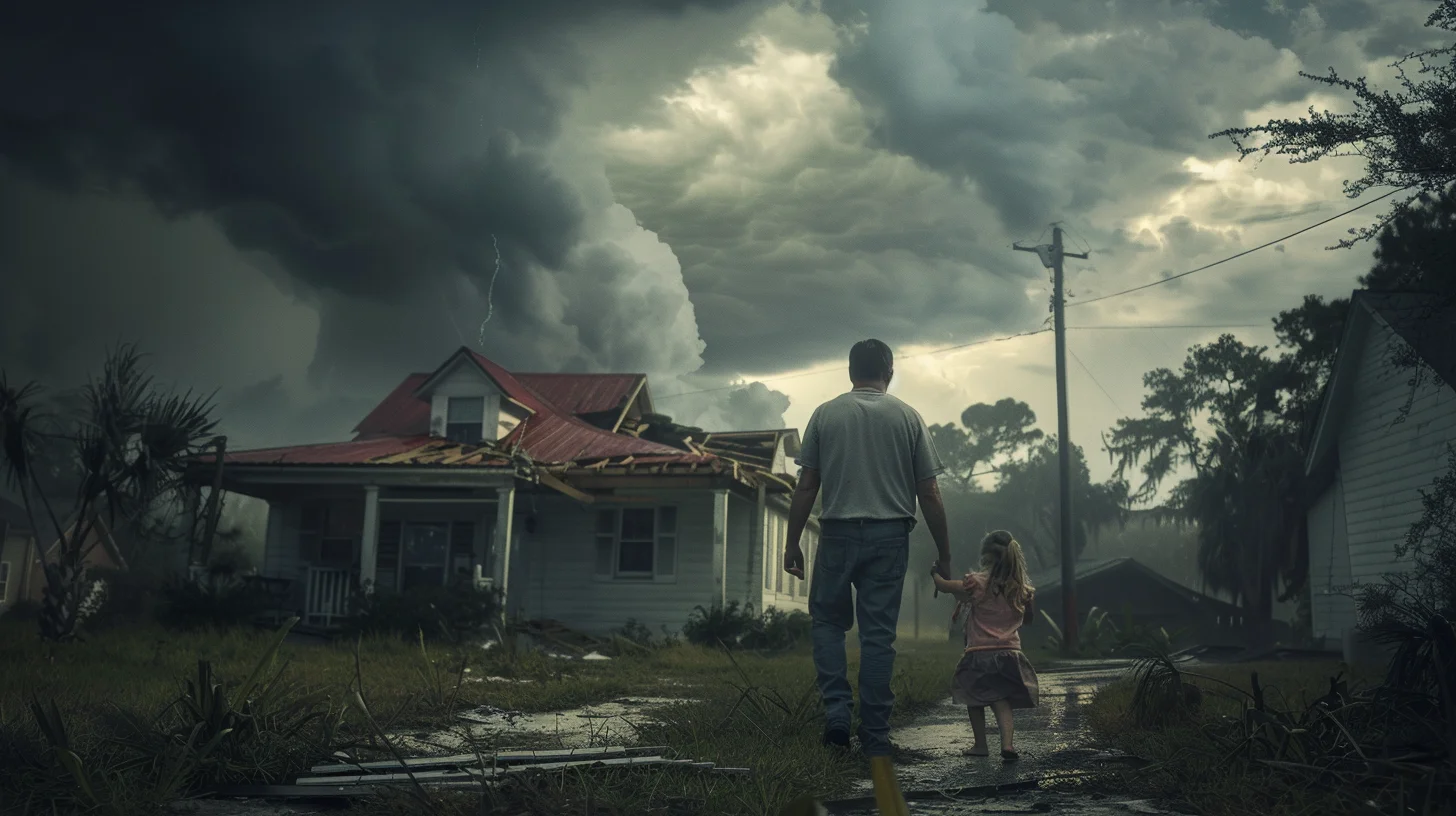
Returning Home After a Hurricane — The Checklist That Could Save Your Life

Returning home too soon or without checking the right things kills people after every hurricane. This is the complete room-by-room checklist for safely re-entering after a storm.

397 mi
Coastline
Cat 4
Peak risk
Available
Wind credits
$15–100
Per sq ft
ⓘ General Awareness Notice: This page is provided for general informational purposes only and is not medical, legal, or professional safety advice. In any emergency, call 911 and follow directives from local authorities, FEMA, CDC, and your healthcare provider. Always consult a licensed professional before acting on any information presented here. Full disclaimer →
⚠️ Tales of Caution

They Made It Through the Storm. They Didn't Make It Home.

Drawn from FEMA post-disaster fatality reports, CDC injury surveillance, state medical examiner records, and documented post-hurricane re-entry incident reports.

Collier County, Florida — The Roof That Looked Intact

Three days after Hurricane Ian made landfall, James returned to his home in a Collier County neighborhood that had sustained significant wind damage but had not flooded. From the street, the house appeared largely intact — the roof looked fine, the walls were standing, the windows he had shuttered were undamaged. He entered through the front door and began assessing damage.

What James could not see from outside was that the roof decking in the northeast corner of the house had been completely lifted and reseated by the wind — appearing intact but with its structural connections to the trusses compromised. As he moved through the master bedroom, a section of roof approximately 12 feet by 8 feet came down. He was struck by roof framing and drywall debris. He survived with a fractured arm and significant lacerations. The Collier County building department inspector who later assessed the home said the damage was not detectable from the exterior.

What this means for your home: A roof that looks intact from the street after a hurricane may be structurally compromised. Before entering any area of your home that sustained wind damage — and before entering the attic for any reason — be aware that overhead structural elements may have been weakened. Move through the home quickly on a first pass, looking up as you move. Do not linger under any area that shows ceiling damage, sagging, or water staining that could indicate wet, heavy debris above.

Harris County, Texas — The Floodwater That Hadn't Receded

After Hurricane Harvey flooded large sections of Harris County, authorities issued re-entry orders for some neighborhoods before others. Michael, who lived in a neighborhood that had been cleared for re-entry, decided to check on his mother's home in an adjacent neighborhood that had not yet been cleared, believing the flooding there had receded. He drove into the neighborhood using back streets to avoid checkpoints.

The street in front of his mother's home appeared to have only a few inches of water — passable by his truck. What Michael did not know was that the road surface had been undermined by the flooding, and beneath the thin layer of visible water, the road had collapsed. His truck dropped into a sinkhole approximately 4 feet deep. The vehicle stalled in water. Michael was trapped and required water rescue. He was unharmed. The rescue took three hours and diverted resources from other life-safety operations.

What this means for your home: Re-entry orders exist because authorities have assessed road conditions, utility safety, and structural hazards that you cannot assess from your car. Avoid re-entering a neighborhood before the official all-clear, regardless of what conditions look like from the perimeter. A thin layer of water over a road does not indicate what is beneath the road surface. If you drive into floodwater and your vehicle stalls, do not attempt to exit into the water — call for help and remain in the vehicle unless the water is actively rising.

St. Tammany Parish, Louisiana — The Gas Leak Nobody Smelled

After Hurricane Katrina, residents returning to St. Tammany Parish reported multiple incidents of gas leaks in homes that had sustained wind damage. In one documented case, a homeowner returned to find his home apparently undamaged, entered, and immediately began assessing. He did not smell gas. He did not check the gas meter. He plugged in a power strip to check if power had been restored and a spark from the plug triggered an explosion from accumulated natural gas in the enclosed space.

He survived with second-degree burns to his hands and arms. The gas company inspection found a cracked fitting at the meter that had allowed gas to accumulate inside the closed-up house over the three days since the storm. "I walked through the whole house before I plugged anything in," he said. "I didn't smell anything. I had no idea the gas was in there."

What this means for your home: Before entering a home after a hurricane, open doors and windows and allow fresh air in for a minimum of 5 minutes before entering. Do not turn on light switches, use lighters, or plug in any electrical equipment immediately upon entering. If you smell gas at any point, leave immediately and call your gas utility. Natural gas detectors are available at hardware stores and provide an additional layer of protection.

Sources: Collier County Building Department post-Ian incident reports; Harris County Flood Control post-Harvey re-entry records; Louisiana Department of Natural Resources post-Katrina gas leak documentation; FEMA post-disaster fatality investigation summaries.

The re-entry window that matters

More people die during post-hurricane re-entry and cleanup than in many storms during actual landfall. Falls from damaged structures, electrocution from downed lines and flooded panels, gas leaks, structural collapses, and carbon monoxide from generators collectively account for a significant share of hurricane-related fatalities. Re-entry is not the end of danger — it is the beginning of a new category of risk.

Before You Enter

Before You Enter — The Exterior Check

  • Confirm official re-entry authorization — do not re-enter before local authorities have cleared your area
  • Walk the perimeter first — check foundation for cracks, walls for visible lean, roof for obvious structural damage
  • Check for downed power lines — do not approach any downed line; assume all downed lines are energized
  • Look for propane tank displacement — if tank has moved, do not approach; call your gas utility
  • Check for standing water around foundation — note depth before entering
  • Open all doors and windows remotely first — allow fresh air in before entering; use a long tool to push doors open from outside if structure integrity is uncertain
  • Wait 5 minutes — for gas to dissipate before entering
  • If you smell gas — do not enter — leave the area immediately, call your gas utility
The First 60 Seconds

The First 60 Seconds Inside

Move through the home quickly on an initial safety pass before stopping to assess damage or retrieve belongings. In the first 60 seconds:

  1. Look up — check ceiling for sagging, water damage, or structural debris before standing under any area
  2. Do not touch light switches — do not restore power at the breaker until the home has been inspected
  3. Check for standing water inside — any interior flooding means treat all electrical systems as energized and dangerous
  4. Smell for gas — if you detect any sulfur or rotten egg smell, exit immediately
  5. Note structural damage — walls that are bowed, floors that feel soft, or doors that will not open or close may indicate structural compromise
  6. Exit and call a professional if any of the above are present before proceeding
Room-by-Room Checklist

Room-by-Room Safety Checklist

Electrical panel / utility room:

  • Do not restore power if panel was flooded or if there is any standing water
  • If panel appears dry and there is no flooding, have an electrician inspect before restoring
  • Turn off individual circuit breakers before restoring main power

Kitchen:

  • Do not use gas appliances until gas has been confirmed safe
  • Discard all food that was in a refrigerator that lost power for more than 4 hours
  • Do not use tap water until boil water order status is confirmed
  • Check under sink for water damage and mold

Bathrooms:

  • Do not flush toilets until sewer system is confirmed operational — may cause sewage backup
  • Check under vanity and around toilet base for water damage

Attic:

  • Do not enter attic until roof has been assessed — compromised roof decking may give way
  • If you must enter, test each step before committing weight
  • Check for roof penetrations that would allow water to damage structure
Utilities & Systems

Utilities — How to Restore Them Safely

  • Electricity: Do not restore power to a flooded home without electrician inspection. If home did not flood, have an electrician assess before restoring main power. Restore circuit by circuit, not all at once.
  • Natural gas: If you turned off gas before the storm, your gas utility must restore service — do not do it yourself. If gas is still on, check for damage before using any appliances.
  • Water: Check for boil water order status before using tap water. If on a private well that flooded, do not use until tested.
  • HVAC: If unit was flooded, do not run until inspected. Running a flooded HVAC distributes contaminated water and mold spores through the home.
  • Septic system: If property flooded, have septic system inspected before use — flooding can displace tanks and damage drain fields.
When to Leave Again

When to Leave Your Home Again After Returning

Leave immediately and call 911 if you find any of the following:

  • Gas smell anywhere in or around the structure
  • Downed power line touching or near your home
  • Significant structural damage — walls leaning, large roof sections missing, foundation cracks
  • Active water intrusion from above (rain still entering)
  • CO alarm activation
  • Standing water in the electrical panel
FAQ

Frequently Asked Questions

How do I know if my home is structurally safe to occupy?

If your home sustained significant structural damage — roof sections missing, walls displaced, foundation cracking — you need a structural assessment by a licensed engineer before occupation. Many counties set up rapid assessment programs after major hurricanes where inspectors tag homes as safe (green), limited entry (yellow), or unsafe (red). Do not occupy a yellow- or red-tagged home.

Can I stay in my home if it smells musty?

A musty smell indicates mold growth. Mold that has grown significantly after flooding can cause respiratory irritation and, with prolonged exposure, more serious health effects. Have the home assessed by a certified industrial hygienist before occupying full-time if there is significant musty odor. Children, elderly, and immunocompromised individuals are advised not to occupy a home with significant mold growth.

When can children and elderly family members return?

Children and elderly family members are advised not to return to a home that flooded until all water has been removed, damaged materials have been removed, the home has been dried to normal moisture levels, and mold assessment has been completed. These groups are more vulnerable to the respiratory, chemical, and biological hazards present in post-hurricane environments.

City guide

Louisiana coastal hurricane shutter guides

Find the guide for your Louisiana city or county.

AbbevilleGulf
Local hurricane shutter guide
View guide →
Baton RougeGulf
Local hurricane shutter guide
View guide →
Cameron ParishGulf
Local hurricane shutter guide
View guide →
ChalmetteGulf
Local hurricane shutter guide
View guide →
CovingtonGulf
Local hurricane shutter guide
View guide →
Golden MeadowGulf
Local hurricane shutter guide
View guide →
GretnaGulf
Local hurricane shutter guide
View guide →
HoumaGulf
Local hurricane shutter guide
View guide →
Iberia ParishGulf
Local hurricane shutter guide
View guide →
KennerGulf
Local hurricane shutter guide
View guide →
Lake CharlesGulf
Local hurricane shutter guide
View guide →
MandevilleGulf
Local hurricane shutter guide
View guide →
MetairieGulf
Local hurricane shutter guide
View guide →
Morgan CityGulf
Local hurricane shutter guide
View guide →
New OrleansGulf
Local hurricane shutter guide
View guide →
Plaquemines ParishGulf
Local hurricane shutter guide
View guide →
SlidellGulf
Local hurricane shutter guide
View guide →
St. Bernard ParishGulf
Local hurricane shutter guide
View guide →
St. Charles ParishGulf
Local hurricane shutter guide
View guide →
ThibodauxGulf
Local hurricane shutter guide
View guide →
💡 Confirm your local wind rating before ordering

Louisiana coastal areas require storm protection rated for local design wind speeds. Verify the rating for your city or county before you buy.

Contractor tips

How to hire a hurricane shutter contractor in Louisiana

Louisiana requires a state contractor license for most work. These steps protect you, especially after a storm.

⚠️ Post-storm contractor flood

After every named storm, out-of-state crews arrive in Louisiana. The state requires a contractor license — verify with the LSLBC before signing anything.

🎒 When You Have to Leave — Go Bag Guides

Shutters protect your home. Your go bag protects your family. We've built the most complete go bag guides online — for every family member and pet, around the 5–7 day Gulf Coast reality.

☣️ Public Health Warning — After Any Hurricane

Waste bags at the curb spread E. coli, Leptospirosis, and Norovirus across entire neighborhoods through rainwater runoff, animal vectors, and children near debris piles. Double-bag all waste. Label it BIOHAZARD. Keep all children and pets away from every curb pile on your street — not just your own.

Full disease prevention guide — all 13 states →
FAQ

Questions Louisiana homeowners ask most

The questions we hear most from Louisiana coastal homeowners.

How much do hurricane shutters cost in Louisiana in 2026?
Louisiana shutter costs run $15–$100 per square foot by type. Storm panels are most affordable; impact windows and roll-downs are highest.
Does Louisiana have a building code for storm protection?
Yes. The statewide Louisiana State Uniform Construction Code (LSUCC) sets elevated wind and flood requirements across coastal parishes. Confirm products meet your parish's wind rating.
What is the hurricane history of Louisiana?
Katrina (2005) caused catastrophic levee failure in New Orleans. Ida (2021) and Laura (2020) were Category 4 landfalls, and Betsy and Audrey devastated earlier generations.
How long does shutter installation take in Louisiana?
From first call to finished install is typically 4–10 weeks. Plan ahead before hurricane season, since demand spikes after every Gulf threat.
Louisiana-specific rules

Louisiana coastal codes, building rules, and insurance — what homeowners must know

Louisiana has about 397 miles of intricate Gulf coastline. Construction follows the statewide LSUCC with elevated design wind speeds and flood elevation rules across coastal parishes.

Louisiana Citizens Property Insurance backs homes that cannot get standard coverage. The Strengthen Louisiana Homes program funds FORTIFIED upgrades, and documented protection can support lower wind premiums.

Key Coastal Counties

Orleans (New Orleans), Jefferson, Plaquemines, St. Bernard, Lafourche, Terrebonne, St. Tammany, Calcasieu (Lake Charles), Cameron, St. Charles

Code & Product Approval

Louisiana builds to the statewide LSUCC, based on the International Residential and Building Codes, with elevated wind and flood requirements across the coastal parishes.

Contractor Licensing

Verify any contractor with the Louisiana State Licensing Board for Contractors (LSLBC). Louisiana requires a state license for most residential and commercial work.

Storm history

Louisiana's hurricane history — Katrina changed everything

Hurricane Katrina (2005) overwhelmed New Orleans' levees and flooded most of the city, becoming one of the costliest and deadliest disasters in US history. It reshaped flood and wind standards across Louisiana.

Hurricane Ida (2021, Cat 4) and Laura (2020, Cat 4) hammered the coast with extreme wind. From Cameron to St. Bernard, no part of the Louisiana coast is safe.

⚠️ Major Louisiana hurricanes

Katrina (2005, ~$125B, levee failure), Ida (2021, Cat 4, ~$75B), Laura (2020, Cat 4, Lake Charles), Rita (2005), Betsy (1965), Audrey (1957)

Protect your Louisiana home

Free estimate · No signup · Results in 60 seconds

Calculate my cost →

General Information Disclaimer: Content on this page is provided for general educational purposes only and is not a substitute for advice from licensed professionals or official emergency management authorities. In any emergency, follow directives from your local emergency management officials and the NOAA National Hurricane Center. Statistical figures reflect published research and industry data; individual results vary. HurricaneShutterCalc.com and Franklyns Bay LLC assume no liability for decisions made based on information on this site. Full disclaimer →