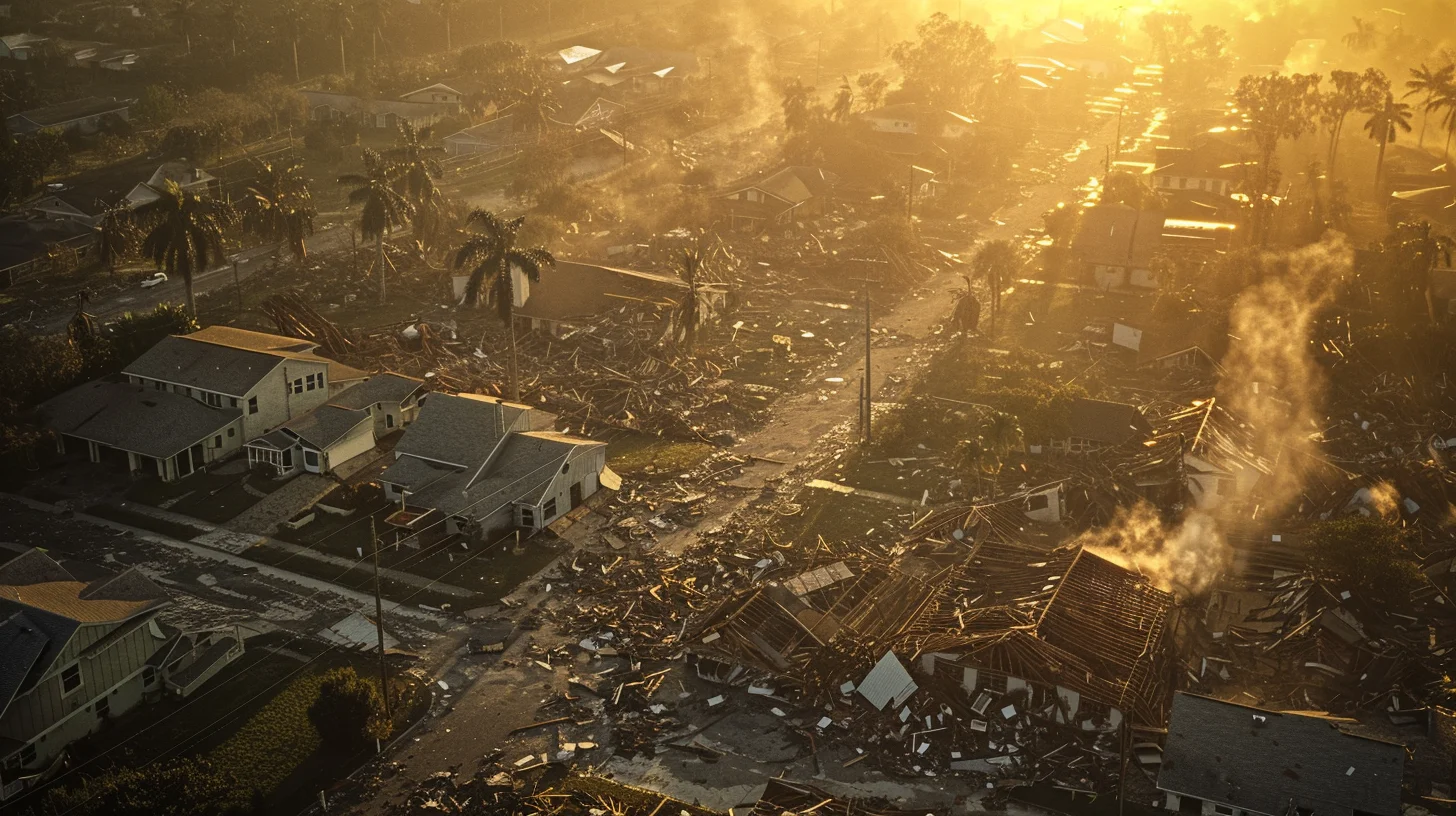
Post-hurricane debris fields generate air quality hazards that are invisible to the naked eye. Mold spores, asbestos fibers, lead dust, silica particles, and chemical vapors from crushed building materials and released household chemicals cannot be seen but can cause serious respiratory illness immediately or decades later. The air above a debris field is not the same as normal outdoor air.
What Post-Hurricane Debris Air Actually Contains
- Mold spores — from water-damaged materials; can cause respiratory sensitization, allergic reactions, and in high concentrations, acute toxic effects
- Asbestos fibers — from demolished pre-1980 buildings; cause mesothelioma and asbestosis with long-term exposure; no safe level of exposure
- Lead dust — from demolished pre-1978 buildings with lead paint; neurological damage, particularly dangerous for children
- Silica dust — from crushed concrete, brick, and drywall; causes silicosis with chronic exposure
- Fine particulate matter (PM2.5) — particles small enough to penetrate deep into lung tissue; from debris, fires, and disturbed soil
- Volatile organic compounds (VOCs) — from released paints, solvents, cleaning products, and building materials; cause headaches, dizziness, and with chronic exposure, organ damage
- Chemical vapors — from ruptured propane tanks, spilled pesticides, industrial chemical releases, and vehicle fuel mixed into floodwater
Asbestos — The Hidden Hazard in Pre-1980 Debris
Asbestos was used extensively in American construction from the 1940s through the late 1970s. Its use was phased out following EPA regulations beginning in 1978, but homes built before 1980 may contain asbestos in:
- Vinyl floor tiles and the adhesive beneath them
- Pipe and duct insulation (often gray or white wrap)
- Roof shingles and felt paper
- Siding (asbestos cement, sometimes called transite)
- Ceiling tiles
- Textured paint and patching compounds (pre-1977)
- Attic and wall insulation (vermiculite insulation, particularly from Libby, Montana)
- Boiler and furnace insulation
Asbestos that is intact and undisturbed is generally not a health hazard. It becomes dangerous when disturbed — cut, broken, crushed, or demolished — releasing fibers into the air. Hurricane damage creates exactly these conditions at massive scale.
If you suspect asbestos: Do not disturb the material. Contact your state environmental agency or EPA regional office for post-disaster asbestos guidance. In federally declared disasters, EPA may conduct asbestos air monitoring and provide guidance for your specific area.
Respiratory Protection — N95 vs P100, When Each Is Right
| Respirator | Protection Level | Use For |
|---|---|---|
| Dust mask (surgical) | No rated protection | Not appropriate for hurricane cleanup |
| N95 | 95% filtration of particles ≥0.3 microns | General debris, mold, dust in post-1980 homes |
| P100 half-face | 99.97% filtration (HEPA-equivalent) | Pre-1980 debris, suspected asbestos, heavy mold |
| Full-face P100 | P100 + eye protection | Chemical vapor risk, heavy asbestos exposure |
Critical rule: Any respirator must fit properly to be effective. A beard prevents an adequate seal with any tight-fitting respirator. NIOSH fit-test guidelines apply. An N95 worn incorrectly provides little protection. The respirator must seal completely against your face — no gaps at the nose or cheeks.
When to Stay Out of the Debris Field Entirely
- When fires are burning in the debris field — structural fires release toxic combustion products
- When you can smell chemical odors (gas, paint, solvent, petroleum) — evacuate the area
- When visibility is significantly reduced by dust — wait for conditions to improve
- When wind is high — disturbed debris creates maximum airborne hazard
- When you have asthma, COPD, or other respiratory conditions — consult your physician before entering any debris environment
- When you do not have appropriate respiratory protection — do not enter without it
Frequently Asked Questions
I breathed debris dust without a mask. What should I do?
For brief exposure to ordinary construction debris, your body's normal defenses may handle it without lasting harm. If you had significant exposure (more than a few minutes) in a pre-1980 debris environment, or if you develop persistent cough, shortness of breath, or chest pain in the days following, consult a physician and mention the nature of the exposure. Document when and where the exposure occurred.
Where can I get a P100 respirator quickly after a hurricane?
Home Depot, Lowe's, and most hardware stores stock 3M half-face respirators with P100 cartridges. Look for the 3M 6500 series or equivalent. Ensure you purchase the P100 cartridges (magenta-colored), not just particulate filters. FEMA disaster assistance sites and Red Cross distribution points sometimes provide respiratory protection supplies in declared disaster areas.
How do I know if a material contains asbestos?
You cannot tell by looking. The only way to confirm asbestos content is laboratory testing of a sample. EPA-certified asbestos inspectors can collect samples safely. Do not attempt to sample suspected asbestos-containing materials yourself — improper sampling releases fibers. Contact your state environmental agency for post-disaster asbestos resources.