By State
🌴 Florida ⭐ Texas 🎷 Louisiana 🌊 Mississippi 🏖️ Alabama 🍑 Georgia 🌴 South Carolina 🏔️ North Carolina 🦅 Virginia 🦀 Maryland 🗽 New Jersey 🌆 New York 🦞 Massachusetts
Shutter Types
🪗 Accordion ⬇️ Roll-Down 🌺 Bahama 🏛️ Colonial 🛡️ Storm Panels 🕸️ Hurricane Screens 🪟 Impact Windows ↔ Accordion vs Roll-Down ↔ Shutters vs Windows
Guides
🧮 Cost Calculator 🤖 AI Pricing 📋 The Process 🔨 DIY Shutters 🪵 Plywood Guide 🔧 Maintenance 🛒 Supplies 🏷️ AirTags & Security 📋 Family Emergency Plan 🎒 Go Bag Guides
After the Storm
🆘 Disaster Help Hub 🛡️ Post-Storm Safety 🌡️ Heat Safety 🐾 Pets & Livestock 🏠 Roof Tarping 💧 Water Damage 🔌 CPAP & Medical Power 💊 Refrigerated Meds 🌡️ Elderly Heat Safety ⚡ Generator Security 🔍 Find a Lost Pet 🧠 Dementia & Wandering 🌳 Tree Removal Florida Recovery Texas Recovery NC Recovery
Verify Contractor
Florida Texas Georgia North Carolina Virginia New Jersey New York Massachusetts
Free Estimate →
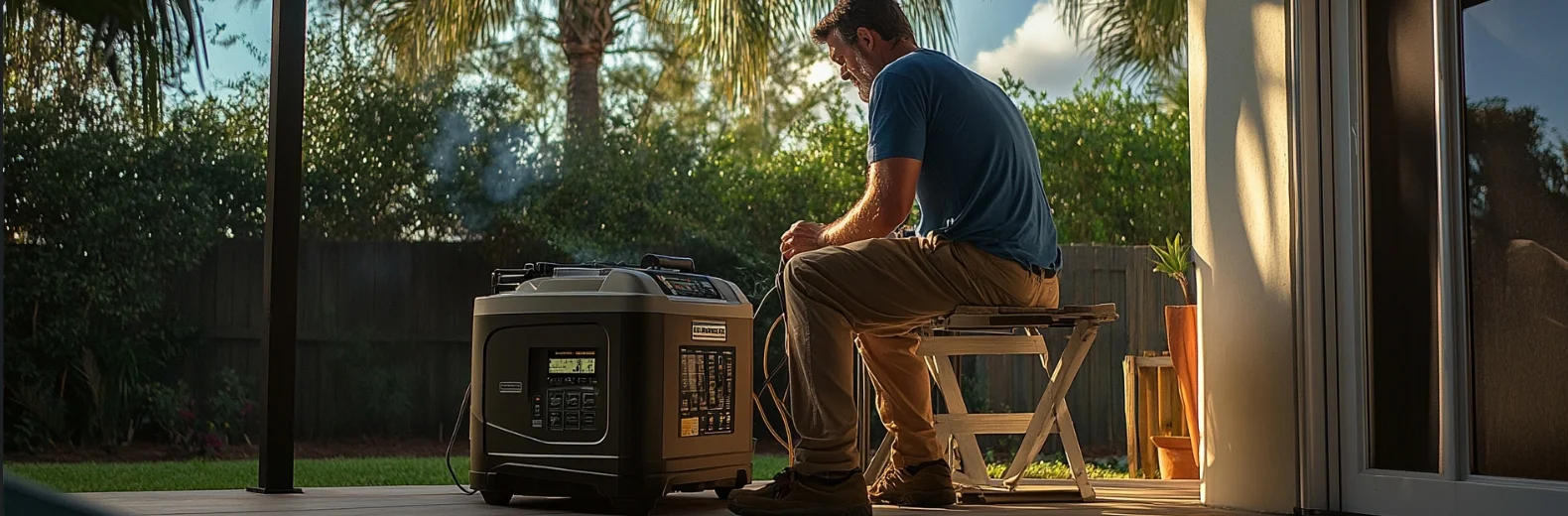
Portable generator running outside a Florida home after a hurricane
🔌 Post-Storm Recovery · Generator Security

How to Stop Your Generator
From Being Stolen

A running generator is the single most stolen item after a hurricane. It sits outside, it is loud, it announces to the whole street that you have power when no one else does — and an unsecured unit can be unplugged and carried off in under a minute. Here is how to lock it down, anchor it, cage it, alarm it, and still get it back if it walks away.

🎯
Why Generators Get Stolen After a Storm
The most-stolen item in any disaster zone

You wake at 3 a.m. and the house is silent — not storm-silent, just quiet. The hum that has been running all night is gone. You look out back, and so is the generator you were counting on for the next two weeks.

In the days after a hurricane, a portable generator becomes the single most attractive target on your street. It sits outside where it can be reached. It is loud, so it announces — to anyone walking or driving past in the dark — that this house has power and a valuable machine running unattended. It is worth $600 to $2,500. And because most owners never record a serial number, a stolen generator is almost impossible to trace and trivial to resell.

Theft spikes for a simple reason: demand explodes at the exact moment supply hits zero. Every store within a hundred miles is sold out, and a working generator is suddenly worth far more than its sticker price. Opportunists cruise neighborhoods at night listening for the hum. An unsecured unit in a driveway or side yard can be unplugged and loaded into a truck bed in under sixty seconds.

⚠️ The overnight window is when it disappears

Most generators are stolen between midnight and 5 a.m., while the household sleeps and the engine noise covers the sound of it being moved. If you run yours overnight — which most people do, to keep the fridge and CPAP and fans going — that is exactly when it is most exposed. Securing it is not optional; it is the difference between having power tomorrow and starting your recovery over.

⛓️
Chains, Cables & Locks — Your First Line of Defense
Make it harder to take than the next house over

Deterrence is most of the battle. A thief working fast in the dark picks the easy target and skips the one that fights back. A hardened chain and a serious padlock turn a sixty-second grab into a noisy, time-consuming job most opportunists will walk away from.

Use a hardened boron-steel chain, at least 10mm thick, routed through the steel frame of the generator — never around a plastic panel, handle, or the fuel tank. Pair it with a disc-style padlock, not a cheap brass lock; disc locks resist bolt cutters and pry bars far better. Then lock the chain to something that cannot itself be cut or unbolted in seconds — a ground anchor, a structural post set in concrete, or a heavy trailer. A great lock attached to a flimsy point is no lock at all.

✅ If you do nothing else

A hardened chain, a disc padlock, and a ground anchor — under about $80 for all three — stop the overwhelming majority of theft attempts. That is a rounding error against a generator worth $600 to $2,500 and the two weeks of power it represents. Buy the three together before the season and you have closed the easy-grab window thieves count on.

Anchoring It to the Ground
A chain is only as strong as what it is attached to

If you run your generator in the same spot every storm — most people do — give it a permanent anchor point. A chain locked to nothing is just a chain. The goal is a fixed, immovable attachment that a thief cannot cut, dig, or unbolt quickly.

For soft Florida ground, a screw-in earth auger anchor drives several feet down and holds against a hard pull. For a concrete pad, slab, or garage floor, a concrete wedge anchor with a heavy eye bolt gives you a flush, permanent loop to chain to. Set it once, before storm season, and your security routine becomes a thirty-second job: roll the generator out, loop the chain, lock it.

📦
Lock Boxes, Cages & Enclosures
Lock it, weatherproof it, and quiet it down at the same time

A steel generator security cage bolts down over the unit and locks, so the whole machine is enclosed and immovable. Many double as a running enclosure that shields the generator from rain and cuts noise — a real bonus when you are trying to sleep next to it. For owners who store rather than run in place, a lockable steel box keeps it out of sight entirely, and out of sight is out of mind for a passing thief.

⚠️ Never trap heat or exhaust

Any enclosure used while the generator is running must have full ventilation and clearance. Generators throw lethal carbon monoxide and a lot of heat. Use only an enclosure designed to run a generator, keep it the manufacturer-specified distance from the house and any window, and never box a running unit in a sealed container or garage.

🚨
Alarms, Lights & Deterrents
Make noise and light the moment someone gets close

Thieves rely on darkness and quiet. Take both away. A motion-activated floodlight on the side of the house where the generator sits removes the cover of darkness instantly. A wireless driveway or motion alarm chimes inside the house the moment someone approaches, giving you a chance to flip on lights or step outside — usually enough to send an opportunist running. A small vibration or padlock alarm clipped to the unit shrieks if it is moved or the lock is tampered with.

None of these is expensive, and together they make your setup the obvious one to skip. The goal is never to fight a thief — it is to be a harder, louder, brighter target than the unsecured generator two doors down.

📍
Recovery — When It Still Walks Away
Track it, and document it so you can get it back

Even a well-secured generator can be stolen by someone determined. Your insurance and the police both need two things to help you: a way to locate the unit, and proof it was yours. Hide a tracker inside before anything happens — a Bluetooth tag like an Apple AirTag works through nearby phones, while a cellular GPS tracker reports its own location anywhere with signal. After a theft, you can hand police a real location instead of a shrug.

Just as important: record the serial number, keep the receipt, and photograph the unit before storm season. A reported serial number lets pawn shops and police flag it, and it is what your insurer will ask for first when you file a claim.

Where exactly to hide a tracker on a generator — and how the Find My network behaves during an outage — is its own deep topic. We cover the placement step by step in our full guide: AirTags & GPS tracking for hurricane security →

🛒
What to Buy — A Complete Generator Security Kit
Everything in one place, before you need it

Buy this before storm season, not the night a hurricane is forming. By the time you need it, the shelves are empty and the thieves are already out. A chain, a disc lock, an anchor point, and one deterrent will stop the overwhelming majority of theft attempts.

As an Amazon Associate we earn from qualifying purchases, at no extra cost to you.
Frequently Asked Questions
Generator theft and security, answered
How do thieves steal generators after a hurricane?
They cruise neighborhoods at night listening for the hum of a running unit, which signals a valuable, portable, unattended machine. Most generators are unsecured in a driveway or side yard and can be unplugged and loaded into a truck in under a minute.
What is the best lock for a generator?
A hardened boron-steel chain of at least 10mm paired with a disc-style padlock resists bolt cutters far better than a cable and a brass lock. Remember the chain is only as strong as what you anchor it to — secure it to a ground anchor or a structural point set in concrete.
Can you chain a generator while it is running?
Yes. Route the chain through the steel frame — never around plastic panels or the fuel tank — and keep it clear of the hot exhaust and muffler. Maintain full ventilation clearance so the unit does not overheat or trap carbon monoxide.
Does homeowner insurance cover a stolen generator?
Often yes, under personal property coverage, but it is subject to your deductible and you must prove ownership. Record the serial number, keep the receipt, and photograph the unit before storm season so a claim goes smoothly.
How can I track a stolen generator?
Hide a Bluetooth tracker such as an Apple AirTag or a cellular GPS tracker inside the unit before it is stolen, so you can give police a location afterward. Also report the serial number so pawn shops can flag it.
How do I secure a generator at a jobsite or campsite?
The same principles scale down: a cable or chain through the frame to a fixed point — a trailer, a tree, an anchor — plus a vibration alarm and, ideally, a hidden tracker. Visibility deters; if it looks locked and alarmed, it gets skipped.