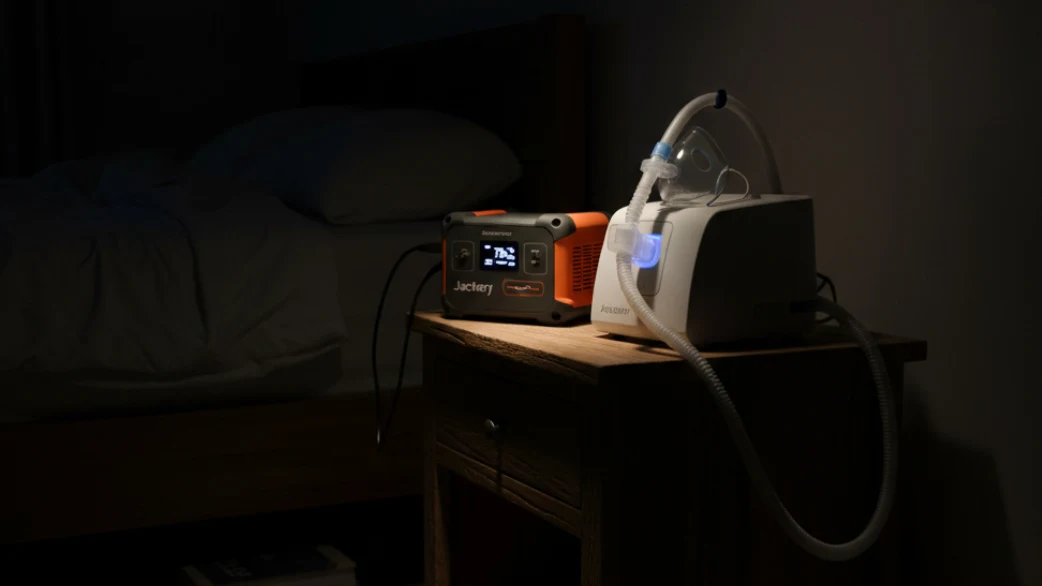
A hurricane outage is dangerous for anyone who depends on powered medical equipment. A CPAP user without therapy is exhausted by morning. An oxygen patient has hours, not days. A ventilator patient has minutes. This is how to keep the machines running, who to call before the storm, and the exact batteries and power stations that actually do the job.
The power goes out at 9 p.m. By 2 a.m. the CPAP user is wide awake, gasping. By the time the sun comes up, the oxygen patient's saturation has been climbing the wrong way for hours. This is the part of a hurricane that the news never shows — and it is entirely preventable.
For most households a hurricane outage is uncomfortable. For anyone on powered medical equipment, it is a clinical event. A CPAP user without therapy collects sleep debt fast and is exhausted, slow, and at higher accident risk by morning. An oxygen-dependent patient has hours, not days, before saturation drops to dangerous levels. A ventilator patient has minutes. And in Florida the heat compounds everything — the people most affected are usually the same ones least able to tolerate a hot house.
The good news: every one of those situations has an off-the-shelf fix, and the cost is small compared to a single ER visit. The work is choosing the right battery or generator before the storm, getting on the right registries, and rehearsing once so you know exactly what to do at 2 a.m.
Plan for at least 72 hours of medical-equipment runtime on your own, and have a step-up plan (a special-needs shelter or a friend with a generator) for anything longer. Utility "estimated restoration" times are optimistic in the first days after a major storm.
Three pieces of paperwork, done weeks before storm season, make every later step easier:
1. Your utility's medical priority registry. Most power companies maintain a list of customers on life-supporting equipment and prioritize their addresses when restoring service. Call your utility and ask to be added — they will usually want a brief letter from your doctor.
2. Your county's special-needs shelter registry. County emergency management runs shelters specifically for people who require powered medical equipment, refrigerated meds, or skilled-nursing oversight during an evacuation. Registration closes as a storm approaches, so do it pre-season.
3. A current doctor's letter describing your equipment and oxygen flow rate. Keep a printed copy with the equipment. It speeds up shelter intake and helps any first responder who walks into your home.
A modern CPAP without the heated humidifier or heated tubing draws roughly 30 to 60 watts. That is small. A 300-watt-hour portable power station runs it the entire night, often two. A 1000Wh unit runs two or three nights. The single most effective thing you can do for runtime is turn off the heated humidifier and heated tube — they can triple or quadruple draw.
Two equipment options to choose from. A dedicated CPAP battery like the Medistrom Pilot 24 is purpose-built, lightweight, and connects straight to the DC input on most machines (no inverter loss). A portable power station like a Jackery or EcoFlow is heavier but powers everything else too — fans, phones, a small fridge — and recharges from a wall outlet, car, or solar panel once power is back.
If you do nothing else: buy one portable power station rated 300Wh or larger, charge it at the start of every storm watch, and confirm your CPAP runs from it before the storm hits. A two-minute test now beats a panicked midnight at 2 a.m.
Oxygen is harder than CPAP because the machines draw far more. A typical continuous-flow home concentrator pulls 300 to 600 watts continuously. A small power station that runs a CPAP for a night runs a home concentrator for an hour. The realistic options:
Whatever you choose, write down your liters-per-minute setting and your equipment model on a card kept with the unit. A shelter intake nurse or a neighbor with a generator can help only if they know what you need.
Most marketing focuses on the wrong specs. The three numbers that determine whether a station will actually keep your equipment running are:
1. Capacity in watt-hours (Wh). Equipment watts × hours of run = Wh you need. A 40-watt CPAP × 8 hours = 320Wh. Add 25% buffer for inverter loss and cold mornings. So a 400Wh station is comfortable for one CPAP night; 1000Wh gives margin for two nights plus phones and a fan.
2. Continuous AC output (watts). Must exceed your equipment's actual draw, including startup surge. A 500W output unit easily handles a CPAP; a home oxygen concentrator wants 1000W+ output with 2000W surge.
3. Recharge options. Wall, car 12V, and solar input. The ability to recharge from a car or solar panel while the grid is down is the difference between three days of runtime and indefinite runtime.
Prefer LiFePO4 (lithium iron phosphate) chemistry if it is in budget — far more charge cycles, safer in heat, and holds a charge longer in storage between storms. Test the station as soon as you buy it — run your actual CPAP from it for a full night and see what percentage you have left in the morning.
For multi-day outages on continuous-flow oxygen or a ventilator, you need a generator. The choice is between a portable inverter generator (quiet, fuel-efficient, 2000–3500W, runs the medical gear plus a fridge) and a whole-home standby generator on natural gas or propane (auto-starts, runs everything, professional install).
Three rules, no exceptions:
And lock it down — a running generator that announces "I have power" to the whole neighborhood is the most-stolen item after a storm. See our full generator-security guide →.
Buy what you need before the season, not the night a storm is named. In rough priority for most households on powered medical equipment: