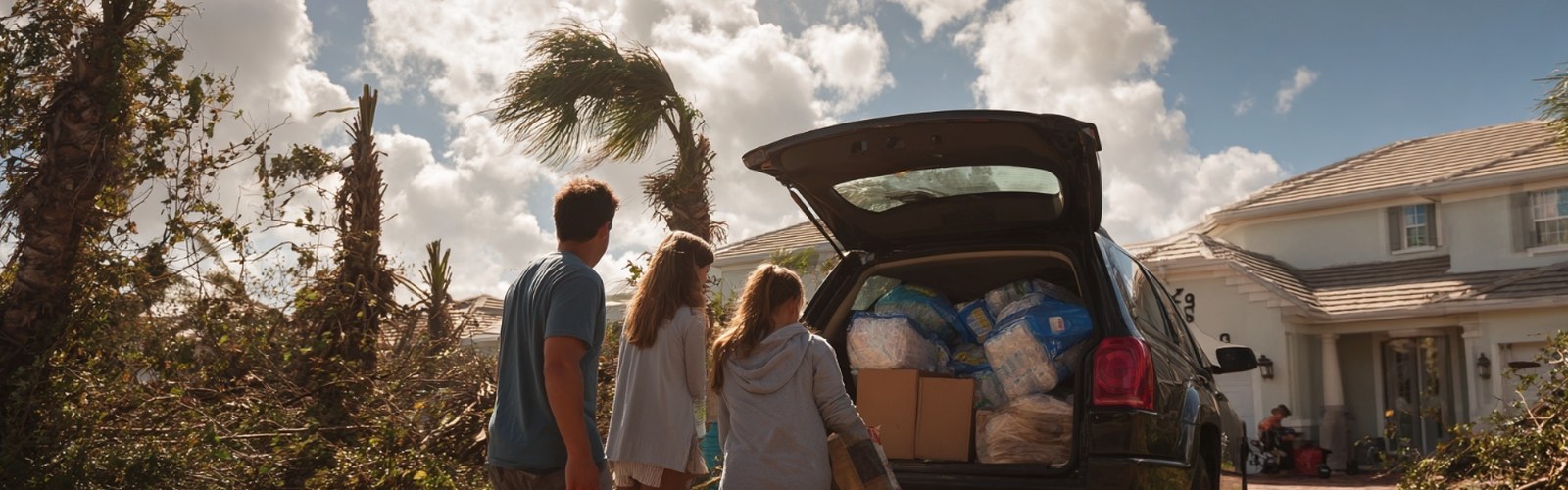
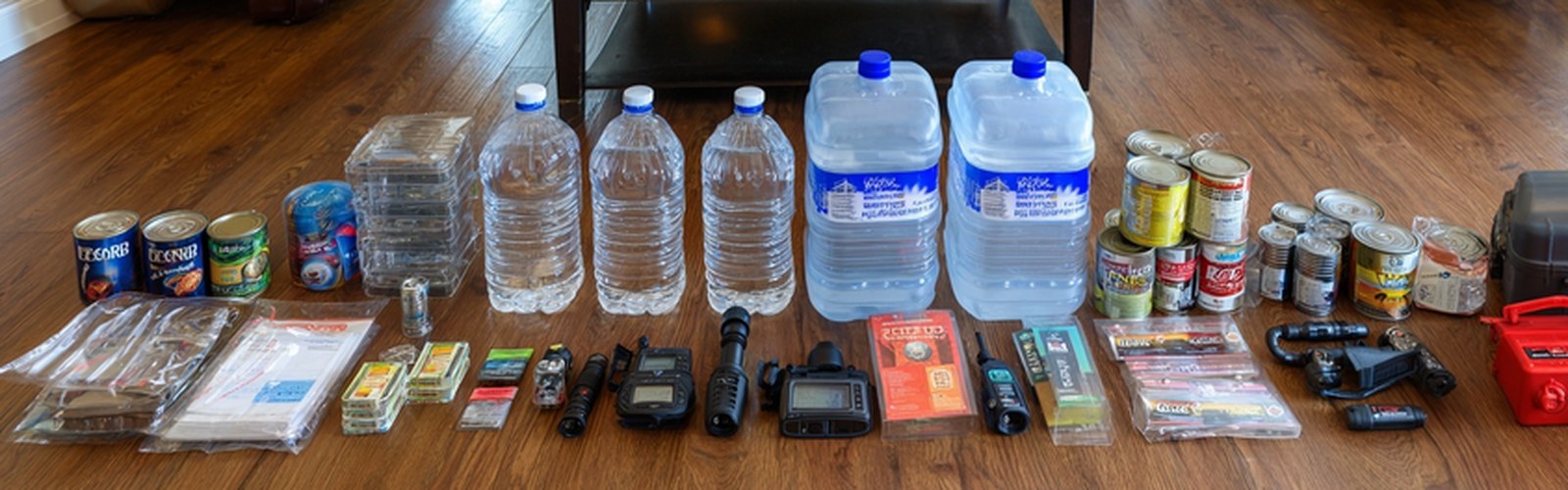
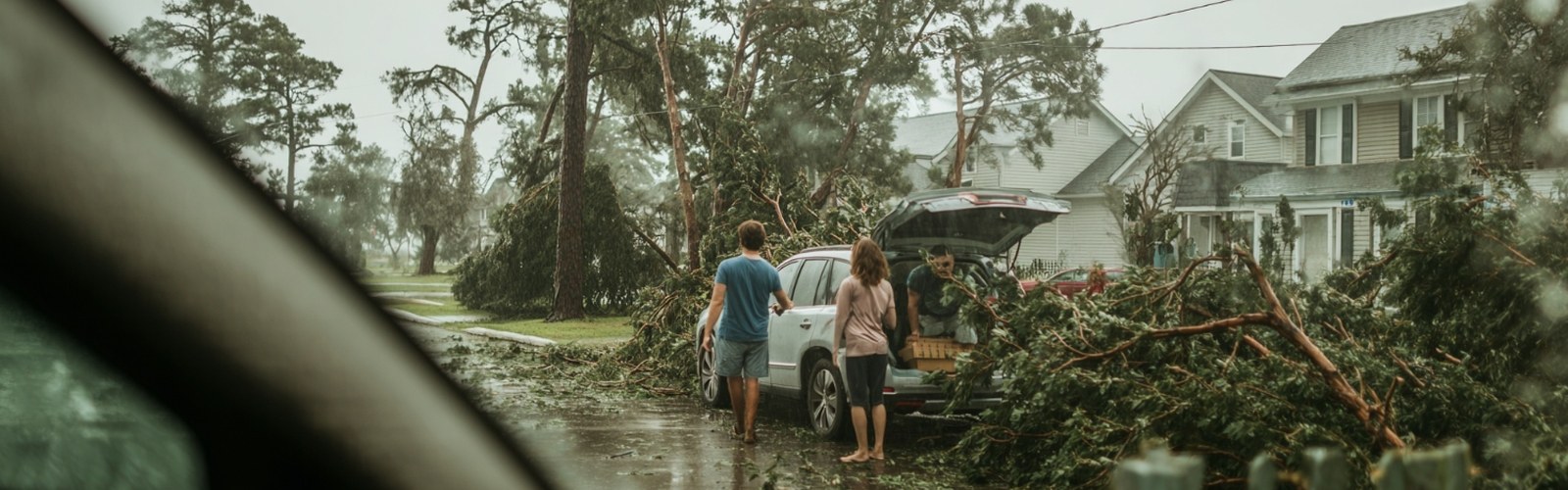
FEMA has a plan. The Red Cross has a plan. Ours is better — because ours is actually designed for real families, with children, with grandparents, with pets, and with the specific chaos of a Florida hurricane. Fill it out together. Practice it together. Know it before you need it.
Government emergency plans fail families for one simple reason: they get filled out once, filed away, and never looked at again. By the time the storm is coming, nobody remembers what's in it. The kids have never heard it. The phone numbers on it are three years old. The meeting place nobody ever drove to has changed its name.
A real family emergency plan is not a document. It's a conversation that happens every year, a set of things every family member actually knows by heart, and a drill that gets run so that when the real moment comes, everyone knows exactly what to do without being told. That's what this is. Read it together. Fill it in together. And then — this is the part that makes it real — practice it.
FEMA's Ready.gov family plan covers the essentials: meeting places, emergency contacts, and communication. We've taken that foundation and built it specifically for Florida hurricane families — adding the conversations to have with children about safe strangers, the practice drills that work by age, the questions to ask your child's school, and the details that government forms leave out because they don't know your family. You do.
This is for a fire, a gas leak, or anything that forces you out of the house immediately. Pick a specific, fixed point — not just "the front yard" but a specific tree, the mailbox, the corner of the driveway, the neighbor's fence. Specific enough that a frightened child running out of the house knows exactly where to stand and wait.
Walk every family member to this spot today. Have them stand there. Make sure they can find it in the dark. This is the fastest reunion point.
Example: "The big oak tree at the end of the driveway, by the mailbox"
This is for an evacuation, a flood, or anything that forces your whole neighborhood out. Pick a place everyone in the family knows well — a specific library, a school, a church, a fire station, a grocery store — that is outside the potential impact zone of most neighborhood-level emergencies. It needs to be walkable from home if necessary, and everyone needs to know the route.
Drive there together. Walk the route once. If you have children old enough to walk there alone, walk it with them so they know the way.
Example: "The Crystal River Library on [address] — the main entrance, front steps"
For a major hurricane requiring evacuation, this is where the family goes. A specific address — a relative's home, a trusted friend's house, a hotel you've used before — that is far enough inland or north to be outside the storm's impact area. Everyone must know this address by heart, not just have it saved in a phone that might be dead.
This should be a real place with a real person who knows they are your evacuation destination. Call them before hurricane season and confirm. A vague "we'll go somewhere inland" is not a plan.
Full address, name of the person, their phone number. Write it on paper and keep it in your car.


Here is the thing about calling family members during a hurricane: everyone in the affected area is trying to reach everyone else at the same time. Cell towers in the impact zone are overwhelmed and often damaged. Local calls fail when long-distance calls still go through — because the damage and congestion is local, not national.
The out-of-state contact is a person outside the storm's reach — a relative in another state, a close family friend who moved away — whose phone number every family member has memorized. When the storm hits, nobody calls each other directly. Everybody calls the out-of-state contact to say "I'm okay and I'm at [location]." The out-of-state contact relays messages between family members. This system was developed by emergency management professionals specifically because it works when direct communication fails.
Choose your out-of-state contact before hurricane season. Call them. Explain their role. Make sure every family member — including children old enough to use a phone — has their number memorized or written in their wallet.
Print this section. Cut one card per family member. Keep in wallet, backpack, car, and posted on the refrigerator.
_______________________
_______________________
_______________________
_______________________
_______________________
_______________________
_______________________
_______________________
_______________________
_______________________
Our family name: _____________ | This card updated: _____________ | hurricaneshuttercalc.com
Every family member needs to be able to call the out-of-state contact from any phone — a borrowed phone, a neighbor's landline, a pay phone, a phone with a dead battery that someone charges and hands to them. That means the number must be memorized or written on paper carried in a wallet or shoe. A number saved only in a smartphone is not reliable in a disaster. Quiz your children on this number regularly. Make it as automatic as knowing your home address.
Most children are taught "don't talk to strangers" as an absolute rule. In an emergency, that rule can trap a child in a dangerous situation. A child separated from their family in a hurricane evacuation needs to ask for help — but they need to know who to ask and how to ask.
This is not complicated, but it requires an actual conversation before the emergency, not a rule shouted in passing. Have it during a calm moment. Make it specific. Make it concrete. And then practice it, because knowing something in theory and knowing it in the panic of being separated are very different things.
Teach children that in an emergency, there are certain categories of people who are safe to approach and ask for help:
Anyone in a uniform with a badge. If your child sees a police officer or sheriff's deputy, they can walk up and say "I'm lost and I need help finding my family." This is always safe.
Anyone in a fire department uniform, paramedic uniform, or emergency vest. These are people whose entire job is helping in exactly this situation.
Anyone working in a store — behind a counter, in a uniform, or wearing a name badge. A store employee can call parents, call police, and keep a child safe in their location until help arrives.
If no official is visible, a parent with young children is statistically the safest adult a lost child can approach. Teach children to look for a family with kids and ask that adult for help — not to follow them, but to stand with them and have them call for help.
Every child old enough to speak clearly needs to know these four things without thinking:
First and last name. Not just "Jayden" — "Jayden Martinez." This sounds obvious until you realize how many young children, when asked by a stranger in an emergency, can only give their first name or a nickname.
Full street address including city and state. Practice this until it is completely automatic. Even a five-year-old can learn this with a few weeks of daily repetition — make it a rhyme, make it a song, make it whatever helps it stick.
One phone number, memorized. Not saved in a phone — memorized. Ten digits. Practice it every day until it comes out without hesitation. This is the single most valuable piece of emergency information a child can carry in their head.
As a backup if parents can't be reached. For older children — 8 and up — both the parent number and the out-of-state number. Write both on a card in their backpack and in their shoe as backup, but the goal is memorization.
Teach children a specific script: "Excuse me, I'm lost and I'm scared. My name is [full name] and I'm trying to find my parents. Can you help me call them? Their number is [number]." Practice saying it out loud. Role-play it. The child who has said those words fifty times in practice can say them when they are frightened. The child who has never practiced goes silent.
A couple in California came up with this, and it is so simple it's almost obvious once you hear it: take a standard metal pet dog tag — the kind you get engraved at any pet store, hardware store, or Walmart for about $5 — and instead of putting the pet's name on it, engrave the child's name on one side and the parents' phone number on the other. Then clip it onto the child's house key ring.
That's it. The child already carries their house keys every single day. The tag travels with the keys. No extra step, no special routine, no remembering to grab something. The emergency contact information is right there on the key ring they've had in their pocket since they left the house that morning — whether it's a normal Tuesday, a hurricane evacuation, or a disaster scenario where phones are dead and everything is chaotic.
A metal engraved tag doesn't run out of battery. It doesn't need a network. It doesn't get wiped when the phone gets wet. A stranger who finds a lost child and sees the tag knows immediately who to call. A first responder checking pockets knows immediately whose child this is and who to contact. The information is physical, permanent, and always present.
Go to any pet store, Walmart, hardware store, or Amazon. Get a metal tag. Engrave it: child's name on one side, both parents' phone numbers on the other. Clip it on the key ring. Done. Cost: under $10. Value: incalculable in the wrong situation.
Most pet tag engravers give you 4–5 lines of text. Use them like this:
For older kids with smartphones: engrave the tag anyway. Phones die. Phones get lost. Phones get damaged in flooding. The metal tag on the key ring keeps working when nothing else does.
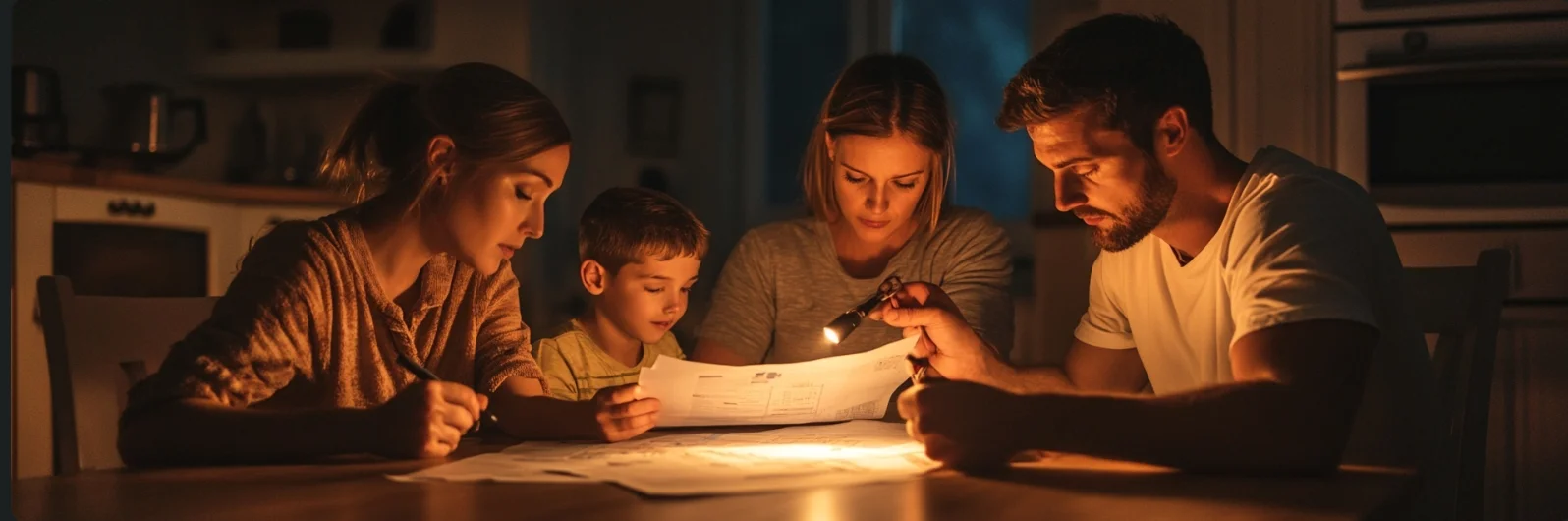
Schools have their own emergency and hurricane plans, and parents need to know what's in them before they need them — not during the chaos of an evacuation.
There is a fundamental difference between knowing something and having practiced it. A child who knows where Meeting Place 1 is will freeze for five seconds when the smoke alarm goes off before remembering. A child who has run to Meeting Place 1 six times, at different times of day, in different weather, in different emotional states — that child's feet start moving before their brain catches up. Practice does not just teach. It builds automatic response. And in a hurricane, automatic response is what keeps families together.
Without warning (or with minimal warning for very young children), announce "emergency drill — everyone to Meeting Place 1." Time how long it takes everyone to get there. Walk the route together afterward if anyone hesitated. Repeat until everyone arrives at the meeting place within 90 seconds of the announcement. Do this drill four times a year minimum — once per quarter. It takes five minutes and builds the most fundamental emergency habit a family has.
At a random moment — during dinner, during a car ride, before bed — ask each child: "What's my phone number?" and "What's [out-of-state contact]'s number?" and "What's our address?" No hints. No looking at a card. Just from memory. It takes 90 seconds. Do it every week from May through November. By September, every child in your household will have these numbers as automatic as their own name.
You play a police officer or a store clerk. Your child comes up to you and says they are lost. They must say their full name, home address, and parent's phone number clearly enough for a stranger to understand and act on it. Make it realistic — put on a slightly different voice, crouch to their level, respond as a real stranger would. Praise what they do right. Gently correct what needs work. Do this twice a year. It is the practice that makes the script automatic.
One person asks a "what if" question. Everyone answers. "What if the power goes out — what do we do first?" "What if a hurricane is coming and dad is at work — where do we all go?" "What if we have to leave the house in five minutes — what do we grab?" There are no wrong answers. This is a conversation, not a test. But the conversation builds the mental map that makes emergency decisions faster and calmer when they happen for real.
From ready.gov: "The more the family practices the plan, the better family members will be able to recall what to do during an actual emergency."
Once before hurricane season, drive your evacuation route with the whole family. Drive it to Meeting Place 2, then continue to Meeting Place 3. Note where gas stations are. Note where the traffic will back up. Note the alternate route if the primary route is flooded or closed — identify it now, not at 2am during an evacuation. Knowing the route physically is completely different from knowing it on a map.
Once a year, announce to the family: "We're pretending we have 30 minutes to leave the house with everything we need for a week. Go." See what gets packed. See what gets forgotten. What was in the hurricane kit that nobody could find? What did the kids grab that should have been left? What essential thing got left behind? This exercise reveals the gaps in your actual preparedness better than any checklist. Fix what you find.
Before hurricane season, assemble a waterproof bag or folder containing copies of these documents. The originals stay home (or in a fireproof box). The copies travel with you in your evacuation. If the house floods, you can replace things faster when you have documentation.
Better yet: photograph every document with your phone and back them up to cloud storage. If you evacuate without the go-bag, the phone is your backup. If the phone is dead, the go-bag is your backup. Both together mean you almost certainly have what you need.
Every year, before June 1st, hold a family meeting. Sit down together. Go through the plan. Update every phone number that has changed. Update every address that has changed. Confirm your evacuation destination and call ahead. Replace any expired items in the emergency kit. Run the phone number quiz on the kids. Drive the evacuation route if it's been more than a year. Confirm the out-of-state contact is still willing and available.
Then run Drill 1 — the fire walk-out. And commit to the weekly phone number quiz for the coming six months.
This meeting takes 30 minutes. It happens once a year. It is, in terms of minutes-invested per impact-when-it-matters, one of the best uses of family time there is.