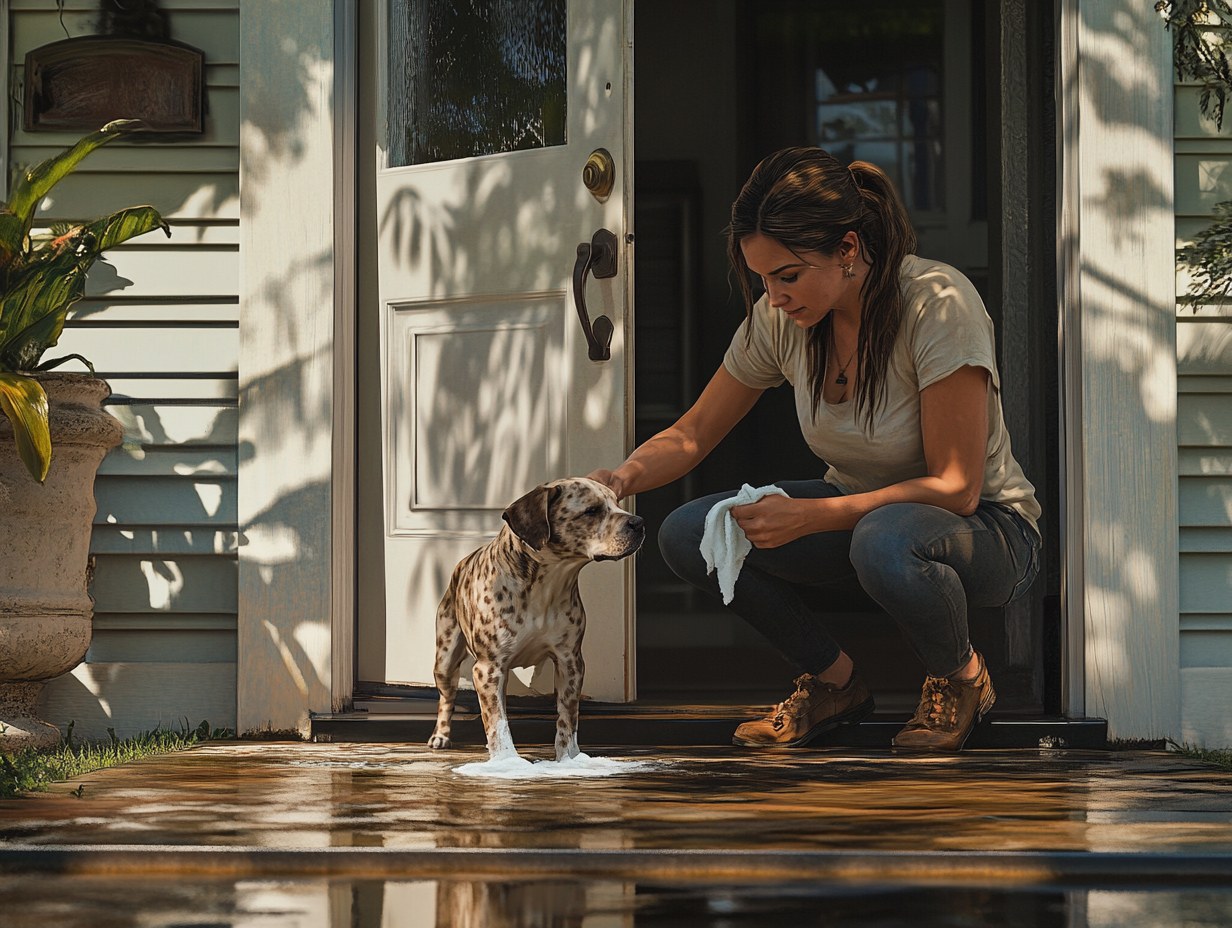
The core principle
Everything that contacted flood debris, waste bags, or contaminated surfaces stays outside. The line between outside and inside is the most important boundary you can draw after a hurricane. These steps make that line real.
Step 1 — Most Important
Set Up a Decontamination Zone Before You Start Work
"After Ian we were doing debris cleanup for four days straight. We'd come inside to eat, drink water, check on the kids — tracking who knows what on our shoes and clothes. On day five my wife said 'why don't you take your shoes off outside?' I hadn't thought of it. We set up a tarp at the back door, a bucket of soapy water, a bottle of hand sanitizer, and a garbage bag for work clothes. It took ten minutes and changed everything. None of us got sick. Our neighbors who didn't do this — two families had GI illness that week."
— Cape Coral, FL homeowner · Post-Ian, 2022
A decontamination zone is simply a defined spot outside your door where contamination stops. You set it up in 10 minutes with things you already own. Everything that goes through it stays outside. Everything that doesn't goes inside clean.
🚿 Your decontamination zone — what goes there
- A tarp or old mat placed just outside your main entry door. This is your transition area — nothing from the work zone crosses it without being decontaminated first.
- A bucket of soapy water and a stiff brush for scrubbing boot soles before removing footwear. Flood debris and waste material stick to boot treads and walk straight into your kitchen.
- A garbage bag or lidded bin for work clothes and gloves. Outer layers come off here, go directly into the bag. The bag gets sealed and doesn't come inside until laundry time.
- Hand sanitizer or a hand wash station — minimum a pump bottle of hand sanitizer, ideally a gravity-fed bucket with soap for a proper 20-second wash before touching the door handle.
- A designated pair of clean indoor shoes or flip flops just inside the door. You transition from work boots to indoor shoes at the zone — never walk in socks on a floor your work boots have touched.
- A hose or water source nearby if possible. A quick rinse of boot soles before the brush scrub removes the bulk of contamination before the soap does its job.
Set it up before the storm, not after:Place a tarp and a bucket outside your most-used door as part of your storm prep — before the hurricane hits. When you're exhausted after three days of cleanup, the last thing you want to do is think about setting up a system. If it's already there, you'll use it automatically.
 🔍 Click to enlarge
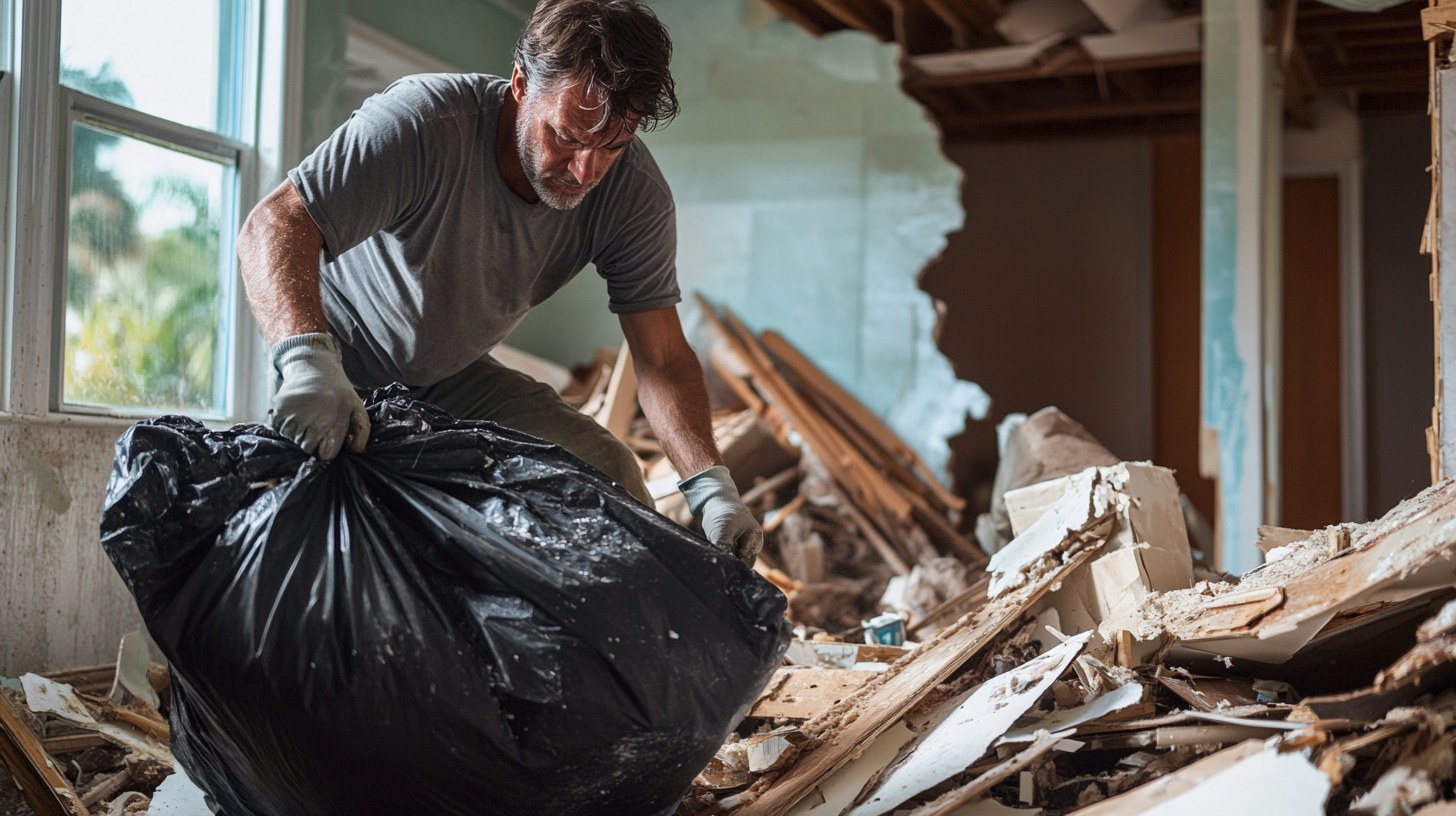
Work boots stay outside on the tarp. The flip flops just inside the door are what goes on your feet inside. That's the entire system.
Step 2 — Non-Negotiable
The Shoe Rule — The Single Most Effective Thing You Can Do
"My daughter is an ER nurse. She called us during the cleanup after Helene and said one thing: 'Don't let anyone wear their work shoes inside the house. I don't care how tired you are. Take them off outside.' We did. She said she sees people come in with E. coli, Salmonella, and Leptospirosis after hurricanes and almost every time when she asks about their habits — they wore their outside shoes inside. She said it was the single biggest vector she could identify."
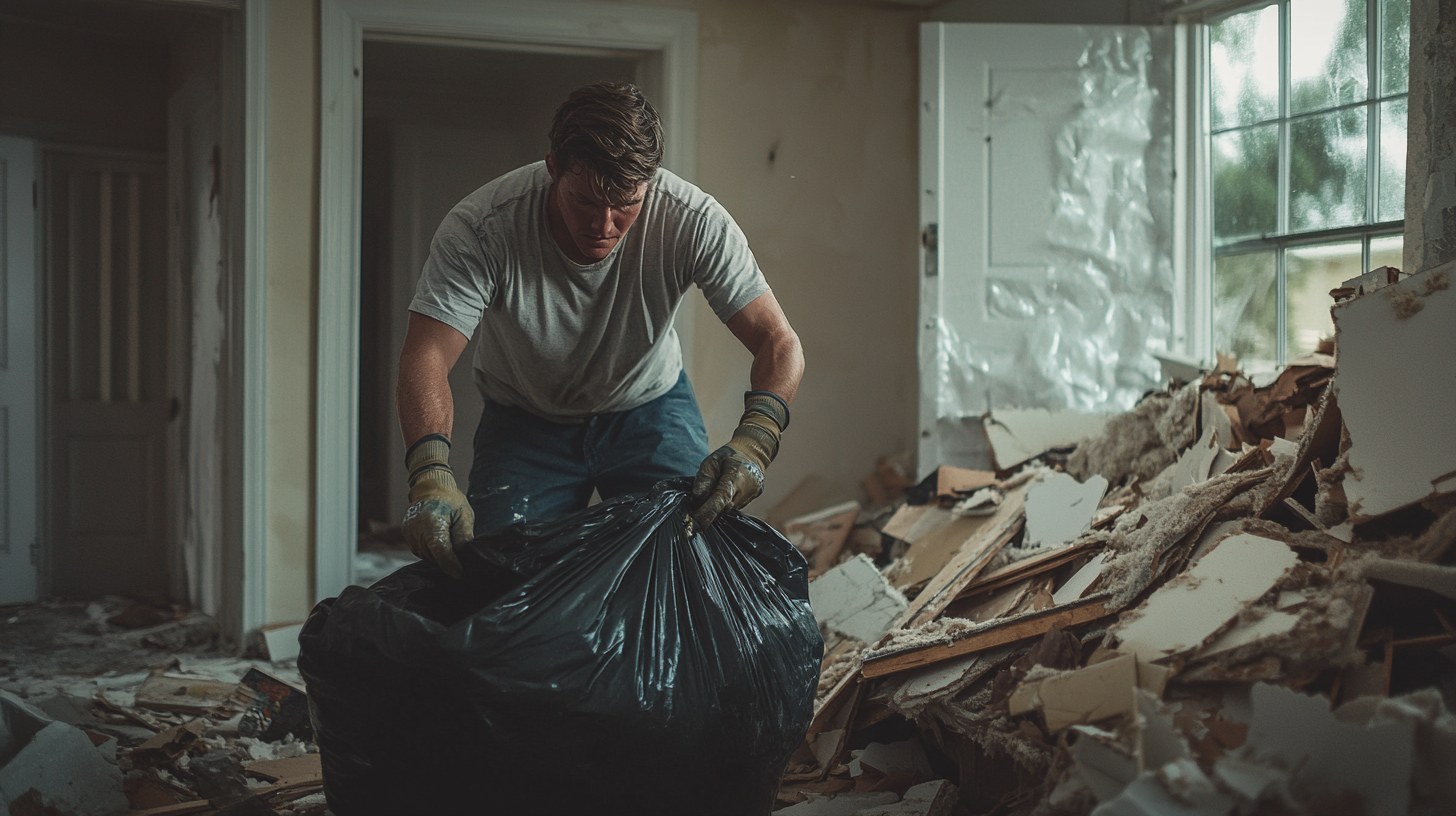
Post-hurricane neighborhoods become temporary open-air biohazard zones. Decontamination protocol applies for every trip outside.
— Homosassa, FL family · Post-Helene, 2024
Studies of pathogen tracking in homes consistently show that the soles of shoes carry the highest concentration of bacteria of any surface in a household — in normal circumstances. After a hurricane, work boots that have walked through flood debris, past waste bags, and across contaminated driveways are carrying concentrations orders of magnitude higher.
Designate specific work boots that never come inside. Mark them with a paint marker or colored tape so there's no confusion. These boots live outside or in the garage — not in the entryway, not in the mudroom, not on the mat inside the door.
Scrub the soles at the decontamination zone before removing them. Boot soles track contamination onto everything they touch — the tarp, the floor, your hands when you take them off.
Never leave work boots in the garage if children access the garage. Children touch garage floors, then touch their faces. Work boots on a garage floor during hurricane cleanup are a contamination source for the entire garage.
Apply this rule to all household members and visitors during the cleanup period. Post a simple sign at the door: "Work shoes off outside." Enforce it every time — the one person who forgets is the one who tracks E. coli to the kitchen floor.
Step 3
Clothing — What to Wear, What to Do With It After
"I hugged my six-year-old after a full day of mold cleanup. Same clothes I'd been wearing all day. She broke out in a rash on her face and arms within a few hours. The pediatrician said it was a contact reaction to mold spores on my shirt. I felt terrible. I hadn't thought about it. Now I change completely before any contact with my kids — every single time."
— Port Charlotte, FL parent · Post-Ian, 2022
What to wear during hurricane cleanup
- Long sleeves and long pants — every day, regardless of Florida heat. Exposed skin that contacts flood debris, mold, or waste material absorbs pathogens directly. The discomfort of working in long sleeves in August is significantly less than treating a skin infection or mold exposure reaction.
- Dedicated work clothes that you treat as contaminated for the entire cleanup period. These are not your everyday clothes — they are your cleanup clothes that live in a sealed bag between uses and go straight to the wash at the end of each day.
- Disposable coveralls for mold removal specifically. The $3–5 cost per pair is nothing compared to the cost of carrying mold spores on your clothes through your house. Change out of a disposable coverall at the decontamination zone and bag it.
- N95 during mold work, debris handling, and waste bag management. See the N95 guide for the specific type required for H2S protection.
What to do with work clothes at the end of each day
Remove outer work layers at the decontamination zone — not inside the house. Place directly into a sealed contractor bag or laundry bag that doesn't touch indoor surfaces.
Wash work clothes separately from family laundry in hot water (130°F or higher kills most bacteria and mold spores). Add a cup of white vinegar to the wash cycle for additional mold spore kill.
If you handled mold debris, bag the clothes outside and wash within 24 hours. Mold spores embedded in fabric spread when clothes are moved through the house.
Shower before contact with children, elderly family members, or immunocompromised individuals — every time, every day during the cleanup period. This is the most important step most people skip.
Step 4 — Every Time
Hand Washing — The Rule That Prevents Most Illness
"We had a bucket hand wash station outside the back door during the entire two weeks of cleanup after Idalia. My husband went out, did debris work, came back, washed his hands at the bucket, came inside. We drilled this into our kids — you wash hands at the outdoor station before you touch the door handle. Nobody got sick. Our neighbor's family had norovirus hit all four of them. He told me they were just using hand sanitizer and skipping the soap. The difference matters."
— Steinhatchee, FL · Post-Idalia, 2023
Hand sanitizer kills many bacteria but does not eliminate all pathogens present in post-hurricane contamination — particularly norovirus and Cryptosporidium, which are alcohol-resistant. Soap and water is the correct primary method. Hand sanitizer is a supplement, not a substitute.
🧼 The correct hand washing sequence
- Rinse hands with clean water to remove visible debris before applying soap
- Apply soap — any liquid soap, not antibacterial specifically required, the friction is what removes pathogens
- Scrub all surfaces — palms, backs of hands, between fingers, under fingernails — for a minimum of 20 seconds
- Rinse completely with clean water
- Dry with a clean paper towel — not a shared cloth towel that others will use
- Apply hand sanitizer as a secondary step after soap and water, not instead of it
- Never touch your face, mouth, eyes, or nose between the start of work and the completion of hand washing
When to wash hands during cleanup: Before eating or drinking anything. Before touching your face. Before contact with children or pets. After handling any bag — waste, mold, or debris. After removing gloves. After contact with flood-affected surfaces. After touching debris at the curb. After contact with any standing water. After removing work boots.
Protecting Children
Keeping Children Safe During Hurricane Cleanup
"We thought keeping the kids in the house meant they were safe. What we didn't think about was that we were coming inside multiple times a day and bringing whatever was on our hands, our clothes, our shoes into their environment. My youngest was crawling on the floor. Three days into cleanup she spiked a fever. The pediatrician asked specifically about our hygiene protocols during cleanup and we realized we didn't really have any. She recovered but it scared us badly."
— Sarasota, FL family · Post-Ian, 2022
Rules for households with children during hurricane cleanup
- Keep children inside and away from all entry points while cleanup work is in progress. Not just away from the debris — away from the doorways where contaminated adults are moving in and out.
- Never hug, hold, or have close contact with children before showering and changing after mold or waste work. Mold spores and bacteria on your shirt transfer directly to a child's face and hands during a hug.
- Wash children's hands after any time spent near doorways, entryways, or any area where cleanup workers have moved through. Children touch floors, door frames, and thresholds constantly.
- Keep children off floors in areas that cleanup workers have walked through in work clothes or boots. Mop entryways, mudrooms, and transition areas with a bleach solution daily.
- The absolute rule: no children near debris piles, curb bags, or the decontamination zone. Establish this as a safety rule equivalent to "don't touch the stove" — non-negotiable, clearly explained, consistently enforced.
- For infants and toddlers who can't understand rules — designate one clean caregiver who does no cleanup work and maintains separation from contaminated household members. That person's clothing, hands, and immediate environment stay clean throughout the day.
⚠️ Watch for these symptoms in children 3–14 days after potential exposureVomiting, diarrhea, or stomach cramps could indicate E. coli or Norovirus. Fever with muscle aches could indicate Leptospirosis. Respiratory symptoms, coughing, or wheezing after mold exposure. Eye irritation or conjunctivitis after mold contact. Any of these within two weeks of hurricane cleanup warrants a pediatrician visit — tell the doctor specifically about the hurricane cleanup and any potential exposures.
 🔍 Click to enlarge
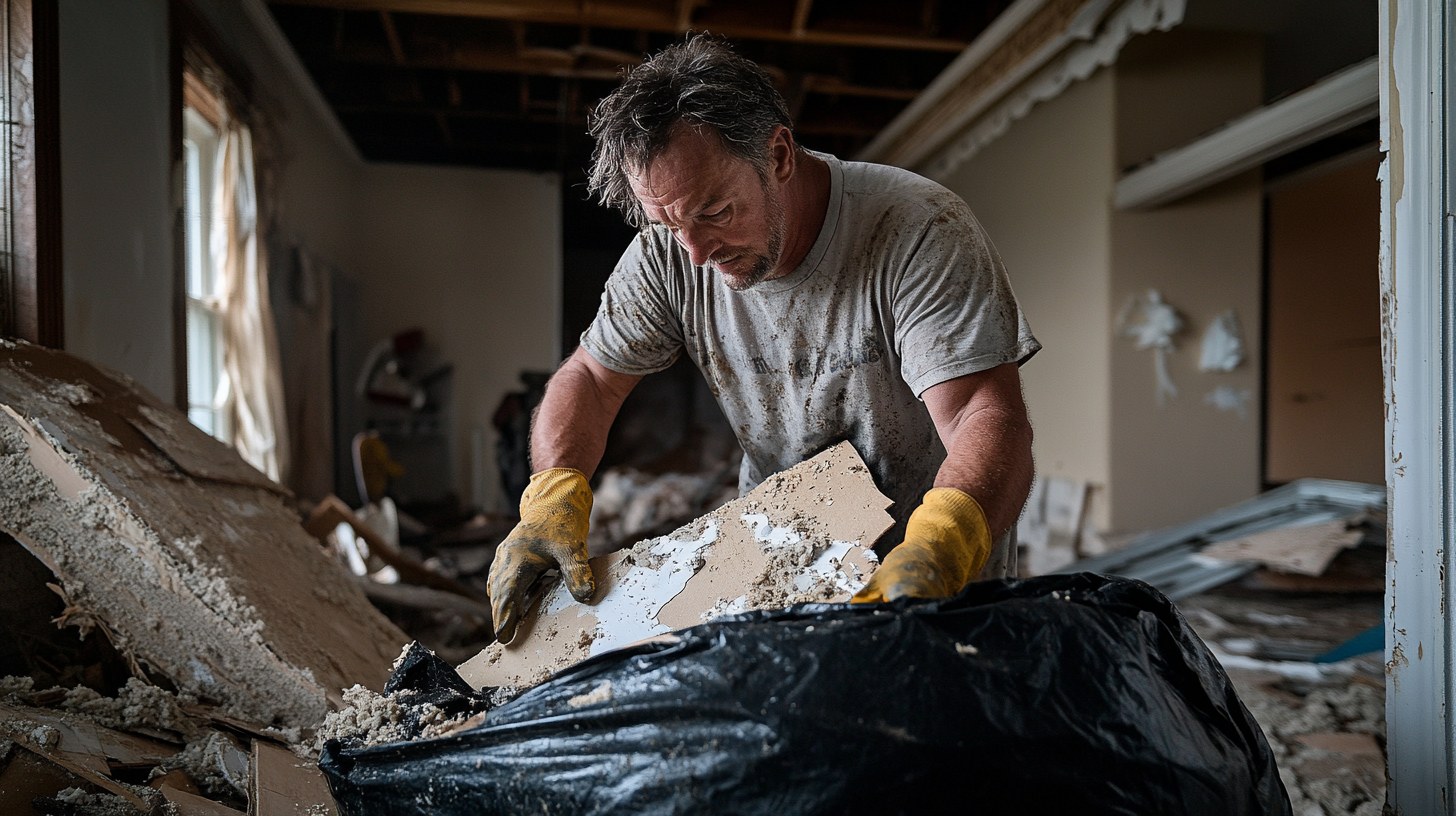
This moment — after days of cleanup, finally holding your child — requires that you showered first. Mold spores on your shirt transfer directly to their face.
Protecting Pets
Pet Protection During and After Hurricane Cleanup
"Our golden retriever Jake got loose during cleanup and made it to the debris pile at the curb before we caught him. He'd been sniffing bags, rolling in debris — the full golden retriever treatment. We bathed him immediately but five days later he was lethargic, not eating, running a fever. The vet diagnosed Leptospirosis. Three days at the animal hospital, IV antibiotics, $1,800. He recovered fully but it was terrifying and completely preventable. We didn't know dogs could get Leptospirosis from debris piles."
— Fort Myers, FL dog owner · Post-Ian, 2022
Rules for dogs during hurricane cleanup
Leash every time, every outdoor trip during the entire cleanup period — no exceptions. The smell of debris, waste, and contaminated material is irresistible to dogs. An unleashed dog in a post-hurricane neighborhood will find every hazard within range.
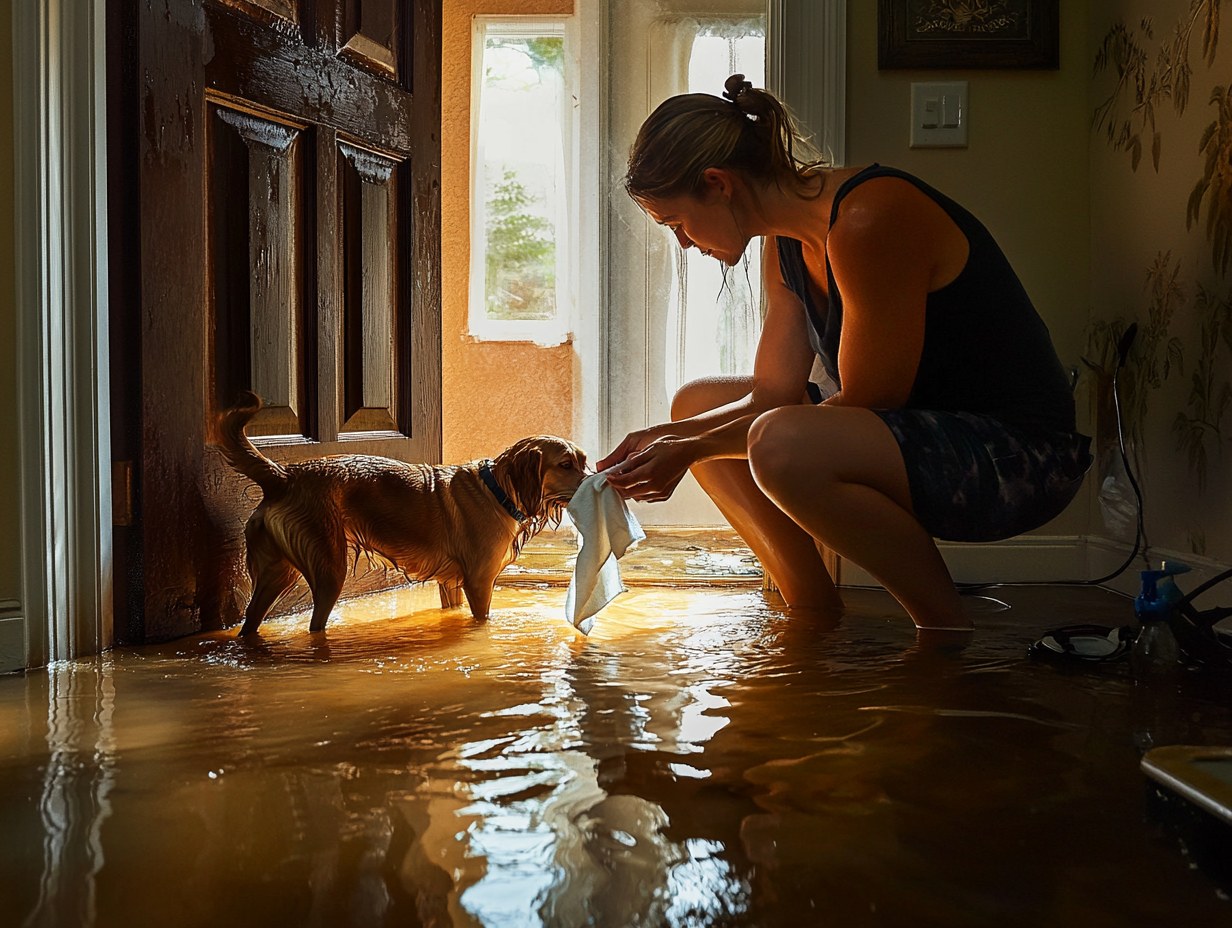
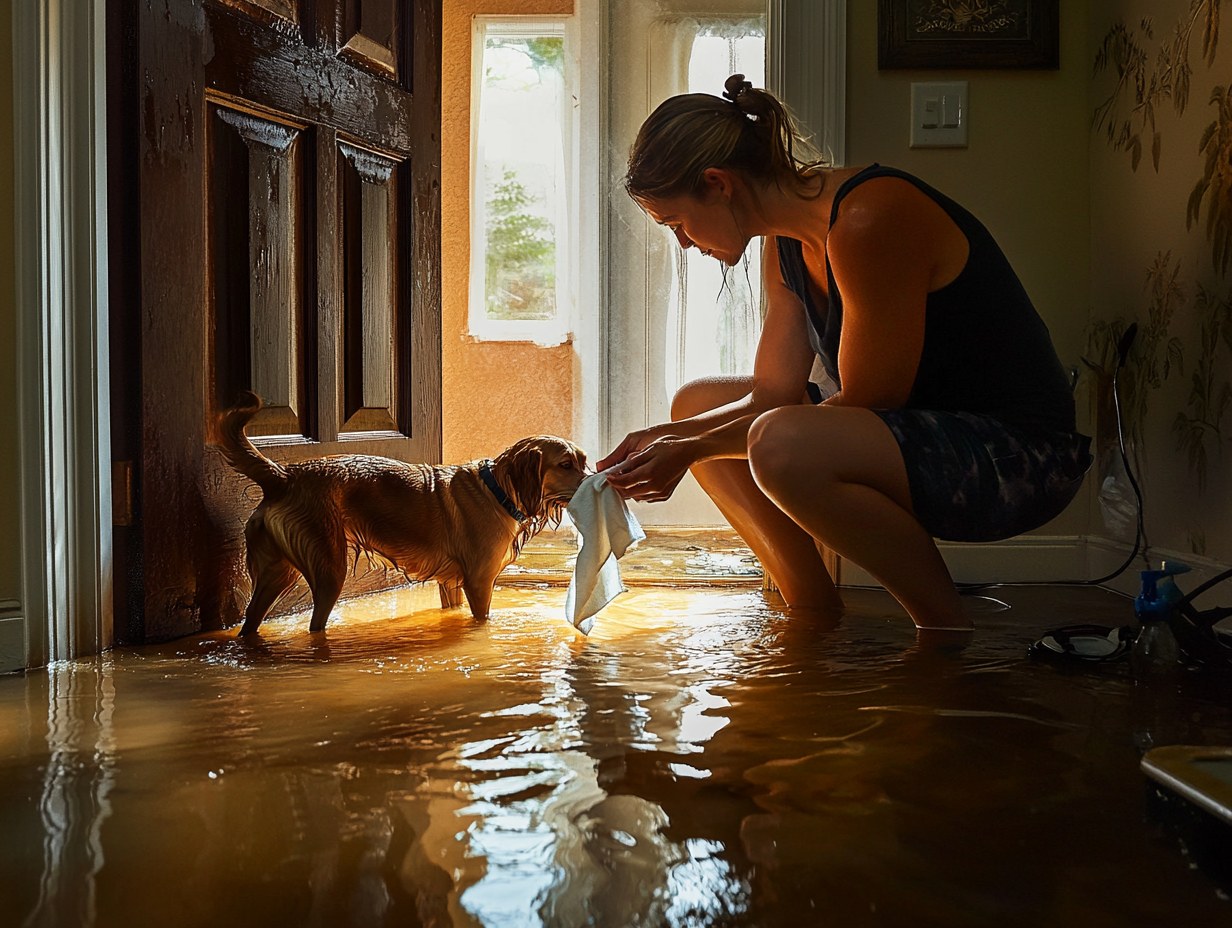
Paw wipe before re-entry. Keep a damp cloth or pet wipes at the door. Wipe all four paws before allowing the dog back inside after any outdoor time. Dogs walk through puddles, across contaminated pavement, and past bag residue constantly during the cleanup period.
Keep dogs away from all standing water — puddles, ditches, flooded areas. Category 3 floodwater contains Leptospira bacteria from animal and human waste. Dogs who drink or wade through contaminated water face Leptospirosis exposure regardless of vaccination status (vaccines reduce severity but don't eliminate risk).
If your dog accesses any debris pile, waste bag, or contaminated water — contact your vet same day, even if the dog appears fine. Leptospirosis symptoms don't appear for 4–12 days after exposure but treatment is most effective when started early.
 🔍 Click to enlarge
Every time. Every outdoor trip. Four paws wiped before the dog comes back inside. Takes 30 seconds and prevents Leptospirosis tracking through your home.
 🔍 Click to enlarge
The door is the line. Wet, post-storm dog gets dried and wiped outside the threshold — not inside.
Rules for cats during hurricane cleanup
- Indoor-only during the entire cleanup period — no exceptions. Cats that roam outdoors during post-hurricane cleanup walk through contamination, carry it on their paws and fur, and deposit it on every surface they rest on inside the home — including children's beds.
- Wipe paws if the cat has been near any entry points where cleanup workers are moving in and out. Cats are low to the ground and groom their paws — any contamination on paws goes directly into their mouth.
- Keep cats out of the decontamination zone area. Cats are drawn to tarps, bags, and unfamiliar objects — and will investigate every surface in the transition area.
Your Home
Keeping the Inside of Your Home Clean During Extended Cleanup
"We were in cleanup mode for eleven days after Helene. By day four I noticed the whole house felt grimy — floors, counters, door handles. We hadn't been deliberately bringing contamination in but we also hadn't been deliberately keeping it out. We started a daily floor wipe routine in the kitchen and entryway with diluted bleach solution, we assigned one person to be the 'clean hands' person who handled food and the kids, and we put a firm rule that nobody sat on the furniture without having showered. The house felt like a home again instead of an extension of the disaster zone outside."
— Crystal River, FL family · Post-Helene, 2024
Daily home maintenance during the cleanup period
- Wipe down door handles, light switches, and countertops daily with a diluted bleach solution (¼ cup bleach per gallon of water). These high-touch surfaces collect contamination from hands that haven't been fully decontaminated.
- Mop entryways and transition areas daily with bleach solution. The decontamination zone is not 100% effective — some contamination always makes it through. Daily mopping of the first 10 feet inside the door contains it.
- Designate one "clean" household member during heavy cleanup days — someone who handles food prep, childcare, and indoor tasks and has no contact with outdoor cleanup work. In a two-adult household, this means splitting roles: one person cleans up outside, one person manages inside. They don't cross over without the full decontamination sequence.
- Keep a clean hand towel at every sink and replace it daily. Shared towels in a post-hurricane household become contamination sources within hours.
- Dispose of kitchen waste daily. Florida heat accelerates decomposition. A kitchen trash bag that sits overnight in a hot house becomes a small-scale version of the waste bag problem outdoors. Take it out daily into a sealed outdoor container.
Know the Warning Signs
Symptoms to Watch For — When to Call a Doctor
"My husband dismissed his symptoms for four days — 'just tired from all the work, probably dehydrated.' By day five he had a high fever, severe muscle pain, and his eyes were yellow. It was Leptospirosis. He was hospitalized for four days with liver involvement. The doctor said if he'd come in on day one or two when symptoms started, the antibiotic course would have been simple and outpatient. The delay is what made it serious. Don't dismiss symptoms in the two weeks after hurricane cleanup."
— Sarasota, FL · Post-Ian, 2022
| Symptom |
Possible cause |
Action |
| Vomiting, diarrhea, stomach cramps | E. coli, Norovirus, Salmonella | Call doctor same day — tell them about hurricane cleanup |
| Bloody diarrhea | E. coli O157:H7 | Go to ER immediately — can cause kidney failure |
| Fever, severe muscle aches, headache | Leptospirosis | Call doctor same day — do not wait |
| Yellow eyes or skin (jaundice) | Leptospirosis, Hepatitis A | Go to ER — liver involvement |
| Coughing, wheezing, chest tightness | Mold spore inhalation | Call doctor — especially if asthmatic |
| Skin rash or burning after contact | Mold contact, chemical contamination | Wash affected area immediately, call doctor |
| Any symptom in a child under 5 | Any of the above | Call pediatrician same day — children deteriorate faster |
Always tell your doctor about the hurricane cleanup:Many post-hurricane illnesses are misdiagnosed as "stomach flu" or "summer virus" when they are actually specific bacterial infections that require targeted antibiotic treatment. Telling your doctor specifically "I've been doing hurricane cleanup for X days, I may have been exposed to flood water and waste material" changes the diagnostic approach and may save days of unnecessary suffering.
Complete Series
The Full Hurricane Sanitation & Safety System
📦 Contractor Bags
Master guide — 55 uses, emergency toilet, mold containment, disease prevention
☣️ Disease Prevention
8 diseases, how they spread through neighborhoods, all 13 state health contacts
🌲 Pine Pellets
The $7 odor solution — lignin chemistry, quantities, where to buy
🪣 5-Gallon Bucket
25 hurricane uses, water storage, washing station, bleach mixing
🔒 Gamma Seal Lid
Why the airtight lid is the critical piece
😷 N95 Masks
Activated carbon vs basic — what protects from H2S and mold
Get your free shutter estimate →