🌀 Hurricane season is activeprotect your Florida home →
By State
🌴 Florida⭐ Texas🎷 Louisiana🌊 Mississippi🏖️ Alabama🍑 Georgia🌴 S. Carolina🏔️ N. Carolina🦅 Virginia🦀 Maryland🗽 New Jersey🌆 New York🦞 Massachusetts
Explore
🛡️ Shutter Types🧮 Guides & Calculator🆘 After the Storm✅ Verify a ContractorFree Estimate →💰 Insurance Savings📋 Find an Installer🌀 Storm Alerts
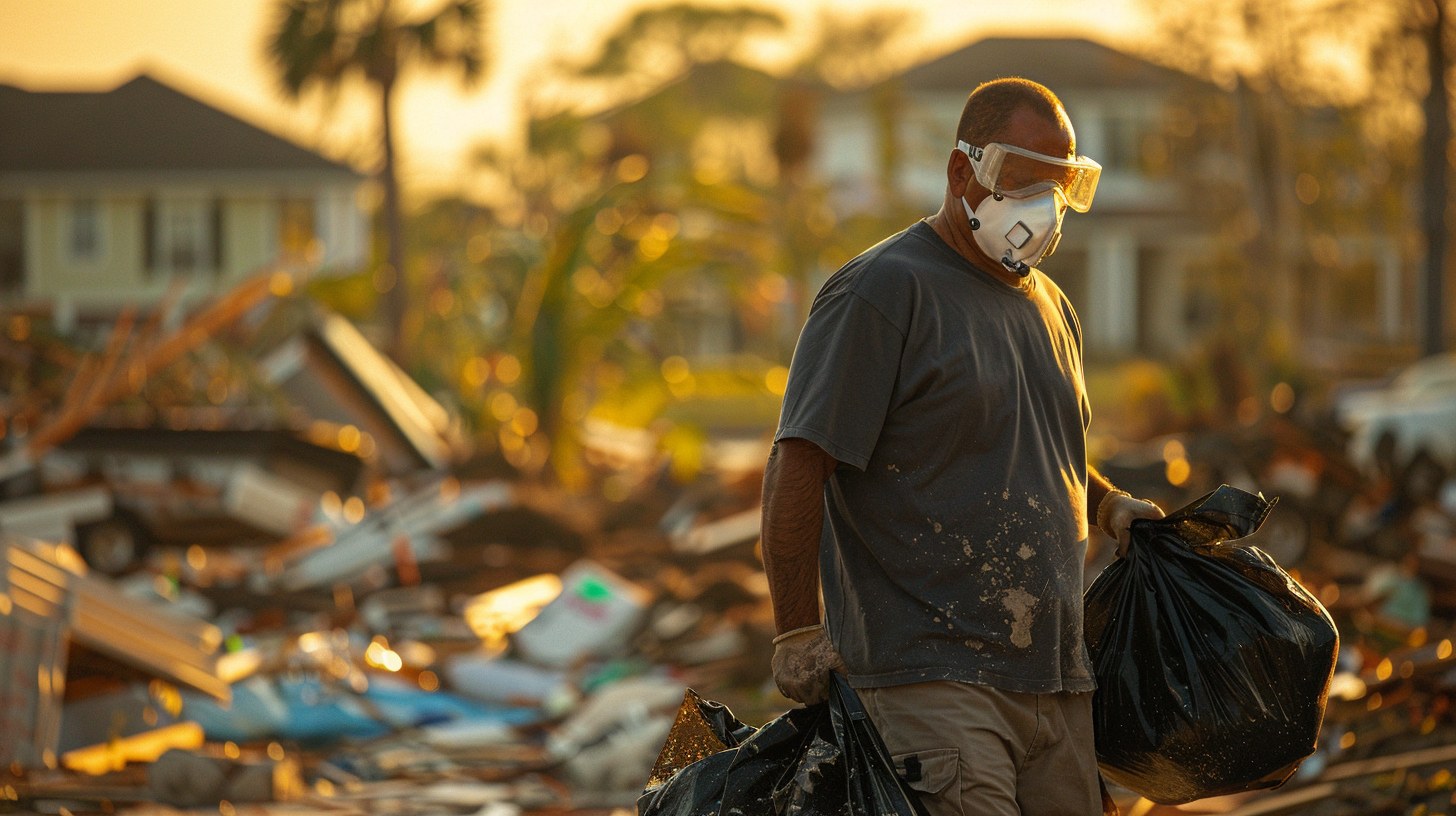
Florida homeowner wearing half-face respirator with organic vapor cartridges carrying two black contractor bags after hurricane in wet Florida neighborhood with palm trees
😷 Hurricane Sanitation Series

N95 Masks for Hurricane Cleanup — Standard vs Activated Carbon, What You Actually Need

A standard N95 filters mold spores. It does not filter H2S gas. Most people grabbing N95s from the hardware store have no idea there's a difference — until they're handling waste bags without gas protection.

The distinction most people miss

N95 is a particle filter rating. It means the mask filters 95% of airborne particles at 0.3 microns. Mold spores are particles — N95 catches them. H2S is a gas molecule — it passes straight through an N95 as if the mask isn't there. For waste bag handling, you need activated carbon, not just N95.

The Core Comparison

Standard N95 vs Activated Carbon N95 vs P100 — What Each Protects Against

"I'm an industrial hygienist. After Ian I went into affected neighborhoods to assess cleanup safety. I watched homeowners handling waste bags in basic N95 dust masks — the flat white ones from the hardware store — thinking they were protected. They had no gas protection at all. The rotten egg smell getting through was H2S, which their masks were not filtering. I spent that afternoon going door to door telling people what they actually needed."

— Industrial hygienist, Southwest Florida · Post-Ian, 2022

Mask typeMold sporesH2S gasAsbestos/fine debrisBest use case
Surgical/cloth mask❌ No❌ No❌ NoNone — do not use for hurricane cleanup
Standard N95 (flat or cup)✓ Yes❌ No✓ YesMold removal, debris dust, drywall work
Activated Carbon N95✓ Yes✓ Partial✓ YesWaste bag handling, toilet bucket management, mold
P100 Half-Face + OV Cartridge✓ Yes✓ Yes✓ YesHeavy mold, enclosed space waste work, maximum protection
P100 Half-Face + Particulate only✓ Yes❌ No✓ YesHeavy debris and mold — not for waste gas protection
The critical distinction: particles vs gas molecules

Mold spores, dust, drywall particles, and asbestos fibers are particles — physical objects that a mechanical filter catches. H2S, ammonia, methane, and volatile organic compounds are gas molecules — they flow through mechanical filter media the same way air does. Activated carbon works by adsorption — gas molecules bond chemically to the carbon surface. No carbon, no gas protection.

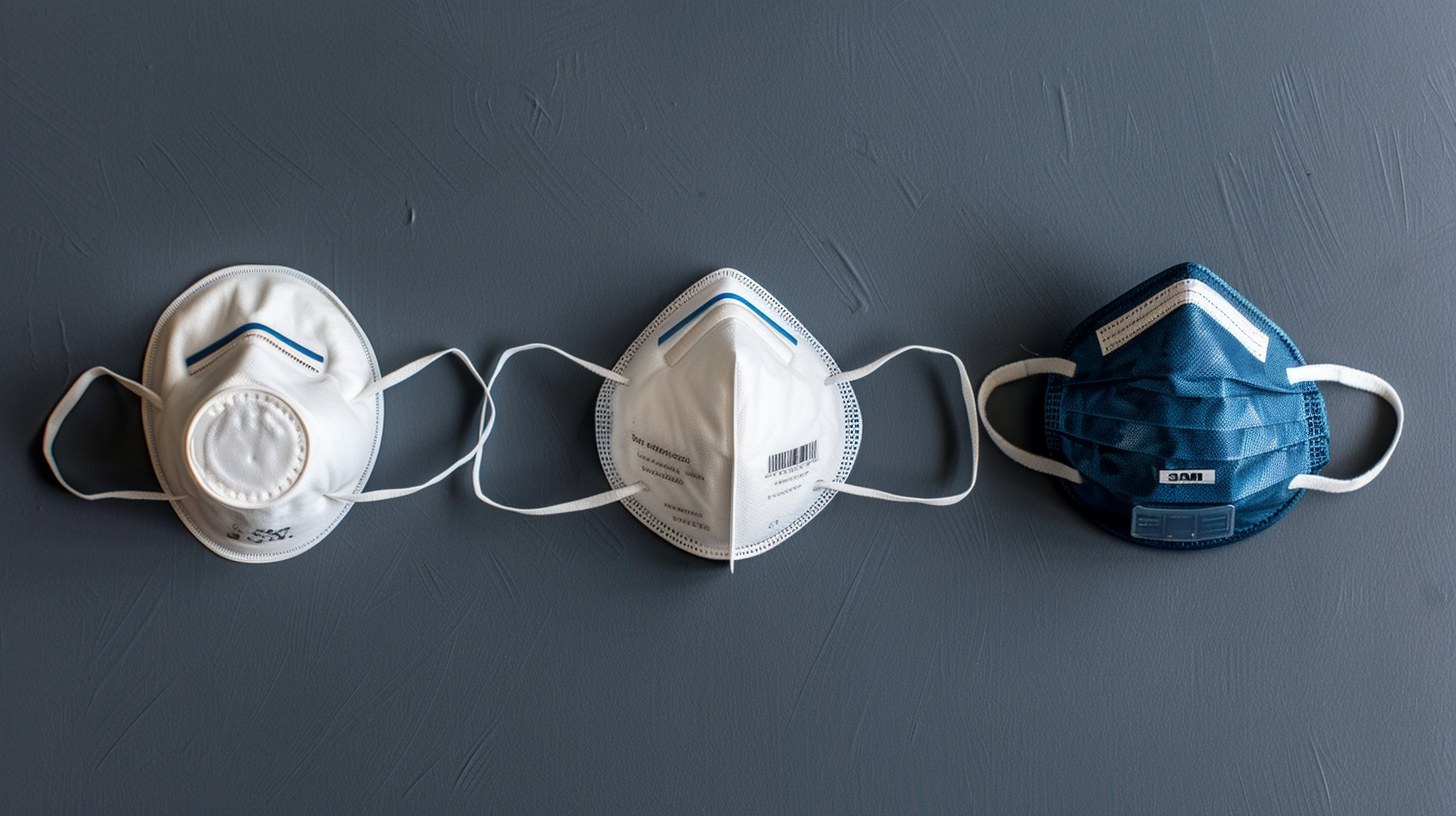
Three masks side by side: surgical mask (no protection), standard N95 cup (particle only), and N95 with valve (particle + some gas) — the three levels of hurricane cleanup respiratory protection 🔍 Click to enlarge

Left: surgical mask — no particle or gas protection for cleanup. Center: standard N95 cup — mold spores yes, H2S no. Right: N95 with exhalation valve — same particle filtration, easier breathing in Florida heat.

Mold Removal

What You Need for Mold Removal After a Hurricane

"After Idalia we had black mold — Stachybotrys — in the lower two feet of every exterior wall. My husband has asthma. We got N95 masks at Home Depot. He was wheezing within 20 minutes of starting removal. What we had were basic N95 cup masks that weren't fully sealed to his face — there's a difference between a mask rating and a mask seal. We ended up renting proper half-face respirators with P100 cartridges. Night and day difference."

— New Port Richey, FL · Post-Idalia, 2023

Minimum protection for mold removal

Any NIOSH-approved N95 rated mask provides adequate filtration for mold spores during typical residential hurricane mold remediation. The filter rating is the floor, not the ceiling. The practical effectiveness depends heavily on fit and seal.

  • N95 cup or fold-flat masks — adequate for light mold work in well-ventilated areas. Must be NIOSH-approved, not just "N95 equivalent." Must fit tightly to the face — perform a seal check before starting work.
  • N95 with exhalation valve — easier to breathe in Florida heat, same inhalation protection. The valve only affects exhalation — inhalation protection is identical.
  • P100 half-face respirator — for heavy mold work, enclosed spaces, or anyone with a respiratory condition. P100 filters 99.97% of particles vs N95's 95%. The half-face design provides a superior face seal. Reusable with replaceable cartridges — more economical for extended cleanup periods.
Florida heat and mask compliance:

Hurricane cleanup in Florida happens in 90°+ heat and high humidity. An N95 that isn't being worn because it's too uncomfortable provides zero protection. If your household will struggle with a tight-fitting N95 in the heat, a P100 half-face respirator with an exhalation valve actually breathes easier than a cup N95 despite its larger size. Buy what will actually be worn.

Waste Bag Handling

What You Need When Handling Waste Bags and the Emergency Toilet

"I do septic system work. H2S is something I think about every single day on the job. After Ian I saw neighbors handling their waste bags in paper surgical masks. I pulled over. Explained what H2S does. Showed them the activated carbon masks I carry in my work truck. One of them said nobody had ever told them that a regular mask doesn't filter gas. That's a gap in hurricane prep information that gets people hurt."

— Septic system contractor, Hernando County, FL · Post-Ian, 2022

When you open a contractor bag that contains waste, or manage the emergency toilet bucket, or handle sealed waste bags at the curb, you are potentially exposing yourself to H2S gas. The concentration depends on how long the material has been decomposing and the temperature — Florida heat dramatically accelerates decomposition and H2S production.

Protection levels for waste bag handling

  • Outdoors, brief contact (carrying sealed double-bagged waste to curb): Activated carbon N95 — adequate for brief outdoor exposure with proper double-bagging and sealed bags.
  • Opening or managing waste bags outdoors: Activated carbon N95 minimum. P100 half-face with OV/P100 combination cartridge preferred.
  • Managing the toilet bucket — removing and sealing waste bags: P100 half-face respirator with combination organic vapor + particulate cartridges. This is the highest-risk exposure scenario.
  • Any enclosed space with waste materials: P100 half-face with OV/P100 combination — always. Never handle waste materials in enclosed spaces without gas protection.
⚠️ Never handle waste bags in an enclosed space without gas protection

H2S is heavier than air. In an enclosed garage, bathroom, or utility room, H2S from opened waste bags accumulates rapidly at floor level. Concentrations that cause olfactory paralysis — where you can no longer detect the smell — can be reached within minutes in a small enclosed space. If you must manage waste bags indoors, use a P100 half-face with OV/P100 combination cartridges and ventilate immediately.

Quick Reference

When to Wear Each Mask During Hurricane Cleanup

TaskMinimum maskRecommended mask
General debris removal outdoorsStandard N95Standard N95
Drywall and insulation removalStandard N95P100 half-face
Mold removal — light, outdoorsStandard N95N95 with exhalation valve
Mold removal — heavy, enclosedP100 half-faceP100 half-face + OV cartridge
Sealed waste bags — outdoor carry to curbActivated carbon N95Activated carbon N95
Opening/managing waste bagsActivated carbon N95P100 half-face + OV cartridge
Toilet bucket bag changeP100 half-face + OVP100 half-face + OV cartridge
Bleach/disinfection mixing outdoorsStandard N95Activated carbon N95
Roof tarping and exterior workNone requiredStandard N95 for dusty conditions
Critical Factor

Fit and Seal — Why the Right Mask Still Fails Without Proper Fit

"I'm a nurse. I was fitted for N95 masks during COVID and I know how to seal-check a mask. After Helene doing mold cleanup I was frustrated watching my husband just put on his N95 and go to work without any seal check. All the filtration rating in the world means nothing if air is bypassing the mask through gaps at the nose or cheeks. I made him do a seal check every time he put his on — positive pressure, negative pressure — before he started work."

— Registered nurse, Citrus County, FL · Post-Helene, 2024

How to seal-check an N95 before use

  • Positive pressure check: Cover the exhalation valve (if present) with your palm. Exhale gently. The mask should slightly puff out and hold pressure for 1–2 seconds. If air escapes around the edges, reposition and retry.
  • Negative pressure check: Cover the inhalation vents with your palms. Inhale sharply. The mask should collapse slightly against your face and hold. If air rushes in around the edges, reposition and retry.
  • The nose wire must be formed to your nose. Press the nose wire firmly from the center out to both sides. An unformed nose wire creates a gap at the top of the mask that bypasses all filtration.
  • Facial hair breaks the seal. Any beard or stubble in the sealing area means the N95 is not providing rated protection. For anyone with facial hair, a P100 half-face respirator with a proper face seal is the only option for real protection.
Person performing negative pressure seal check on N95 mask before hurricane cleanup — both hands cupped over mask checking for air leaks at nose and cheeks 🔍 Click to enlarge

Seal check before every use. Both hands cupped over the mask — inhale sharply, the mask should collapse slightly against your face with no air rushing in around the edges.

Masks rated for your face shape matter:

N95 masks come in multiple sizes and fit profiles — small, medium, large, and different cup vs fold-flat shapes. A mask that fits poorly on your face structure provides significantly reduced protection even with correct technique. Buy a small variety pack before hurricane season and identify which model seals best to your face before you need it in the field.
Complete System

The N95 Is One Part of the Full Sanitation System

Does an N95 protect from H2S gas?
Standard N95 masks do NOT protect from hydrogen sulfide (H2S) gas. N95 is a particle filtration rating — it filters 95% of airborne particles at 0.3 microns. H2S is a gas molecule, not a particle, and passes through N95 filter media without resistance. Only activated carbon masks adsorb H2S. For waste bag handling and emergency toilet management, you need activated carbon N95 or a P100 half-face with organic vapor cartridges.
What is the difference between N95 and KN95?
N95 is the NIOSH-approved US standard. KN95 is the Chinese equivalent standard — similar particle filtration specification but quality control and testing standards vary by manufacturer. For hurricane cleanup, NIOSH-approved N95 is the verified standard. KN95 from reputable manufacturers provides similar protection but is not interchangeable for OSHA-regulated work environments.
How long does an N95 mask last during hurricane cleanup?
Disposable N95 masks should be replaced when they become difficult to breathe through, visibly soiled, deformed, or the nose wire no longer holds shape. In humid Florida conditions with heavy physical work, this may be after just a few hours of heavy use. For extended cleanup periods, a reusable P100 half-face respirator with replaceable cartridges is more economical — cartridges last until you can smell breakthrough (for organic vapor) or until breathing resistance increases (for particulate).
Do I need a mask for every task during hurricane cleanup?
No — outdoor tasks in open air with no dust, mold, or waste materials don't require respiratory protection. Roof tarping, window boarding, and exterior assessment in clean areas don't require masks. The mask rule applies when: removing damaged drywall or insulation (dust), doing any mold remediation, handling any waste bags or toilet bucket, mixing bleach in enclosed spaces, or working in areas with visible mold or heavy debris dust.
Where can I buy activated carbon N95 masks before a storm?
Activated carbon N95 masks are harder to find than standard N95 at local hardware stores. Order online before hurricane season — 3M and Moldex make commonly available activated carbon N95 models. Half-face P100 respirators with combination OV/P100 cartridges are available at Home Depot, Lowe's, and Ace Hardware year-round in the paint department. Buy before storm season — they sell out when named storms approach.
Get your free shutter estimate →

KN95 vs N95 — What the Difference Means After a Hurricane

After COVID, the market flooded with KN95 masks. They look similar to N95s and many people have them in their hurricane prep kit without knowing the difference. For hurricane cleanup, the distinction matters.

Feature N95 KN95 Surgical Mask
Certifying bodyNIOSH (USA)China GB StandardFDA (USA)
Filtration (0.3 micron)≥95%≥95% (self-certified)60–80%
Fit test required✓ Yes (OSHA)✗ No✗ No
Mold spore protection✓ Yes⚠ If properly fitted✗ No
Sewage aerosol protection✓ Yes⚠ If properly fitted✗ No
Third-party audit✓ Required✗ Not required✓ Required

Bottom line: A properly fitted KN95 from a reputable manufacturer gives adequate protection for most hurricane cleanup tasks. But an N95 from a NIOSH-approved manufacturer is the gold standard — especially for mold remediation and sewage cleanup where you need verified filtration performance.

How Long Does an N95 Last During Hurricane Cleanup?

N95 masks are rated for single use in healthcare settings — but in non-infectious environments, NIOSH guidance allows extended use and limited reuse. After a hurricane, knowing when to replace your mask can mean the difference between protection and false confidence.

Replace Immediately If:
  • Breathing becomes noticeably harder
  • Mask is wet from sweat or water contact
  • Straps are stretched or broken
  • Mask is visibly contaminated with sewage or mold
  • You can smell what you're working around
Expected Duration by Task
  • Light dust/debris: 4–8 hours
  • Mold-affected drywall: 2–4 hours
  • Active sewage cleanup: Replace every 1–2 hours
  • Outdoor debris in humidity: 3–5 hours
Florida Heat Factor

Florida's humidity and heat accelerate mask degradation. Sweat saturates the filter media faster than in cooler climates, reducing filtration efficiency. Plan to go through twice as many masks in Florida summer conditions as you would in a Northern state doing the same work.

NIOSH and OSHA Standards — What They Mean for Homeowners

NIOSH (National Institute for Occupational Safety and Health) certifies respirator performance. OSHA (Occupational Safety and Health Administration) sets the rules for workers. As a homeowner doing your own cleanup, neither agency has direct authority over you — but their standards are the best available guidance for what actually protects you.

What NIOSH Approval Means

A NIOSH-approved N95 has been independently tested to filter ≥95% of airborne particles at 0.3 microns under controlled conditions. The approval number (TC-84A-XXXX) is printed on the mask. If you don't see it — it's not NIOSH-approved. Check the CDC's NIOSH approval database before buying bulk masks online.

OSHA's Mold Guidance for Homeowners

For mold remediation areas under 100 sq ft, OSHA recommends N95 minimum. For 100–1,000 sq ft, half-face respirator with P100 filters. Above 1,000 sq ft or when black mold (Stachybotrys) is suspected — OSHA recommends professional remediation, not DIY cleanup. Know when to call a pro.

Frequently Asked Questions About N95 Masks and Hurricane Cleanup

Can you reuse an N95 mask during hurricane cleanup?
In non-infectious environments like hurricane debris and mold cleanup, NIOSH allows limited reuse — typically 5 uses or until the mask is wet, soiled, or damaged. Between uses, hang the mask in a clean dry area and let it fully dry. Do not store used masks in a plastic bag — moisture degrades the electrostatic charge in the filter media.
Do N95 masks expire?
Yes. N95 masks have a manufacturer-stated shelf life, typically 5 years from the manufacture date. The elastic straps degrade over time and the electrostatic charge in the filter gradually diminishes. Check the manufacture date on the packaging. Masks stored in hot environments like a Florida garage may degrade faster than the stated shelf life.
Is a dust mask the same as an N95?
No. A standard paper dust mask (also called a nuisance dust mask) filters large visible particles and provides minimal protection against mold spores, bacteria, or fine debris. Mold spores range from 1–30 microns — well within N95 filtration range but largely passing through a dust mask. For any hurricane cleanup involving mold, sewage, or demolished drywall, use a NIOSH-certified N95 minimum.

Get your free hurricane shutter estimate

2026 installed prices · Insurance savings · No signup required

Calculate my cost →

General Information Disclaimer: For educational purposes only. Follow local emergency management directives. Full disclaimer →