Hurricane Survival Skills — The Complete Guide
Most people grab whatever garbage bags are on sale before a storm. That mistake costs real money and creates real danger. The difference between a 0.9-mil kitchen bag and a 3-mil contractor bag isn't just thickness — it's whether you get mold spores in your lungs, whether your emergency toilet holds for 10 days, and in some situations, whether you live or die.
Everything on this page
55 Uses — Click Any Item to Jump There
Click any line to jump directly to the full instructions. No scrolling through what you don't need.
☀️ Before the Storm
1
🪨Improvised sandbags (fill calculator included)
→
2
🌧️Rain water collection
→
3
📄Protect documents, medications, electronics
→
4
🧊Protect your freezer during evacuation
→
5
🌊Doorway flood barrier — how many bags per opening
→
6
💊Waterproof your go-bag medications
→
7
💻Double-bag your hard drive and router
→
8
🛁Line any container for emergency water storage
→
9
🎒Waterproof your bug-out bag contents
→
10
🏗️Weight bags for wind bracing and tarp anchors
→
11
🍱Double-bag shelf-stable food for flood protection
→
12
🔋Waterproof battery packs and chargers
→
🚽 Emergency Sanitation
13
🪣Bucket toilet system (Gamma Seal method)
→
14
🚽Use your actual toilet (bag-in-bowl method)
→
15
🎒WAG bags for go-bags and vehicles
→
16
🪣🪣Twin-bucket urine separation system
→
17
🌲Pine pellets vs kitty litter vs sawdust
→
18
🚿Hand-wash station setup
→
19
🌿Diluted urine as emergency fertilizer
→
20
🧴Commercial BioGel vs pine pellets — cost breakdown
→
21
👴Easiest setup for elderly and young children
→
22
⏱️How long each bag lasts — family of four math
→
🌀 After the Storm
23
🦠Mold containment — wet drywall protocol
→
24
📋Documenting damage for insurance
→
25
🏠Roof tarp weighting
→
26
➕Rain poncho, car protection, roof patch & more
→
27
🖊️What to write on every bag (labeling system)
→
28
🗑️Disposal rules — Florida & Citrus County
→
29
👕Bagging flood-contaminated clothing
→
30
🌧️Emergency rain poncho — cut and wear
→
31
🚗Waterproof car interiors before window breakage
→
32
🔥Ash disposal from generators and rocket stoves
→
33
🏚️Temporary roof puncture patch with 3M tape
→
34
🧱Isolating wet flooring and carpet sections
→
35
🐶Pet waste system — dogs, cats, small animals
→
36
⚠️Leptospirosis danger after Florida floods
→
37
☀️Storing bags when pickup is delayed 2+ weeks
→
38
💥When a bag splits — emergency recovery steps
→
39
👶Children's toilet regression during disasters
→
40
💰Bucket system vs Porta Potti — real cost comparison
→
41
🏘️HOA rules and debris bags — Florida law explained
→
⚠️ Safety & Buying Smart
42
☠️H2S gas danger — what can kill you
→
43
🛒Brand comparison — which bags hold up
→
44
❓FAQ — questions homeowners ask most
→
45
📊Specs — mil, LLDPE, weight rating explained
→
46
⭐Star-sealed bottom vs flat seam — why it matters
→
47
📦How many boxes to stockpile per household size
→
48
🌡️How Florida heat degrades stored bags over time
→
49
😷Which respirator actually protects you — and which doesn't
→
50
👶Plastic bag suffocation danger for children under 5
→
51
🐕Animal hazards — dogs, cats, and contractor bags
→
52
☣️Biohazard classification — what's actually in the bags
→
53
⚠️Biohazard labeling system — protect your family and crew
→
54
🦠Neighborhood disease spread — E. coli, Lepto, Norovirus
→
55
🏘️How to talk to your neighbors before the storm
→
Before the Storm
What to Do Before the Hurricane Hits
"We filled contractor bags with yard dirt when the sandbag distribution ran out two hours before Ian made landfall. Stacked them three deep across the garage door. Kept out six inches of surge that flooded both neighbors. Twenty bags, forty minutes of work."
— Port Charlotte, FL homeowner · Post-Ian, 2022
How many bags do you actually need?
Four boxes minimum for a single-family home — two boxes of 42-gallon contractor bags and two boxes of 33-gallon. FEMA estimates the average home generates 8–12 cubic yards of debris after a major storm. A fully packed 42-gallon bag holds roughly 0.2 cubic yards. Emergency toilet use for a family of four for 10 days requires another 120 bags on top of that.
Storage warning:Store bags in a sealed waterproof bin away from direct heat and UV. Florida garage heat degrades plastic over time. Bags stored for two years in a hot garage may be brittle when you need them most.
Improvised sandbags — dirt works fine
Fill contractor bags 2/3 full with yard soil, tie off, and stack. They interlock better than traditional sandbags because the plastic deforms slightly and conforms to adjacent bags. Fill weight is about 35–40 lbs per bag — manageable for one person. Post-Katrina survival forums documented this widely when FEMA distribution points ran dry hours before landfall.
Sandless sandbag fill calculator:A single layer of 42-gallon contractor bags filled 2/3 with soil covers roughly 18 inches of linear barrier per bag. To protect a standard 8-foot garage door opening at two bags high you need approximately 11 bags. A standard 3-foot entry door needs 4 bags per layer. Stack three layers high for surge protection up to 18 inches — that's 33 bags for a garage door, 12 for an entry door. Fill before the storm while you still have time; wet soil is heavier and harder to work with.
Water collection from rain
A clean unused contractor bag draped inside any large container — a trash can, a barrel, a wheelbarrow — becomes a rain collection system that catches and holds water without contaminating it with the container's residue. Drape the bag over the rim and let rain fill it directly. Tie it off when full. This water is suitable for toilet flushing (to clear lines once sewers restore), washing, and with boiling or chemical treatment, emergency drinking water. One 42-gallon bag can hold up to 35 gallons of rain water — roughly a 2-day supply for basic hygiene for a family of four. Never use a bag that previously held waste, debris, or mold-contaminated material for water collection.
Protecting documents, medications, electronics
Double-bag method: place documents (birth certificates, insurance policies, passports, deeds) inside one contractor bag, press out the air, twist and tie. Place that bag inside a second contractor bag and repeat. Add a silica gel packet between the layers. This protects against 24–48 hours of submersion in Category 3 floodwater. Same method works for medications, external hard drives, and routers.
Protecting your freezer during evacuation
Before evacuating, double-bag everything in your freezer inside contractor bags while it's still frozen. Category 3 floodwater contains sewage, agricultural runoff, and fuel. Sealed contractor bags keep contents intact even if floodwater reaches the refrigerator. When you return you can make informed decisions about what's safe to keep.
Emergency Sanitation
Emergency Toilet: Three Methods Compared
"Sewage backed up into our first floor 18 hours after Idalia. Three days without working toilets. We had a camp toilet with thin bags — two of them split. One family on our street had contractor bags, a Gamma Seal lid, and pine pellets. They were the only ones without a sanitation crisis."
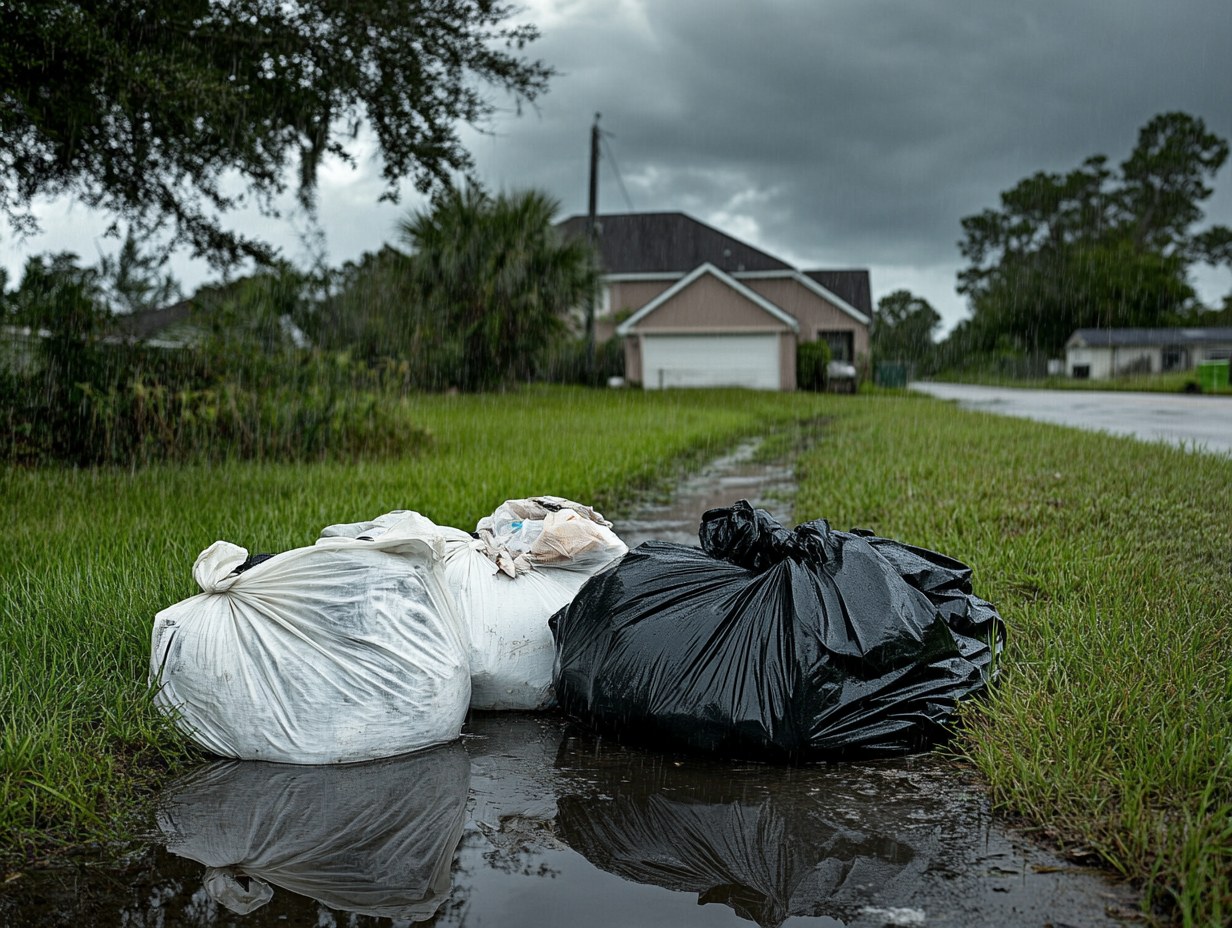
Pre-staged contractor bags before cleanup begins. Have bags open and ready before you touch anything — never handle waste, then reach into a bag roll.
— Steinhatchee, FL · Post-Idalia, 2023
Sewer lines back up after every major Florida hurricane. The answer is typically 3–10 days inland and potentially weeks on barrier islands. Plan for the full duration, not just a day or two.
🪣 Bucket + Gamma Seal
Recommended
- Airtight lid prevents odor and gas buildup
- Reusable indefinitely
- Works for full 10-day outage
- Cost: $25–40 total setup
- Best with pine pellets for odor control
🚽 Over your toilet
Easy option
- Psychologically easier, especially for kids and elderly
- No extra equipment needed
- Bag conforms to bowl shape
- Less stable than bucket method
- Best for short outages 1–3 days
🎒 WAG Bags
Go-bag option
- Powder gels waste on contact — single use
- Pack-out friendly, no bucket needed
- Best for go-bags and vehicles
- More expensive per use
- Not practical for 10-day home outage
Method 1: The Bucket System (Recommended)

A complete bucket toilet setup: 5-gallon bucket, wooden seat adapter, contractor bag liner, toilet paper, hand sanitizer, and wipes. This is what ready looks like.
Get a 5-gallon bucket — any standard hardware store bucket works.
Get a Gamma Seal lid — threads on and creates an airtight, liquid-tight seal with no tools. A standard snap-on lid pops under gas pressure buildup. Critical difference. Cost: $8–12.
Get a bucket toilet seat adapter — snap-on seat that converts the bucket into a usable toilet. Cost: $10–15.
Line with a 42-gallon contractor bag — drape it over the inside of the bucket. Extra material folds over the outside edge.
Add your absorbent of choice — 2-inch layer in the bottom. Pine pellets, kitty litter, or sawdust all work. See the absorbent comparison below.
After each session: add a scoop of absorbent on top. When the bag is 2/3 full, lift it out, twist and tie, double-bag, and dispose outside in shade. Thread the Gamma Seal lid onto the clean bucket immediately.
Method 2: Over Your Actual Toilet
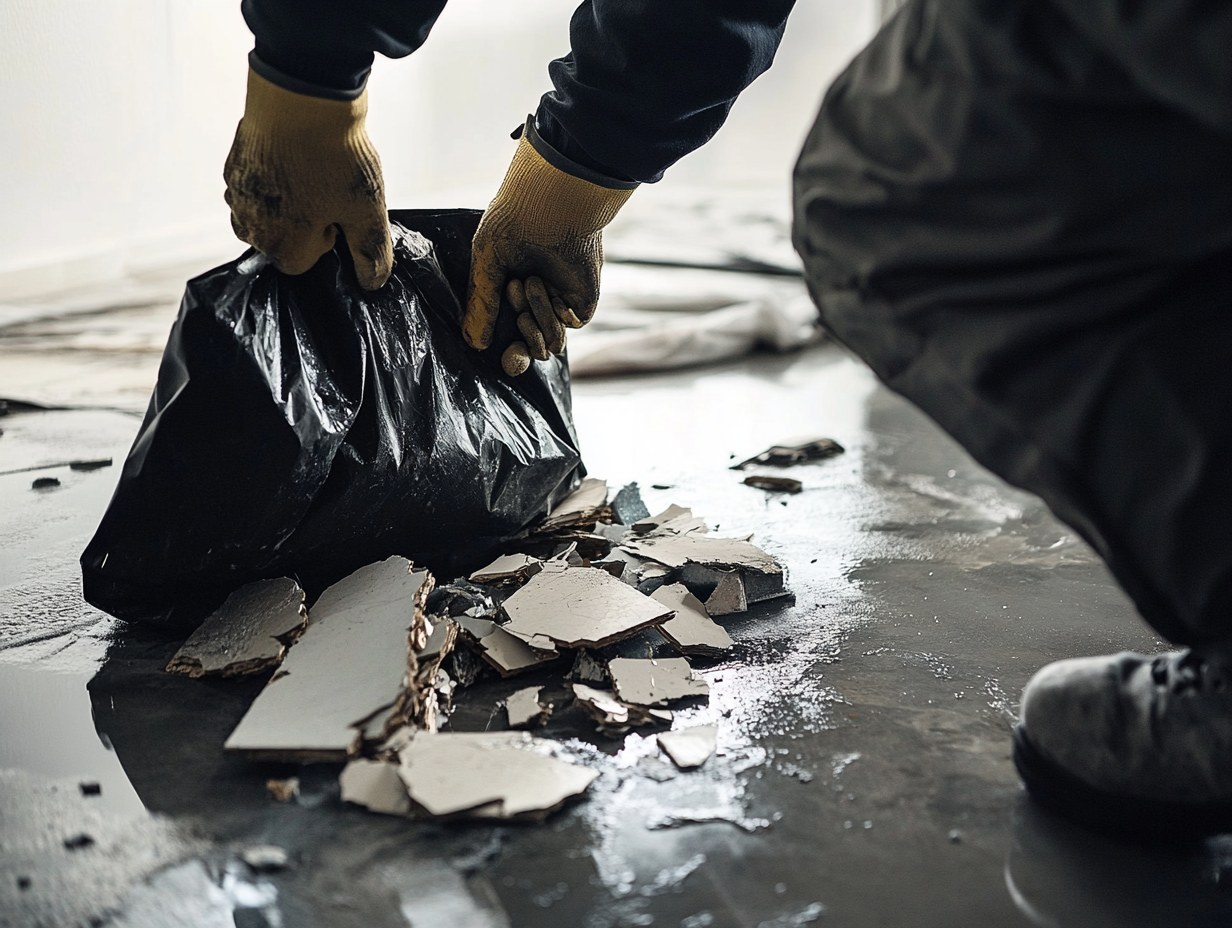
A contractor bag draped inside the bowl and over the rim — seat down on top holds it in place. Psychologically easier for families with young children or elderly members.
When sewers back up but your bowl is intact — seat down, spread a contractor bag inside the bowl so it drapes over the rim, use normally, lift out and double-bag immediately. Add pine pellets or kitty litter to the bottom before use. Best for short outages and families with young children or elderly members.
Method 3: WAG Bags (For Go-Bags and Vehicles)
WAG bags (Waste Alleviation and Gelling) contain a powder that solidifies waste on contact. No bucket needed — use anywhere, then seal and pack out. They're the right choice for your go-bag, your car emergency kit, or evacuation shelters. Not practical for a 10-day home outage due to cost per use (~$2–4 each), but worth having a 10-pack alongside your bucket setup.
Advanced Method
The Twin-Bucket System: Why Separation Changes Everything
💡 The single biggest upgrade to any bucket toilet system
Most of the odor from a bucket toilet comes from urine and solid waste mixing together and reacting. Separate them into two buckets and you eliminate the primary odor source, cut the volume in each bag dramatically, and extend how long each bag lasts.
Bucket 1 — Solids only. This is your primary bucket setup with contractor bag, absorbent layer, and Gamma Seal lid.
Bucket 2 — Urine only. A second bucket lined with a contractor bag. No seat adapter needed. Urine alone has minimal odor when kept sealed.
Diluted urine (10:1 water ratio) can be used as fertilizer away from vegetable gardens and water sources — useful in extended grid-down situations. The solids bag lasts 3–5x longer before needing to be changed.
Florida angle:In the heat after a hurricane, the twin-bucket method is more than a comfort upgrade — it's a health decision. Mixing waste in Florida summer heat dramatically accelerates the bacterial decomposition that produces hydrogen sulfide. Separation slows that process significantly.
Absorbents Compared
Pine Pellets vs Kitty Litter vs Sawdust vs Commercial Gel
Every absorbent option works — but they work differently and cost differently. Here's the full comparison so you can stock what's right for your situation.
| Absorbent | Cost | How it works | Verdict |
|---|
| Compressed pine pellets (horse stall bedding) | ~$7 for 40 lbs | Lignin expands on contact with liquid, forms gel, neutralizes ammonia at molecular level | Best value by far — same chemistry as expensive portable toilet products at 1/10th the price |
| Clumping kitty litter | ~$12–18 for 20 lbs | Clay absorbs liquid and clumps; sodium bentonite masks some odor | Widely available, works well, heavier than pine pellets |
| Non-clumping kitty litter | ~$8–12 for 20 lbs | Absorbs liquid without clumping; less effective odor control | Budget option; functional but inferior to clumping |
| Sawdust or peat moss | Free–low cost | Absorbs liquid, slows decomposition; peat moss has natural antimicrobial properties | Great free option post-storm; requires more volume than pellets |
| Commercial waste gel (BioGel, Walex) | ~$1–3 per use | Chemical treatment breaks down waste and kills odor bacteria | Best odor control but expensive; worth having a small supply for extended outages |
Hand-wash station — the step most people skip
Your emergency toilet system is incomplete without a hand-wash station. A gravity-fed water jug with a spigot, liquid soap, and paper towels mounted near the toilet area is the minimum. A siphon pump water dispenser over a bucket works equally well. Have hand sanitizer as the secondary backup. In Florida heat without running water, hand hygiene after toilet use is a direct disease prevention measure — not optional.
After the Storm
Critical Uses After the Hurricane Passes
"My wife tried to bag wet drywall in regular bags. Three bags in, they split. She had black mold spores on her hands, her face, her shirt. The ER doc told her she'd inhaled enough to cause a chronic respiratory issue. Nobody told us you have to bag it wet and seal it immediately."
— Port Charlotte, FL · Post-Ian debris cleanup, 2022
Mold containment — the most critical post-flood use
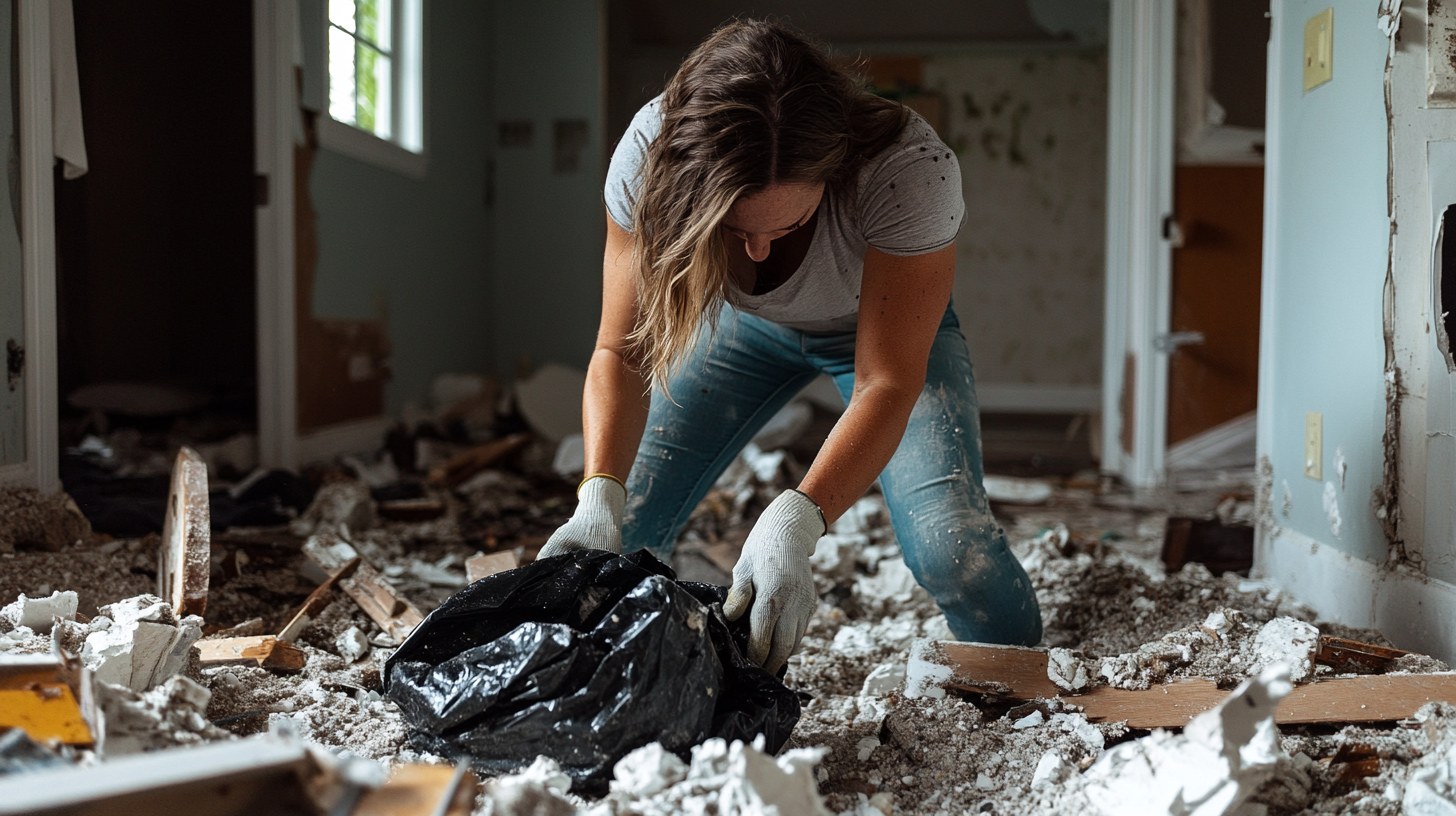
EPA mold remediation guidelines are specific: wet drywall must be bagged while still wet, before it dries and releases spores. In Florida heat that process starts within 24–48 hours after water recedes. Protocol:
- Cut drywall sections while still saturated — do not let it begin to dry
- Slide directly into an open contractor bag — do not shake or drop it
- Twist and tie the bag immediately at the top
- Place inside a second contractor bag and seal again
- Label the outside: "MOLD-CONTAMINATED — DO NOT OPEN"
- Dispose same day — never leave sealed mold bags in enclosed spaces overnight
⚠️ Mold spore warningWear an N95 during all drywall removal. Once the bag is sealed the spores are contained. If drywall has already dried before you can bag it, treat it as a hazmat situation and contact a professional remediation company.
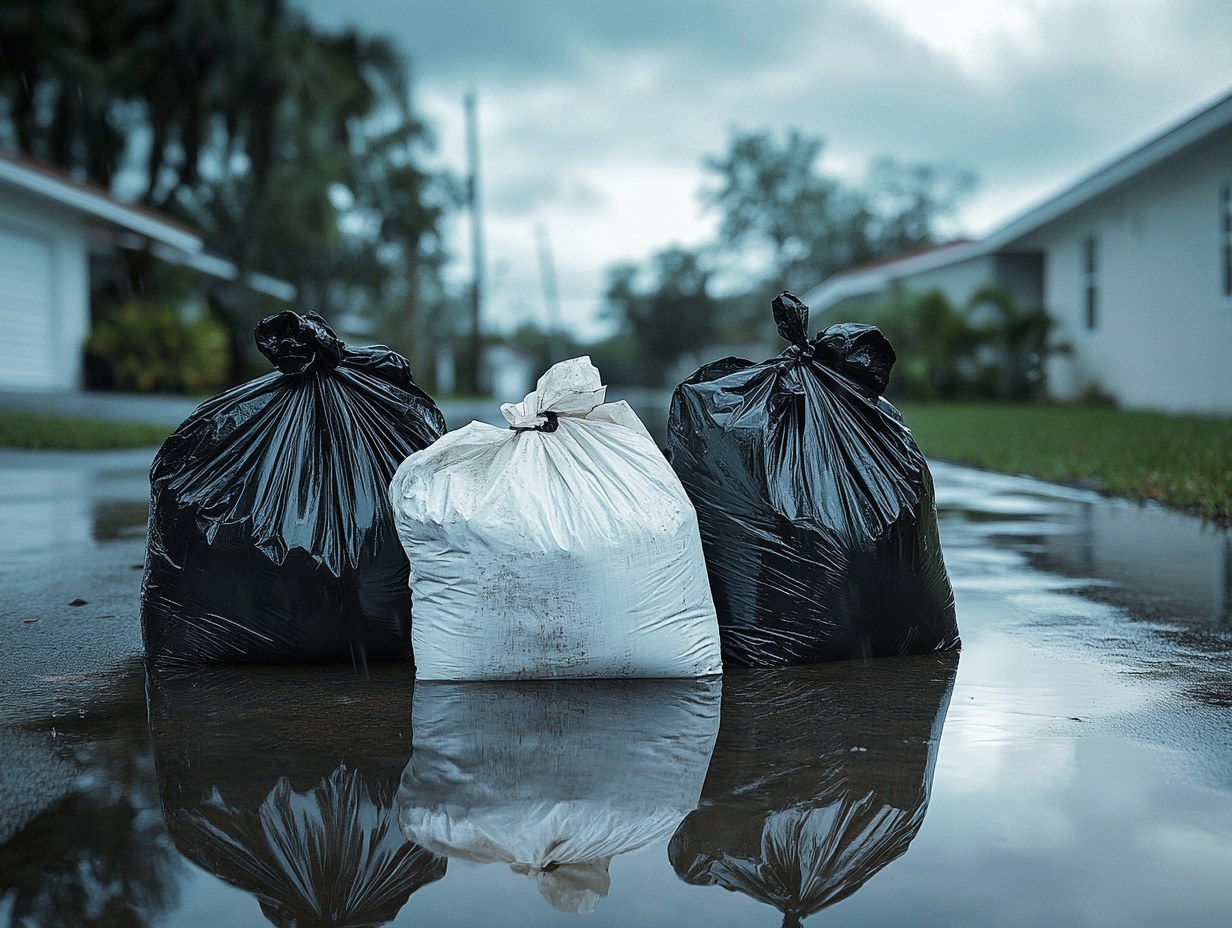
After Ian and Helene, contractor bags lined every curb in coastal Florida. Having enough before the storm is what mattered.
Documenting damage for insurance
Photograph every item on the ground before bagging it. Write on the outside of each bag: what it is, which room it came from, and "FLOOD CONTAMINATED." Insurance adjusters process labeled bags organized by room far faster than anonymous debris piles — and the documentation directly affects your settlement.
Roof tarp weighting
Fill contractor bags 1/3 full of dirt or gravel and drape them over the ridge and edges of your emergency tarp. This keeps tarps in place against residual wind gusts without penetrating the roofing material with additional fasteners — the standard post-Katrina field fix.
More post-storm uses
- Emergency rain poncho — cut head and arm holes, holds up in sustained rain unlike cheap ponchos
- Waterproofing car interiors before parking in areas at risk of window breakage
- Isolating contaminated clothing — anything that contacted floodwater into a sealed contractor bag until washed
- Ash disposal from generators, rocket stoves, or charcoal grills
- Temporary roof patch — overlap multiple bags, secure with 3M flashing tape
Pet waste during extended outages — the section nobody else writes
"After Helene we were without sewer for nine days. We have two dogs and a cat. Nobody told us what to do with pet waste. We were just tossing it in the yard and by day four it was a health and smell problem. We wish we'd had a system before the storm."
— Crystal River, FL resident · Post-Helene, 2024
Florida is one of the highest pet-ownership states in the country. After a major storm, animal waste management becomes a genuine public health issue — and almost no preparedness content addresses it. Here's the full system.
Dogs
Walk dogs to a designated area away from standing water, drainage ditches, and neighbors' property. Use contractor bags the same way you'd use oversized poop bags — one bag per walk, twist and tie immediately. The key difference from normal dog walking: do not leave any waste bags at the curb during the active storm recovery period. Collection trucks are not running. Instead, store sealed pet waste bags in a lidded outdoor trash can placed in shade, away from the house and any standing water. A 32-gallon trash can with a locking lid handles a large dog's output for 7–10 days before needing disposal.
Never let dogs near floodwater puddles:Category 3 floodwater contains sewage, fertilizer runoff, and fuel. Dogs will drink standing water if not restrained. Leptospirosis, a bacterial disease spread through contaminated water and animal urine, spikes sharply in Florida after floods. Keep dogs leashed and away from any standing water until the county issues an all-clear.
Cats — indoor litter boxes
Clumping litter is your friend here — scoop into contractor bags daily and tie off. The same pine pellet system used for the human emergency toilet works equally well for cat boxes and cuts odor dramatically. One 40-lb bag of compressed pine pellets handles a two-cat household for the full 10-day outage. Line the litter box with a contractor bag before adding pellets — when it's time to change, lift the whole bag out rather than scooping. Cuts cleanup to 30 seconds.
Small animals, birds, reptiles
Cage liners go directly into contractor bags and tie off. For reptiles that require humidity — keep their enclosures away from flood-damaged areas of the house. Mold spores that are harmless to humans at low concentrations can be fatal to reptiles and birds. If any part of your home has visible mold growth, relocate cages and enclosures to a clean area immediately.
Disposal rules for pet waste in Florida
Under normal conditions, bagged pet waste can go in regular household trash. After a declared disaster in Florida, the same rules apply — sealed pet waste bags go in your regular garbage pile at the curb, separate from construction debris and vegetative debris piles. Do not mix pet waste bags into mold debris or flood debris piles — it complicates disposal for crews and can void FEMA debris pickup eligibility for those piles. In Citrus County, Waste Pro resumes regular household garbage pickup as soon as road access allows — typically 2–4 days after a major storm passes. Check the Citrus County website or their Facebook page for confirmed pickup dates.
⚠️ Leptospirosis risk after Florida floodsLeptospirosis is a bacterial infection spread through water or soil contaminated by animal urine — including wildlife that floodwater displaces into neighborhoods. Raccoons, rats, and deer all carry it. Symptoms in dogs: fever, vomiting, muscle pain, and jaundice within 2–12 days of exposure. If your dog waded in or drank floodwater, contact your vet immediately even if the dog seems fine. In humans, the same bacteria causes flu-like illness and can lead to kidney failure if untreated. Wear gloves when handling any animal waste during post-flood cleanup.
What to write on the outside of every bag
A bag with no label is a hazard to anyone who handles it after you — family members, debris haulers, insurance adjusters, FEMA crews. Before you tie off any bag after a storm, write on the outside with a permanent marker. Here's the system:
| Bag contents | Write on outside | Why it matters |
|---|
| Flood-contaminated debris | FLOOD DEBRIS — [Room name] — DO NOT OPEN | Tells adjusters what room it came from; warns crews of contamination |
| Mold-contaminated drywall | MOLD — [Room] — DOUBLE BAGGED — DO NOT OPEN | Required by EPA protocol; warns anyone handling it to use PPE |
| Human waste bags | HUMAN WASTE — BIOHAZARD — DO NOT OPEN | Critical for anyone handling debris piles; legal requirement in most counties |
| General storm debris | STORM DEBRIS — [Date] | Helps FEMA debris removal crews categorize pickup; speeds collection |
| Insurance documentation items | [Item name] — [Room] — FLOOD LOSS — [Date] | Directly supports your insurance claim; do not dispose until adjuster photographs |
Keep a permanent marker in your storm kit:A Sharpie stored in a zip-lock bag in your emergency supplies costs under $2 and makes every bag in your post-storm cleanup traceable and safe. Black permanent marker on a black contractor bag is hard to read — use a white paint marker or white duct tape label instead.
Bag disposal after the storm — Florida rules and Citrus County specifics
What you do with filled contractor bags after a storm depends on what's in them. Florida law and county ordinances apply — and FEMA debris removal crews will not pick up everything.
- General storm debris bags — place at the curb. Florida counties activate curbside debris pickup after declared disasters. In Citrus County, Waste Pro handles regular solid waste while the county coordinates separate debris collection after major storms. Check the Citrus County Emergency Management Facebook page for pickup schedule updates — they post daily during active recovery.
- Mold-contaminated material — place at curb separated from regular debris. Label bags clearly. Most Florida counties treat post-flood mold debris as construction and demolition waste, not household waste — it goes in a separate debris pile from vegetative debris (tree limbs, leaves) and regular garbage.
- Human waste bags — do NOT place at curb for standard pickup. Contact Citrus County Utilities (352-527-7880) or your local health department for guidance on disposal during extended outages. When sewers restore, small quantities of properly sealed waste bags can typically be disposed of at permitted transfer stations. Never dump in drainage ditches, storm drains, or on undeveloped land — this is a public health violation and a felony in Florida under F.S. 403.413.
- FEMA debris removal — after a federal disaster declaration, FEMA funds curbside debris removal for eligible items. Vegetative debris (trees, limbs) goes in one pile; construction debris (drywall, flooring, lumber) in a separate pile; appliances and electronics in a third. Bagged mold debris can go in the construction debris pile if clearly labeled. Do not mix piles — mixed debris is ineligible for FEMA removal reimbursement.
Crystal River and Citrus County homeowners: After major storms the county opens the Lecanto Transfer Station (3600 W. Sovereign Path) for extended hours including weekends. Call Citrus County Solid Waste at 352-527-7670 for current hours during active recovery periods. The Chassahowitzka and Floral City drop-off sites also accept storm debris — call ahead to confirm what they're accepting.
Extended Outage Planning
Storing Filled Bags When Pickup Is Delayed 2+ Weeks
"After Ian, trash pickup didn't come for 19 days in our neighborhood. We had bags of debris, waste bags, mold bags — all of it sitting outside. By day ten the sun had degraded some of the thinner bags and we had a mess. We had no plan for storage. Nobody told us we needed one."
— Cape Coral, FL homeowner · Post-Ian, 2022
After a major hurricane, normal trash and debris pickup can be suspended for days or weeks. In Citrus County after Idalia, some neighborhoods waited 12–16 days for first pickup. After Ian in Lee County, some areas waited over three weeks. You need a storage plan before the storm — not after bags start piling up.
Sun degradation — the timeline nobody publishes
Direct Florida sun degrades contractor bag plastic faster than most people expect. UV radiation and heat cause polyethylene to become brittle and crack. Here's what actually happens by exposure duration:
| Sun exposure duration | What happens to the bag | Risk level |
|---|
| 1–3 days direct sun | Surface becomes slightly tacky; no structural change | Low |
| 4–7 days direct sun | Color fades; plastic begins to stiffen; seams start to stress | Medium — move to shade |
| 8–14 days direct sun | Significant brittleness; bags crack when handled; seams split | High — double-bag immediately |
| 14+ days direct sun | Structural failure likely during handling; contents exposed | Critical — re-bag before moving |
The correct outdoor storage system
- Shade first, always. Place all filled bags in the deepest shade available — under a carport, under a tarp, against the shaded side of the house. Shade alone extends bag integrity by 2–3x compared to direct sun exposure.
- Distance from living areas. Keep waste bags minimum 20 feet from any door or window and downwind of prevailing breeze. In Florida's summer heat the smell from even well-sealed bags intensifies rapidly.
- Separate pile types. Keep waste bags, mold bags, flood debris bags, and general debris in separate stacks. This matters for FEMA pickup categorization and prevents cross-contamination if any bag fails.
- Never stack waste bags more than 3 high. Weight compresses lower bags and stresses seams. Use a wide flat stacking pattern instead.
- Check bags every 48 hours. Look for color change (white streaking), surface cracking, or swelling from internal gas pressure. Any bag showing these signs gets double-bagged immediately before moving.
- Mark the date on every bag. Write the tie-off date in permanent marker. Helps you prioritize oldest bags for first disposal when pickup resumes.
Tarp your storage pile:A contractor tarp over your bag storage pile provides UV protection that can extend bag integrity from 7 days to 3+ weeks. Weight the tarp edges with dirt-filled contractor bags — the same improvised sandbag technique. This single step has prevented dozens of post-storm contamination incidents documented in Florida county health reports after major hurricanes.
Emergency Recovery
When a Bag Splits — Emergency Recovery Protocol
"I was carrying a bag of mold drywall to the curb on day three after Helene and the bottom seam gave out completely. Wet moldy drywall chunks on my driveway, on my shoes, on my hands. I didn't have gloves on. I didn't have a plan. I just stood there. My neighbor had to help me figure out what to do. We wish we'd talked through this before it happened."
— Homosassa, FL · Post-Helene, 2024
Bag failures happen — especially with debris bags dragged across concrete, waste bags under gas pressure, or any bag that's been in the sun too long. Knowing the recovery procedure before it happens means you react correctly instead of panicking and spreading contamination.
Mold bag failure — immediate steps
Stop moving immediately. Don't carry the failed bag further. Set it down exactly where it is and back away. Every step spreads spores.
Put on your N95 before touching anything. If you don't have one on already, get one before continuing. Disturbed mold material releases spores into the air instantly.
Bring a new contractor bag to the spill — don't bring the spill to a new bag. Open a fresh 42-gallon bag and bring it to the failed material. Slide the existing bag and its contents into the new bag from the side — don't lift or shake.
Double-bag immediately. Twist, tie, place inside a second bag, twist and tie again.
Wipe down the area. Spray any spilled material on hard surfaces with a diluted bleach solution (1 cup bleach per gallon of water). Do not sweep or use a leaf blower — both aerosolize spores.
Change your clothes. Anything you were wearing when the bag failed goes into its own contractor bag until it can be washed in hot water.
Waste bag failure — immediate steps
Don't touch the spill with bare hands. Gloves first — always. If you don't have disposable gloves, use a clean contractor bag as a hand cover.
Bring a new bag to the spill. Same as mold protocol — move the bag to the material, not material to the bag.
Triple-bag waste bag failures. Three layers minimum when re-bagging spilled human waste.
Clean the area with bleach solution. Undiluted household bleach on concrete. Let it sit 10 minutes before rinsing.
Wash hands immediately with soap and water for at least 20 seconds. Use hand sanitizer as a secondary step, not primary.
⚠️ Prevention is everythingThe best bag failure response is preventing the failure. Never drag filled bags across concrete — the abrasion tears through even 3-mil bags within a few feet. Always carry bags by the tied top, not by the body. For heavy bags, use a two-person carry or a wheelbarrow. If a bag feels like it's pulling at the seams, double-bag it before moving it — not after.
Buying Smart
Contractor Bag System vs Portable Chemical Toilet — Real Cost Comparison
"After Matthew we swore we'd never go through the bucket system again. We bought a Thetford Porta Potti before the next season. After Irma we were glad we had it. But we also needed the contractor bags anyway — for the mold, the debris, the dog. You really need both."
— St. Augustine, FL homeowner · 2017
A portable chemical toilet like the Thetford Porta Potti looks expensive upfront but may make sense for your household depending on size, duration, and comfort level. Here's the honest math.
| System | Upfront cost | Cost per day (family of 4) | 10-day total | Best for |
|---|
| Contractor bag bucket system | $25–40 | $3–5 in bags + absorbent | $55–90 all-in | Most households — best value |
| Twin-bucket upgrade | $50–70 | $2–3 (bags last longer) | $70–100 all-in | Households with odor sensitivity |
| Thetford Porta Potti 335 | $95–130 | $1–2 in chemical treatment | $110–150 all-in | Comfort upgrade for longer outages |
| Thetford Porta Potti 565E (electric flush) | $175–220 | $1–2 in treatment | $195–240 all-in | Elderly or mobility-limited household members |
| WAG bags only (no bucket) | $0 | $8–16 per day | $80–160 | Go-bags and short evacuations only — not practical long-term |
The honest verdict
The contractor bag bucket system wins on cost for almost every household. The Thetford Porta Potti makes sense in two specific situations: households with elderly members who struggle with a bucket's low profile, and outages exceeding 2 weeks where the comfort difference becomes significant. For most Florida families, the $25–40 bucket system handles a 10-day outage with less total cost than any alternative — and you need the contractor bags anyway for everything else on this page.
One critical point: buying a Porta Potti does not mean you don't need contractor bags. You still need them for mold containment, debris cleanup, sandbags, document protection, and everything else covered on this page. The toilet method is the only substitution — everything else requires contractor bags regardless.
Family Preparedness
Children and Toilet Training Regression During Disasters
"Our three-year-old had been fully trained for six months. After three days without a working toilet after Irma she completely regressed. Accidents constantly. She was scared of the bucket. The darkness, the noise during the storm, the disrupted routine — it all hit her at once. We weren't prepared for any of it. It lasted almost two months after we got home."
— Orlando, FL parent · Post-Irma, 2017
Toilet training regression during and after disasters is extremely common and almost never discussed in preparedness content. Child psychologists document it consistently after major hurricanes — the disruption of routine, the fear from the storm, unfamiliar sleeping arrangements, and an unfamiliar toilet setup all combine to trigger regression in children who were fully trained. It is normal, it is temporary, and preparing for it in advance reduces both the child's distress and the parent's stress significantly.
Before the storm — set up for children specifically
- Buy child-sized bucket toilet seat adapters — they exist and make the bucket system far less frightening for small children than an adult-sized seat
- Let young children see and touch the bucket toilet setup before the storm in a calm, matter-of-fact way — "this is our special storm toilet, it works just like our regular toilet"
- Stock pull-ups or training pants for children who are in the training window even if they've been accident-free for months — regression supplies in advance removes the scramble and the shame
- Keep a child's portable potty chair as part of your storm kit if you have children under five
During and after the storm
- Never shame or punish accidents during or immediately after a disaster — the regression is a stress response, not a behavior problem
- Maintain as much routine as possible around toilet time even in disrupted circumstances
- Keep wipes and a change of clothes easily accessible at all times during the outage period
- Expect regression to continue for days to weeks after normal services restore — the stress response outlasts the storm
- If regression persists more than 4–6 weeks after returning to normal routine, speak with your pediatrician
The kindest prep you can do:Read one age-appropriate book about storms and emergencies with your child before hurricane season. The American Red Cross has free downloadable children's guides on disaster preparedness. Familiarity with the concept of a storm toilet, stored food, and disrupted routines — discussed calmly in advance — dramatically reduces fear response when the real event happens.
Florida Homeowners
HOA Rules and Debris Bags After a Storm — Know Before You Stack
"We had seventeen bags of debris at the curb the day after Ian. Our HOA sent us a violation notice three days later saying bags had to be removed within 48 hours of the storm passing per our community rules. The county pickup hadn't even started yet. Our attorney had to send a letter explaining that Florida law supersedes HOA rules during a declared emergency. We won but it took two weeks and real stress we didn't need."
— Cape Coral HOA community · Post-Ian, 2022
Florida has one of the highest rates of HOA-governed communities in the country. After every major hurricane, HOA violation notices for debris bags at the curb spike — even during active disaster recovery periods. Here's what the law actually says and how to protect yourself.
Florida law during declared emergencies
Under Florida Statute 252.363 and related emergency management statutes, a Governor's Declaration of Emergency suspends certain local rules and ordinances that would impede disaster recovery. HOA restrictions on debris storage, bag placement, and curbside appearance are generally unenforceable during the active emergency period and for a reasonable time thereafter while government debris pickup is pending.
⚖️ The legal bottom line for Florida HOA residents
Your HOA cannot legally fine you for debris bags at the curb during an active state of emergency declaration when county debris pickup has not yet occurred. If you receive a violation notice during this period, respond in writing citing Florida Statute 252.363 and the active emergency declaration. Keep a copy of everything. If the HOA persists, contact the Florida Department of Business and Professional Regulation (DBPR) — they regulate HOAs and take emergency-period enforcement complaints seriously.
What HOAs can and cannot do post-storm
| Situation | HOA authority | Your rights |
|---|
| Debris bags at curb during active emergency declaration | Cannot enforce appearance rules | Full right to place debris for county pickup |
| Debris bags at curb after emergency declaration lifted | Can enforce rules again | Must comply with HOA rules once declaration ends |
| County pickup not yet arrived but declaration lifted | Gray area — document everything | Respond in writing, cite pending county pickup |
| Waste bags stored outdoors long-term | Can enforce after emergency period | Dispose as soon as services resume |
| Tarps on roof after storm | Generally cannot enforce during emergency | Emergency tarping is protected in Florida |
Practical steps for HOA residents before and after the storm
- Email your HOA board before hurricane season asking for their written emergency policy — their response (or non-response) is documented
- Keep a printed copy of the active emergency declaration in your storm kit — it's your first line of defense against premature enforcement
- Photograph your debris piles at the curb with a timestamp before any HOA contact occurs
- Respond to any violation notice in writing within 5 business days — silence can be interpreted as agreement
- The Florida DBPR HOA hotline is 850-487-1395 — they handle emergency-period enforcement complaints
- Your county emergency management office can also provide written confirmation that debris pickup is pending — useful documentation if HOA enforcement escalates
Citrus County note: Citrus County is not heavily HOA-governed compared to South Florida counties, but communities around Crystal River, Citrus Springs, and Lecanto have active HOAs. If you're in an HOA community, contact Citrus County Emergency Management (352-746-6555) for documentation of active disaster recovery status — useful if your HOA pushes back during the recovery period.
Critical Safety — Children, Animals & Biohazards
Plastic Bag Hazards for Children and Animals — What Every Florida Parent and Pet Owner Must Know
"After Ian we had contractor bags everywhere — debris bags, waste bags, bags of mold drywall. Our four-year-old got into the garage while we were clearing the backyard. We found her with her head inside an open contractor bag trying to look at something inside it. My heart stopped. We had no idea how dangerous that was. We'd never thought about it."
— Cape Coral, FL parent · Post-Ian, 2022
☠️ Contractor bags kill children through suffocation faster than any other common household item
The U.S. Consumer Product Safety Commission documents plastic bag suffocation as one of the leading causes of accidental death in children under 5. Contractor bags are more dangerous than regular kitchen bags — they are larger, thicker, and do not tear when a child panics. A child who pulls a contractor bag over their head and inhales creates an airtight seal against their face. The bag will not tear. The child cannot remove it. Loss of consciousness occurs within 2–3 minutes. Death within 4–5 minutes. This happens in seconds of unsupervised access.
Children — Rules That Are Not Optional
- All open contractor bags must be attended at all times. Never leave an open bag unattended anywhere a child under 12 can access. This includes garages, yards, driveways, and storage areas.
- All unused bags must be stored locked or out of reach. Boxes of contractor bags belong on high shelves or in locked storage — not on the garage floor, not in open bins, not in unlocked sheds. Children are curious about large bags and will put them over their heads, climb inside them, and use them as play items.
- Filled bags must be sealed and moved outside immediately. A tied, sealed bag is still a suffocation risk if a child pulls the tied portion open. Get filled bags out of the living space as fast as possible.
- Waste bags are a biohazard to children. Children who touch waste bags and then touch their mouths, eyes, or food are at risk for E. coli, Salmonella, norovirus, and in flooded areas, Leptospirosis. Treat all waste bags as hazardous material around children — the same rules as household chemicals.
- Mold bags are a respiratory hazard to children. Children's lungs are more vulnerable to mold spore exposure than adult lungs. A child who handles a mold-contaminated bag and then rubs their eyes or inhales near an open bag can develop respiratory symptoms within hours. All mold bags must be double-sealed and removed from the home immediately — never stored in rooms children occupy.
- H2S affects children faster than adults. Hydrogen sulfide is heavier than air and accumulates at floor level — exactly where children play and crawl. At any concentration that affects an adult, a child at floor level is experiencing a higher concentration. Never allow children into spaces where waste bags have been stored for more than a few hours without confirmed ventilation.
⚠️ Teach older children before the stormChildren ages 6–12 old enough to understand should be explicitly told before hurricane season: contractor bags are not toys, open bags are never to be touched without a parent present, and any bag with a label or that smells unusual is to be left alone and a parent called immediately. This conversation takes 5 minutes and could save a life.
Animals — Dogs, Cats, and the Hazards They Face
"Our lab mix got into the garage the morning after Helene and chewed through two waste bags before we found him. He was sick for three days — vomiting, lethargy, wouldn't eat. The vet said it was a combination of waste ingestion and possible leptospirosis exposure. $800 vet bill and three scared days. The bags were on the ground and we forgot to close the garage door."
— Lecanto, FL dog owner · Post-Helene, 2024
- Dogs will chew through contractor bags. Even well-trained dogs are attracted to the smell of waste bags and food-contaminated debris bags. A contractor bag on the ground is not a barrier for a motivated dog — it is a chew toy with dangerous contents. All filled bags must be in sealed outdoor containers or areas inaccessible to pets.
- Cats suffocate in open contractor bags. Cats climb inside large bags to hide — especially during the stress of a storm. An open contractor bag on the floor is an invitation. A cat inside a tied or knotted bag cannot escape. Check all bags before tying and disposing.
- Dogs ingesting waste bag contents face multiple hazards: bacterial infection (E. coli, Salmonella, Campylobacter), Leptospirosis from flood-contaminated waste, intestinal obstruction from ingested plastic fragments, and toxic mold exposure if they access mold debris bags. Any dog that accesses waste bags should be seen by a vet within 24 hours even if they appear fine.
- Animals tearing mold bags spread spores. A dog or cat that tears open a mold-contaminated bag releases spores into the air and carries them on their fur into the living space. Keep all mold bags completely inaccessible to animals and remove them from the property same day.
- Animals are at floor level for H2S exposure. Same as young children — dogs and cats spend time at floor level where H2S accumulates. Pets showing sudden lethargy, confusion, or respiratory distress in a space where waste bags have been stored should be moved to fresh air immediately and seen by a vet.
Biohazard Classification — What These Bags Actually Contain
This is the part most preparedness content glosses over. Here's what is actually inside your waste bags after a hurricane and why they must be treated as genuine biohazards — not just unpleasant household waste.
| Bag type | Biohazard contents | Transmission risk | Minimum protection |
|---|
| Human waste bags | E. coli, Salmonella, norovirus, hepatitis A, Cryptosporidium, Giardia, Leptospira (in flood conditions) | Fecal-oral — hands to mouth; aerosol from disturbed bags | Nitrile gloves, N95, wash hands immediately after handling |
| Flood debris bags | Category 3 water contamination — sewage bacteria, agricultural chemicals, fuel residue, industrial runoff | Skin contact, inhalation of dust from dried debris, accidental ingestion | Nitrile gloves, N95, long sleeves, eye protection for dusty debris |
| Mold-contaminated bags | Stachybotrys chartarum (black mold), Aspergillus, Penicillium, Cladosporium — spores become airborne when bag is disturbed | Inhalation — respiratory damage, allergic reaction, chronic exposure illness | N95 minimum, P100 half-face respirator preferred, eye protection |
| Pet waste bags | Toxoplasma gondii (cats), Campylobacter, Giardia, roundworm, hookworm, Leptospira | Fecal-oral, skin contact with open wounds | Nitrile gloves, wash hands immediately |
| Animal carcass bags | All of the above plus decomposition bacteria, potential rabies exposure if animal behavior was abnormal | Direct contact, aerosol | Heavy nitrile gloves, N95, call animal control — do not handle rabies-suspect animals |
⚠️ The "it's just trash" mistake kills people every disaster seasonPost-storm debris and waste bags are not household trash. They contain Category 3 biohazardous material — the same classification as medical waste. The reason post-hurricane areas see spikes in gastrointestinal illness, skin infections, and respiratory disease in the weeks after a storm is not poor luck — it is direct contact with biohazardous material without proper protection. Gloves, N95, hand washing, and keeping children and animals away from bags are not suggestions. They are the difference between a healthy recovery and a hospitalization.
Biohazard Labeling — Making It Visible to Everyone
Every waste bag, mold bag, and flood debris bag should be labeled before it leaves your hands. Anyone who encounters that bag after you — family members, neighbors, debris crews, children — needs to know what's inside at a glance. Use a black permanent marker on white duct tape applied to the outside of the bag:
- Waste bags: ⚠️ HUMAN WASTE — BIOHAZARD — DO NOT OPEN — KEEP AWAY FROM CHILDREN AND ANIMALS
- Mold bags: ⚠️ MOLD CONTAMINATION — BIOHAZARD — DO NOT OPEN — RESPIRATORY HAZARD
- Flood debris: ⚠️ FLOOD CONTAMINATION — CAT 3 WATER — DO NOT OPEN
- Pet waste: ⚠️ ANIMAL WASTE — BIOHAZARD — DO NOT OPEN
Public Health Warning
Neighborhood Disease Spread — You're Not the Only One Putting Bags on the Curb
"About two weeks after Ian, half our street came down with the same stomach bug at the same time. Vomiting, diarrhea, fever — whole families sick at once. The county health department came out and traced it back to a failed waste bag that had split open at the curb. The contents washed into the storm drain during a rain shower. Kids had been playing near the drain. Nobody made the connection until people started getting sick. That is how fast disease spreads after a hurricane."
— Cape Coral, FL neighborhood · Post-Ian, 2022
"My neighbor is an older gentleman who didn't understand the difference between his waste bags and his kitchen trash bags. He put both in the same pile at the curb, unlabeled, no double-bagging. His dog got into the pile within an hour. The dog was sick for four days. The neighbor didn't know he'd done anything wrong — nobody told him. That conversation should happen before the storm, not after people and animals are already sick."
— Crystal River, FL · Post-Idalia, 2023
After a major hurricane, entire neighborhoods become temporary open-air waste management sites. Every household is dealing with the same problems simultaneously — no sewer, no trash pickup, bags accumulating at the curb. What happens to those bags over the next 1–3 weeks directly affects every person and animal on your street, not just your own family.
☠️ Post-hurricane neighborhoods are one of the highest disease transmission environments that exist in American life
Category 3 floodwater contains sewage from every broken sewer line in the watershed. Post-storm waste bags contain human fecal matter from families who have no working sewer. The bags sit in Florida heat, degrading in the sun, attracting animals, getting rained on. Children play near curb piles. Dogs investigate every bag. Rainwater carries bag contents into storm drains that empty into the same waterways people use for fishing and swimming. This is not a hypothetical risk — the Florida Department of Health documents disease spikes in every affected county after every major hurricane.
The diseases that spread after hurricanes through improper waste bag handling
| Disease | Pathogen | How it spreads from bags | Symptoms | At-risk population |
|---|
| E. coli infection | Escherichia coli O157:H7 | Failed bags, animal contact with bags, children touching bag surfaces then mouths | Severe stomach cramps, bloody diarrhea, vomiting — can cause kidney failure in children | Children under 5, elderly, immunocompromised |
| Leptospirosis | Leptospira bacteria | Floodwater contaminated with animal and human urine washes into neighborhood; direct contact with waste | Flu-like illness, severe headache, muscle pain, jaundice — can cause liver and kidney failure | Anyone with skin cuts or abrasions; pets |
| Norovirus | Norovirus | Aerosolized particles from disturbed waste bags; surface contamination of children's play areas | Violent vomiting, diarrhea, stomach cramps — spreads person to person rapidly | Entire neighborhoods — highly contagious |
| Hepatitis A | Hepatitis A virus | Fecal-oral route from contaminated surfaces, water, and food near improperly handled waste | Fatigue, nausea, jaundice, liver inflammation — weeks of illness | Unvaccinated individuals; children |
| Salmonellosis | Salmonella | Animal vectors — flies, rodents, and dogs that access waste bags carry pathogens to food preparation areas | Diarrhea, fever, abdominal cramps — severe in elderly and infants | Children, elderly, immunocompromised |
| Cryptosporidiosis | Cryptosporidium | Contaminated water runoff from bag pile areas entering wells or water sources | Watery diarrhea, stomach pain, nausea — lasts 1–2 weeks | People with private wells; anyone consuming untreated water |
| Cholera (rare but documented) | Vibrio cholerae | Contaminated floodwater and waste in severely affected areas with compromised infrastructure | Severe watery diarrhea, vomiting, dehydration — can be fatal within hours without treatment | Anyone — most severe in elderly and children |
| Mold-related respiratory illness | Stachybotrys, Aspergillus, Penicillium | Improperly sealed mold bags releasing spores into neighborhood air when disturbed or rained on | Respiratory irritation, asthma attacks, chronic cough, hypersensitivity pneumonitis | Asthma sufferers, children, elderly |
How disease spreads from your curb pile to your neighbors
This is not like COVID — you are not waiting to encounter someone who is sick. The pathogen is already there, in every bag, guaranteed.
With an airborne illness you can distance from infected people. With hurricane waste bags, there are no uninfected bags. E. coli, Leptospirosis, and Norovirus are present in every bag of human waste on your curb right now. The disease has already found your street. The only variable you control is whether it reaches your family. See the full explanation: Why this is not like COVID →
Most people think of post-storm disease as something that happens through direct contact with floodwater. The curb pile vector is just as dangerous and far more persistent — bags sit at the curb for days or weeks, and every day creates new transmission opportunities.
- Animal vectors. Flies land on waste bags, then land on exposed food in kitchens. Rats, raccoons, and opossums that floodwater displaces into neighborhoods investigate every bag — they carry Leptospirosis, Salmonella, and Hantavirus and track it through neighborhoods on their feet and fur. Dogs that access waste bags become vectors themselves, carrying pathogens home on their paws and coats into the living space.
- Rainwater runoff. Florida receives heavy afternoon rain even between named storms. Rain hitting an improperly sealed or degraded waste bag carries its contents across driveways, lawns, and sidewalks into storm drains. Storm drains in Florida coastal counties discharge to the same canals, rivers, and bays where people fish, kayak, and swim.
- Children playing near curb piles. Children who play near debris piles and then touch their faces have direct fecal-oral transmission exposure. Post-storm debris piles are magnets for curious children. Every neighborhood with waste bags at the curb needs adults actively keeping children away from the piles — not just their own children, but all children on the street.
- Bag degradation in sun. Bags that have been in direct sun for 8–14 days begin to crack and fail — their contents become exposed at the curb weeks before pickup arrives. This is not hypothetical. This is what happened in Lee County after Ian when some areas waited three weeks for debris pickup.
- Mixing bag types. When waste bags are mixed into general debris piles, debris crews who don't know the pile contains biohazardous waste handle it without appropriate PPE. This exposes the workers and spreads contamination across multiple locations as they move through the neighborhood.
What you can do to protect your neighborhood — not just your family
Your bags are a neighborhood responsibility, not just a personal one:The choices you make about how you seal, label, and store your waste bags after a hurricane directly affect the health of every family on your block. This is not about blame — it's about information. Most people who improperly handle post-storm waste bags don't know they're creating a risk. Share this page. Have the conversation with neighbors before the storm. One well-informed block keeps dozens of families safer.
- Double-bag every waste bag without exception. A single failure in one layer is contained by the second layer. A single-layer waste bag that fails at the curb is a neighborhood disease event.
- Label every bag clearly on the outside — "HUMAN WASTE — BIOHAZARD — DO NOT OPEN" in large letters visible from 10 feet. This protects children, neighbors, and debris crews who encounter the bag.
- Keep waste bags completely separate from all other debris. Never mix waste bags, mold bags, or flood contamination bags into a general debris pile. Stack them separately, clearly labeled, away from the main debris pile.
- Cover your curb pile. A tarp over the waste bag portion of your curb pile prevents rain from washing contamination into the street and reduces fly access. Weight the tarp edges with dirt-filled contractor bags.
- Keep ALL children away from ALL curb piles on your street — not just yours. Other families may not know about proper sealing. A child who touches a neighbor's improperly sealed waste bag faces the same risks as touching your own. Establish a clear rule with your children before the storm: no touching any bag, pile, or debris at any curb.
- Keep ALL dogs leashed away from curb piles. Your dog doesn't understand why a bag is dangerous. Your leash does the understanding for them.
- Talk to your neighbors before the storm. Print this page. Share the labeling system. Coordinate so your entire block is handling waste bags the same way. A block where every household double-bags and labels is dramatically safer than a block where one household doesn't know the rules.
- Report obvious biohazard situations to Citrus County Health Department (352-527-0068) or Florida Department of Health if you see improperly handled waste bags creating a neighborhood hazard. They have post-disaster rapid response teams specifically for this.
⚠️ Citrus County specific — private wells and septic systemsCitrus County has a high proportion of homes on private wells and septic systems compared to municipal water and sewer. This creates two additional disease vectors that don't exist in fully sewered urban areas. Floodwater that carries waste bag contamination into the soil can reach private well intakes — test your well water before drinking from it after any flood event. Citrus County Water and Sewer (352-527-7880) can advise on testing. Damaged or flooded septic systems that back up into yards create the same risks as improperly handled waste bags. Never assume your septic system survived a flood intact without inspection.
Talk to your neighbors — before the storm
The single most effective thing you can do is have this conversation with your immediate neighbors before hurricane season starts — not after bags are already at the curb and people are already sick. You don't need to be an expert. You just need to share a few key points:
- Double-bag all waste bags and label them BIOHAZARD
- Keep waste bags separate from debris piles
- Keep children and dogs away from all curb piles — theirs and everyone else's
- Cover curb piles with a tarp when rain is coming
- Call the health department if you see a bag failure situation
That five-minute conversation, block by block, is what prevents a post-hurricane neighborhood disease outbreak. It costs nothing. It could prevent hospitalizations.
Critical Safety Warning
Hydrogen Sulfide: The Gas That Can Kill You
☠️ H2S from accumulated waste bags can reach fatal concentrations in enclosed spaces — OSHA has the fatality reports
Hydrogen sulfide is colorless, heavier than air, and accumulates at floor level in enclosed spaces. It smells like rotten eggs at low concentrations — but at concentrations that cause rapid incapacitation, your sense of smell shuts down first. You lose your warning system before you lose consciousness.
| H2S concentration | Effect | Time to onset |
|---|
| 1 ppm | OSHA 8-hour exposure limit | Long-term limit |
| 50 ppm | Eye and lung irritation, disorientation | Minutes |
| 100 ppm | Loss of consciousness | Minutes |
| 300+ ppm | Immediately fatal | Seconds to minutes |
⚠️ Florida heat makes this worseIn Florida summer heat, bacterial decomposition in a sealed space accelerates dramatically. A bathroom where waste bags have been accumulating for 48+ hours with no AC and no ventilation can reach dangerous concentrations. OSHA fatality records document multiple deaths from this exact mechanism in enclosed spaces.
⚠️ A standard N95 does NOT protect against H2SOnly activated carbon filters — OV/P100 combination cartridge respirators or N95s with an activated carbon layer specifically rated for organic vapors — provide any protection. For routine bag changing: work quickly, keep doors and windows open, never let anyone enter an enclosed space until ventilation is confirmed. The twin-bucket urine separation method significantly reduces H2S production by preventing the urine-solid mixing that accelerates bacterial decomposition.
Buy the Right One
Which Contractor Bags Actually Hold Up
| Spec | Minimum for hurricane use | Why it matters |
|---|
| Thickness | 3 mil | Below 2.5 mil splits dragging on concrete or across nail debris |
| Plastic type | LLDPE (Linear Low-Density) | LLDPE stretches before tearing; LDPE punctures and rips immediately |
| Capacity | 42 gallons | 33-gallon fills too fast; 55-gallon is too heavy fully loaded |
| Weight rating | 40 lbs wet | Handles are the first failure point — this rating is for handle seams |
| Bottom seam | Star-sealed | Star seals distribute weight evenly; flat seams concentrate stress at corners |
| Brand | Mil | LLDPE? | Verdict |
|---|
| Husky Pro 42-gal (Home Depot) | 3 mil verified | Yes | Top pick — most recommended on r/preppers and SurvivalistBoards |
| Hefty Contractor 45-gal | 2.8–3 mil | Yes | Good overall; occasional handle seam failures on very heavy loads |
| Glad ForceFlex Contractor | 2.5 mil | Yes | Thinner than labeled but LLDPE saves it; more flexible than LDPE competitors |
| Generic / warehouse club | Often 1.5–2 mil | Usually no | Mislabeled mil ratings common — avoid for critical hurricane uses |
How many to stockpile: Minimum 2 boxes (50 bags) of 42-gallon 3-mil bags. For serious preparedness: 4 boxes (100 bags). Emergency toilet alone for a family of four for 10 days = 120 bags. Add 40–60 more for debris cleanup after a major storm.
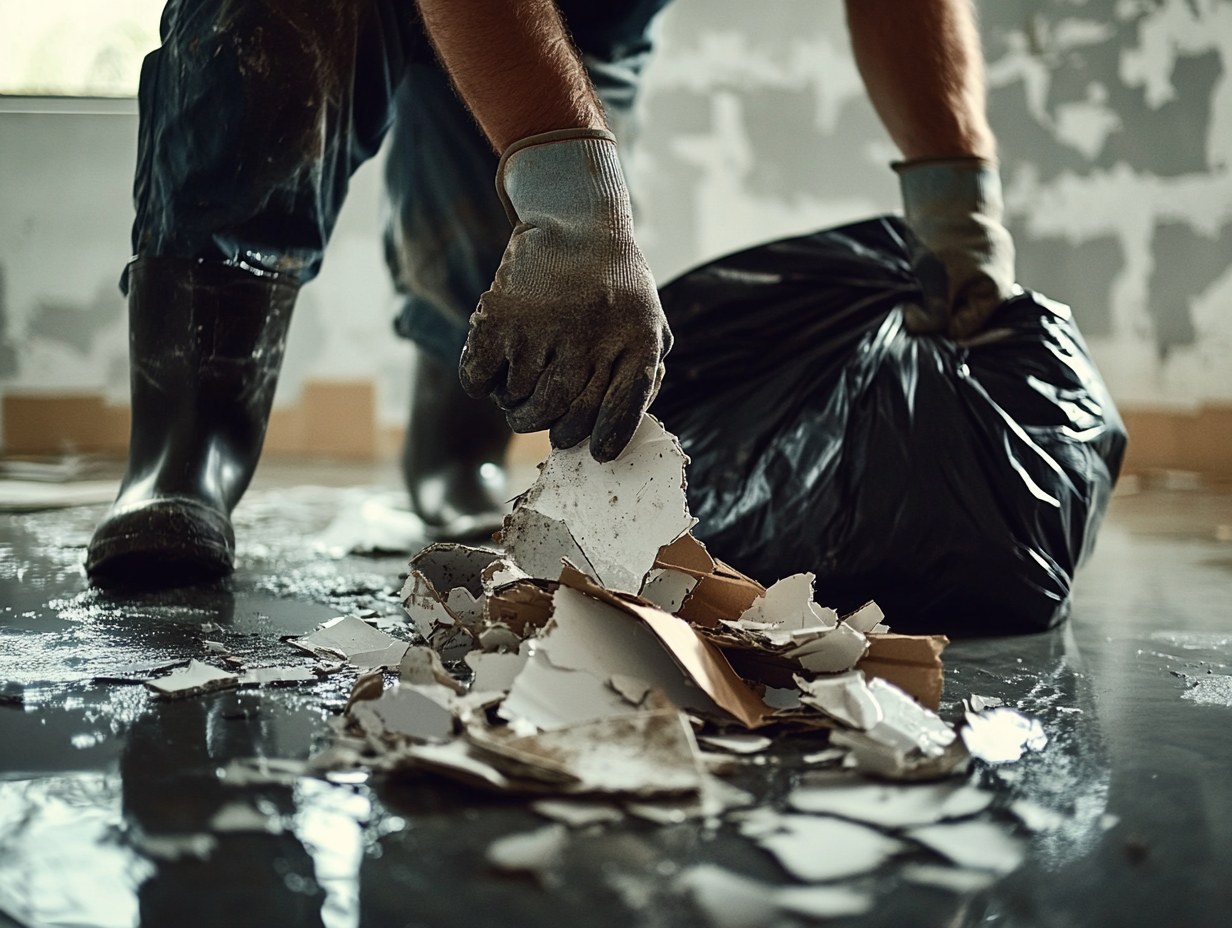
The bags that matter most are the ones already in your garage before the storm arrives.
Full Series
Hurricane Survival Skills — 30 Deep-Dive Guides
Each guide covers one supply item with more depth than anything else published on it.
🔥 Rocket Stove
Cooking, heating, water purification — and the CO danger that kills people every season
🖤 Tape: What Works
Why duct tape fails and what Gorilla Tape, Flex Tape, and 3M flashing tape actually do
🪣 5-Gallon Buckets
Water storage, sanitation, and 20 uses nobody writes about
🔵 Tarps (Not Equal)
Mil thickness, grommets, and why the dollar store blue tarp will fail you
🔦 Headlamps
Lumen ratings, battery life under load, the feature that makes the difference
😷 N95 Masks
Activated carbon vs basic, and what actually protects from mold spores and H2S
Related guides on HurricaneShutterCalc.com
Get your free shutter estimate →