By State
🌴 Florida ⭐ Texas 🎷 Louisiana 🌊 Mississippi 🏖️ Alabama 🍑 Georgia 🌴 South Carolina 🏔️ North Carolina 🦅 Virginia 🦀 Maryland 🗽 New Jersey 🌆 New York 🦞 Massachusetts
Shutter Types
🪗 Accordion ⬇️ Roll-Down 🌺 Bahama 🏛️ Colonial 🛡️ Storm Panels 🕸️ Hurricane Screens 🪟 Impact Windows ↔ Accordion vs Roll-Down ↔ Shutters vs Windows
Guides
🧮 Cost Calculator 🤖 AI Pricing 📋 The Process 🔨 DIY Shutters 🪵 Plywood Guide 🔧 Maintenance 🛒 Supplies 🏷️ AirTags & Security 📋 Family Emergency Plan
After the Storm
🆘 Disaster Help Hub 🛡️ Post-Storm Safety 🌡️ Heat Safety 🐾 Pets & Livestock 🏠 Roof Tarping 💧 Water Damage 🌳 Tree Removal Florida Recovery Texas Recovery NC Recovery
Verify Contractor
Florida Texas Georgia North Carolina Virginia New Jersey New York Massachusetts
Free Estimate →
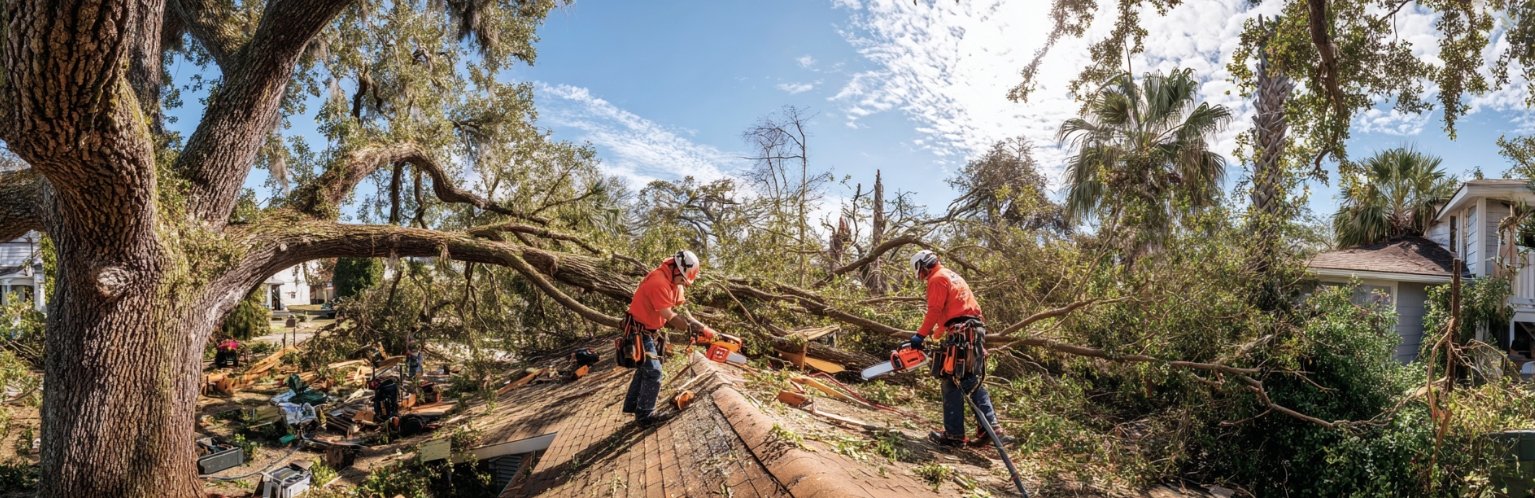
Tree removal crew after hurricane
🌳 Post-Storm Recovery · Tree Removal

Hurricane Downed Tree
Removal Guide

Immediate safety steps, DIY removal for small trees, what to look for when hiring a tree service, insurance coverage, and how to avoid post-storm tree removal scams.
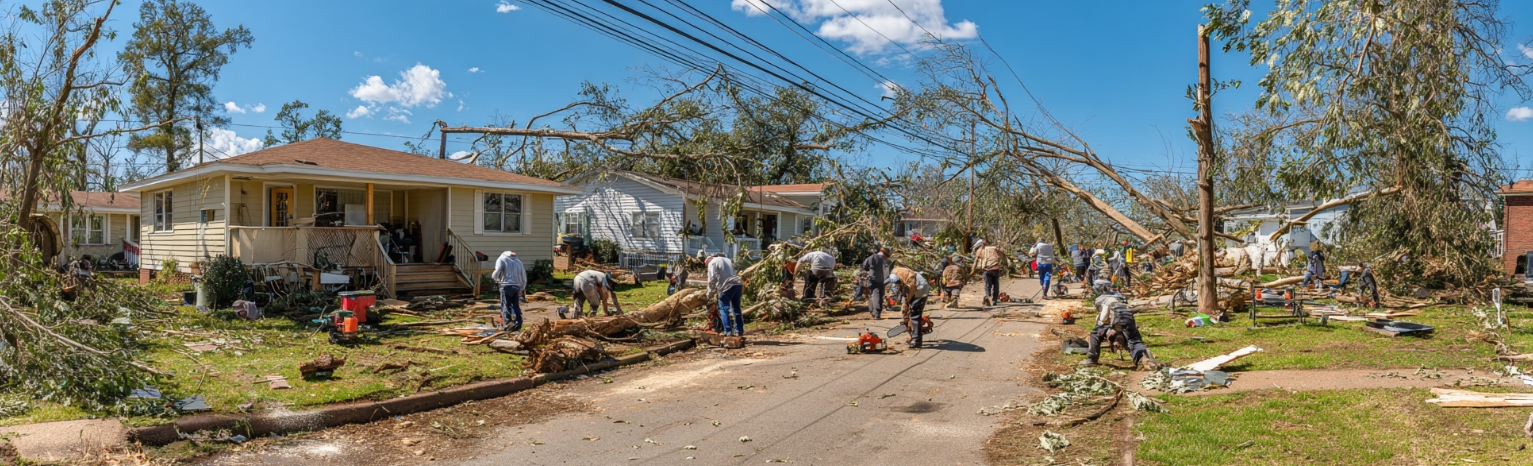
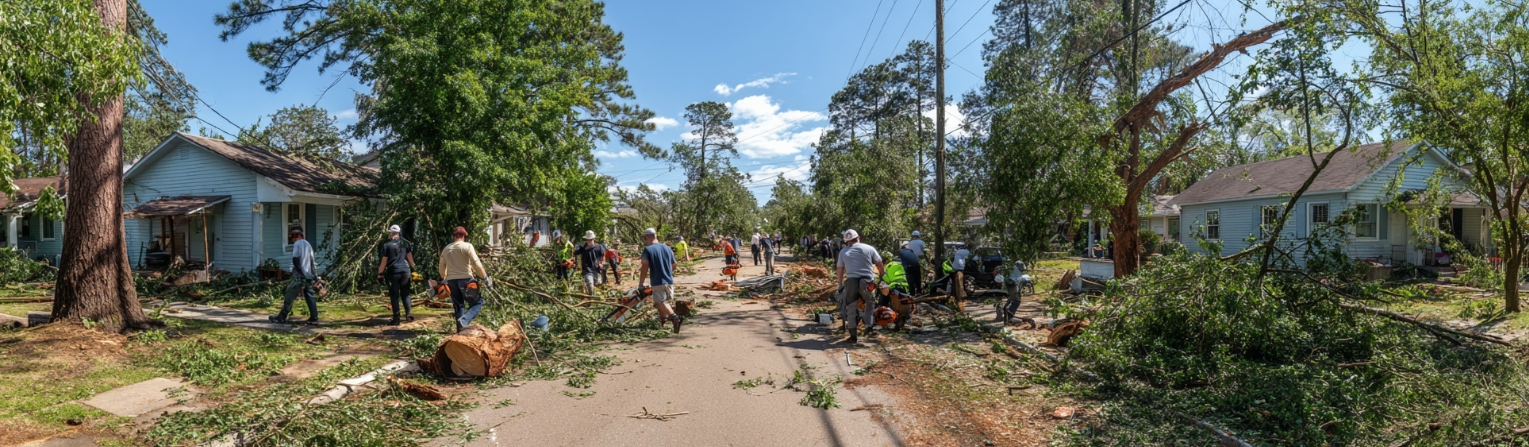
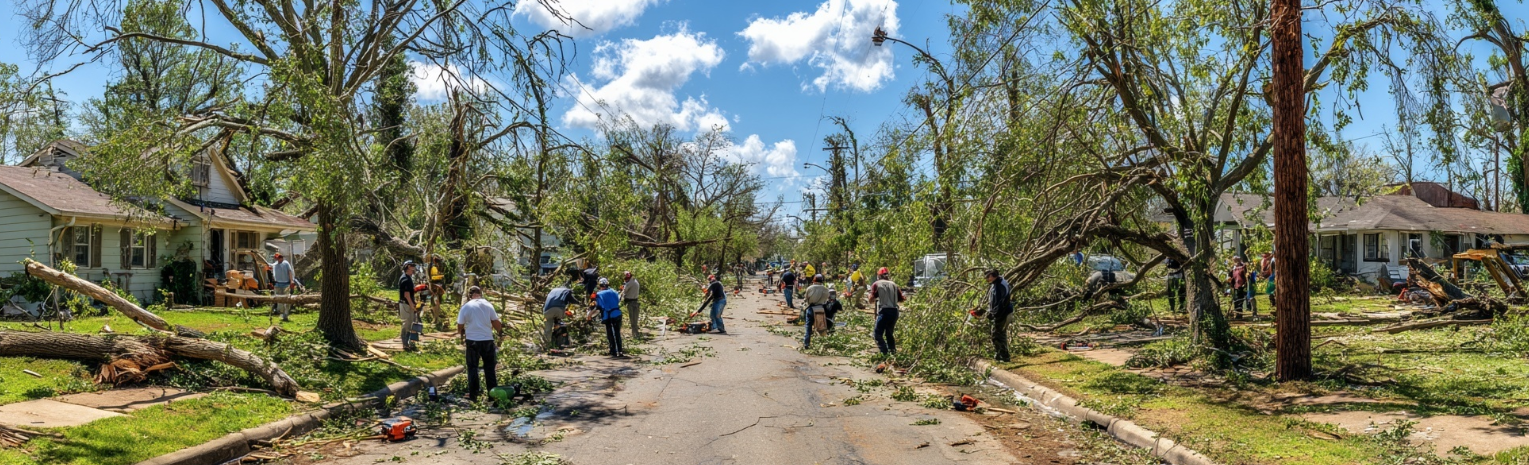
Community clearing fallen trees after hurricane with chainsaws
In the first 24 hours neighbors help neighbors clear roads before crews arrive
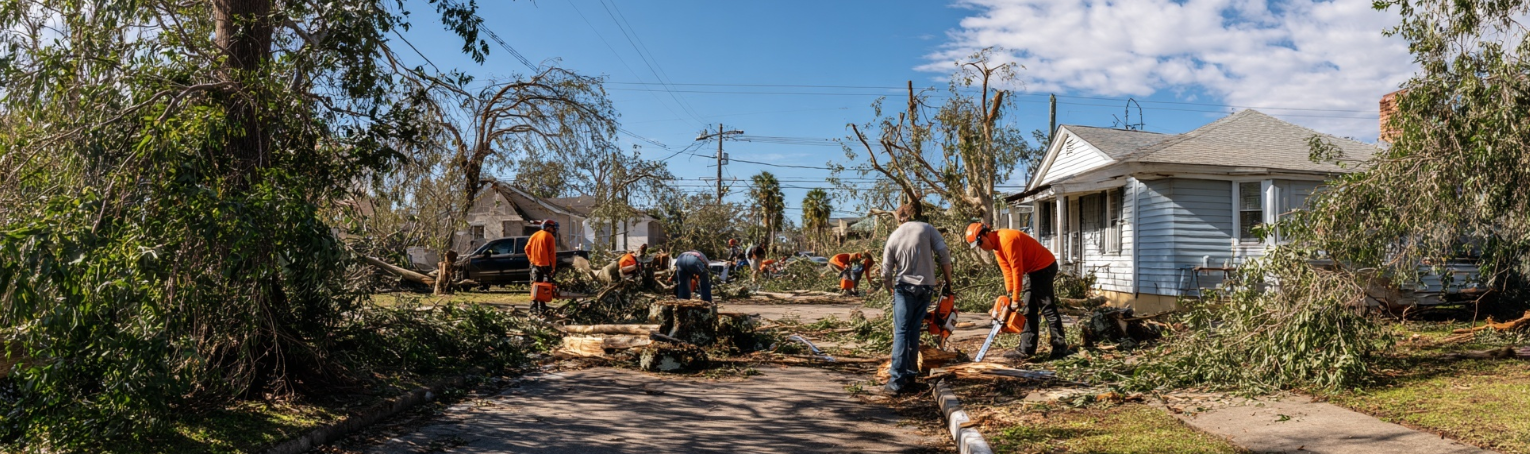
Tree removal crews clearing suburban street after hurricane
Licensed arborists prioritize homes with trees on roofs — call before DIY removal
Entire street covered with fallen trees post-hurricane
Tree debris can take weeks to clear — city prioritizes main roads first
Professional tree crew in orange vests with chainsaws
Certified arborists with proper equipment — do not attempt without training
Professional tree removal crew with crane removing fallen tree from Florida home after hurricane
Part 1 — Immediate Safety
Do this before anything else
Storm debris on roof after hurricane tree fall

🚨 Downed tree + power line = Do not touch, do not approach

A tree in contact with or near a downed power line must be treated as energized until the utility company physically disconnects it — not just turns off the breaker. Call 911 immediately. Do not attempt to move the tree, cut branches, or go near the area. Electricity can travel through the ground up to 30 feet from a downed line. This is the leading cause of post-hurricane electrocution fatalities.

Before you touch anything — safety checklist

1

Check for power lines

Look up and around the entire tree. Check if any lines are sagging, broken, or in contact with the tree or any branches. If yes — stop, back away, and call 911. Do not proceed until the utility company clears the scene.

2

Check for gas lines

If the tree fell near your home and you smell gas — leave immediately and call your gas company and 911 from a safe distance. Roots can rupture underground gas lines when a large tree falls.

3

Check for structural damage

If the tree hit your home, garage, or any structure — do not enter until a structural assessment confirms it is safe. A tree on a roof can compromise load-bearing walls and cause sudden collapse. Call your insurance company before entering the structure.

4

Photograph everything before touching anything

Walk the full perimeter and record video of the downed tree, any structural damage, and the surrounding area. This documentation is your insurance claim. Do it before any cleanup, cutting, or debris removal begins.

5

Assess for spring tension

A tree under tension — bent, leaning, pinned under another tree, or with roots partially lifted — can spring violently and fatally when cut. Look for bowing in the trunk, compressed bark on one side, or roots lifting from the ground. Any of these signs mean hire a professional; do not attempt DIY removal.

🪚
Part 2 — DIY Removal
What you can handle yourself — and what you can't
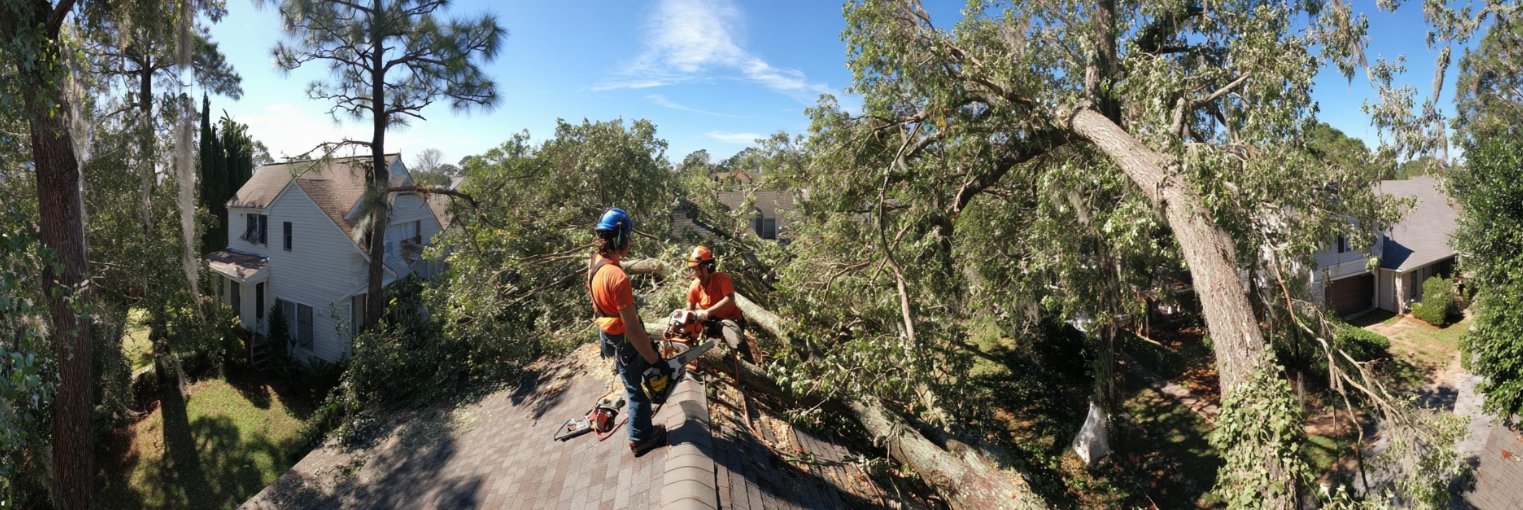
Arborist with chainsaw removing fallen tree from roof
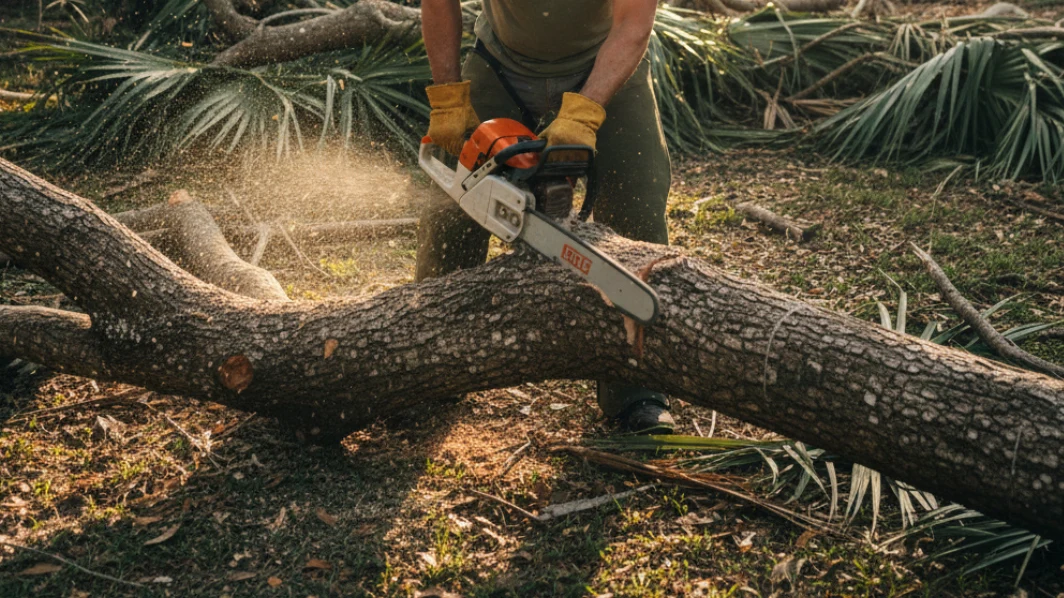
Homeowner with hard hat and gloves cutting fallen tree with chainsaw in Florida backyard

The honest DIY threshold

You can safely handle DIY removal if ALL of the following are true: the tree is completely down (not leaning or hung up in another tree), under 8 inches in diameter, away from all structures and utilities, shows no signs of spring tension, and you have proper safety gear and chainsaw experience.

If any one of those conditions isn't met — hire a professional. Chainsaw injuries and falling tree accidents are among the leading causes of post-hurricane fatalities every year in Florida and the Gulf Coast.

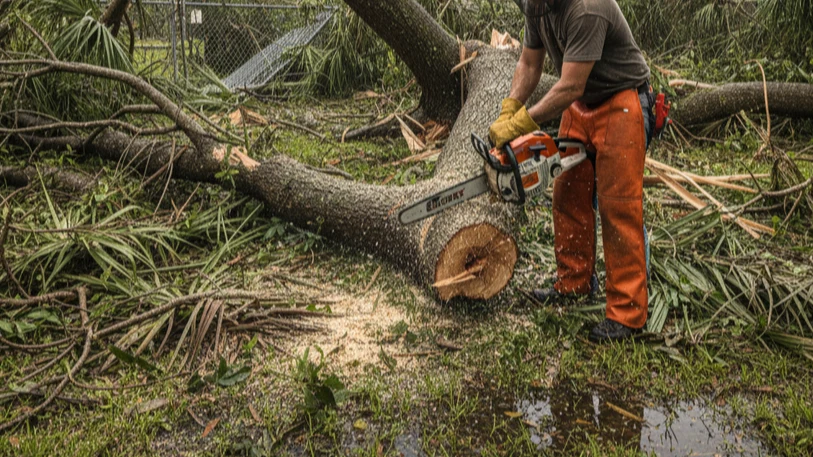
Tree worker in safety gear cutting hurricane-felled tree trunk in debris field

⚠️ The "widow maker" — hung up trees

A tree that fell into another tree and is suspended ("hung up") is one of the most dangerous situations in tree removal. The suspended tree can fall suddenly in any direction when the supporting tree is disturbed. Never attempt to free a hung-up tree yourself — this requires professional rigging equipment and training.

DIY Tools & Safety Gear

As an Amazon Associate we earn from qualifying purchases, at no extra cost to you.

DIY Cutting — How to Do It Safely

1

Gear up completely before starting the saw

Chaps, helmet with face shield, cut-resistant gloves, steel-toe boots, and ear protection — all on before the chainsaw starts. No exceptions. One kickback without chaps can be a life-changing injury. Post-storm fatigue and distraction are when accidents happen most.

2

Identify compression and tension in each cut

Every log on the ground has a "compression side" (where it bends toward the ground) and a "tension side" (where it bends away). Always start your cut on the compression side to avoid the bar getting pinched. Insert a felling wedge as soon as the cut is started to prevent pinching.

3

Cut from the outside in, section by section

Start at the top (outermost end) of the fallen tree and work toward the root ball in manageable 18–24 inch sections. Never stand directly in line with the log — stand slightly to the side. Move cut sections completely clear before making the next cut to keep your workspace clean.

4

Limb before bucking

"Limbing" is removing branches; "bucking" is cutting the trunk into sections. Remove all branches first so you can see the trunk clearly and work without tripping on brush. Cut branches from the underside up for branches under compression, from the top down for branches under tension.

5

Never work alone

Always have someone nearby who knows where you are and can call for help. Chainsaw accidents can incapacitate instantly. Keep your phone in a pocket — not on the ground. Let someone know your plan and expected finish time before starting any chainsaw work post-storm.

🌳
Part 3 — Hiring a Tree Service
What to look for and what to avoid
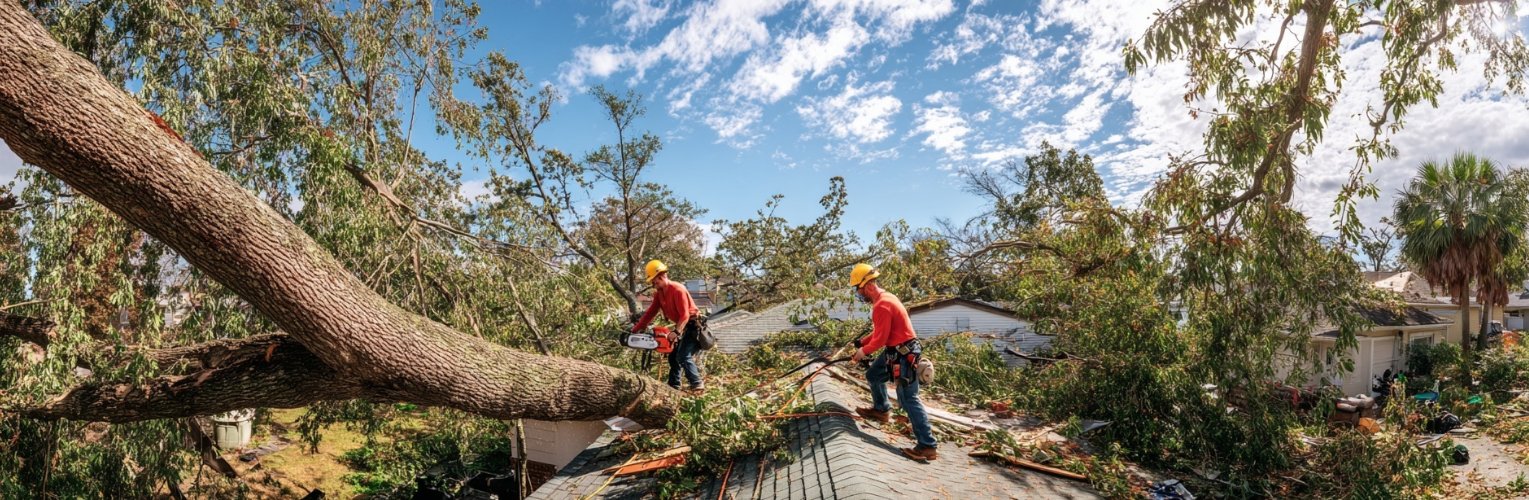
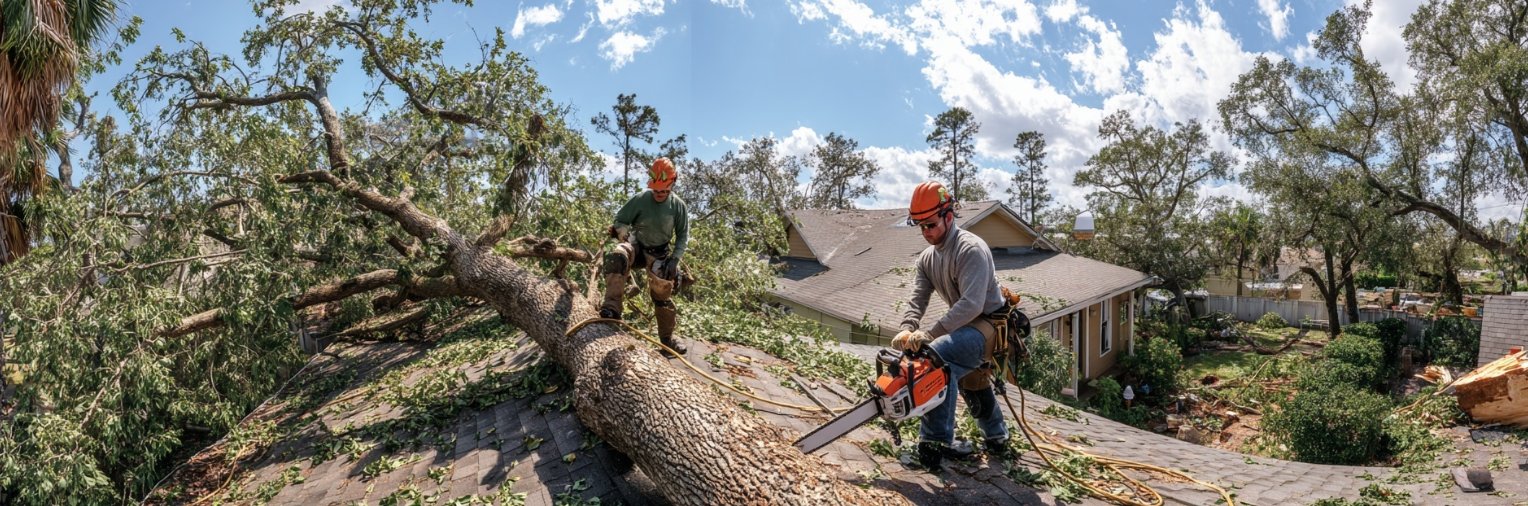
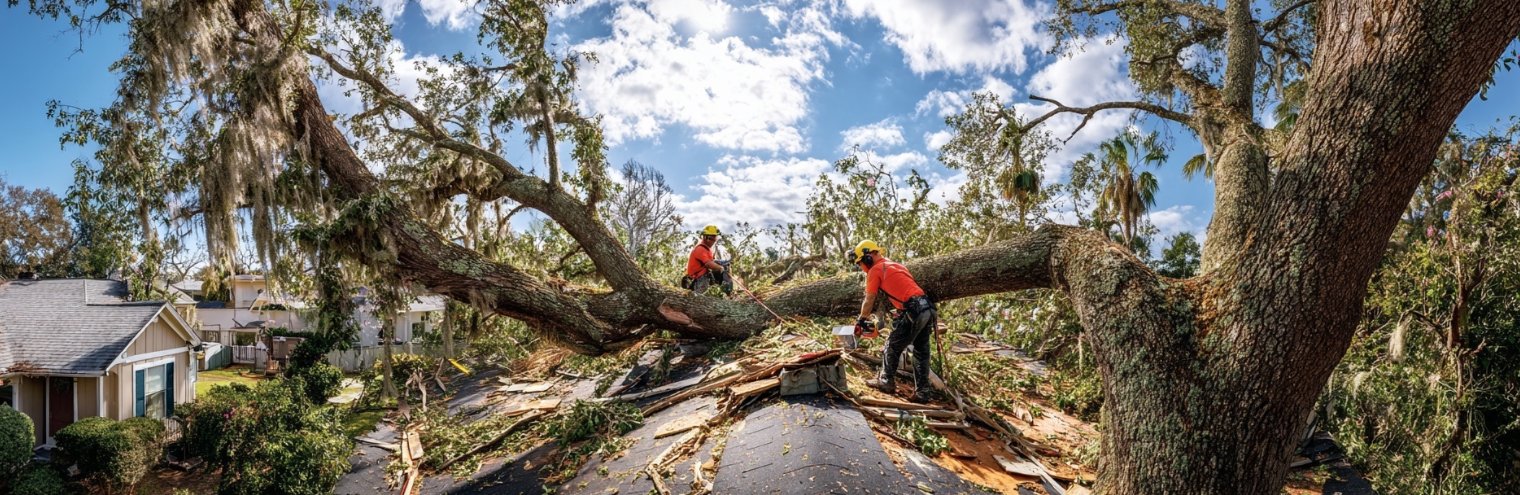
Professional tree removal crew on hurricane-damaged roof

When to hire instead of DIY

Hire a professional tree service for any tree that: is over 8 inches in diameter, is hung up in another tree, is on or touching your home, is near any utility line, shows signs of spring tension, requires climbing, or involves the root ball lifting from the ground. The cost of professional removal is far less than a hospital bill or a crushed roof.

Find Licensed Tree Services Near You

Search pre-screened, insured tree removal companies. After a hurricane, call early — licensed tree services book out weeks while storm chasers work immediately.

Find on Angi → Search Thumbtack →

What a legitimate tree service looks like

ISA Certified Arborist
The International Society of Arboriculture (ISA) certification is the gold standard. Verify at treesaregood.org — search by name or certification number.
TCIA Member
Tree Care Industry Association membership requires companies to meet safety and ethics standards. Find members at tcia.org.
Liability insurance + workers' comp
Ask for a Certificate of Insurance. Call the insurer to verify it is current. If a worker is injured on your property without workers' comp, you may be liable.
Written estimate before work begins
Scope, equipment, debris disposal, stump grinding, timeline, payment schedule — all in writing before anyone touches a chainsaw.
Payment after work is complete
Legitimate tree services accept payment after you've inspected the finished work. A deposit up to 25% is reasonable for large jobs. Never pay 100% upfront.
Local company with verifiable address
A permanent local address means accountability. Check Google Maps. Storm chaser crews have no local presence and disappear after collecting payment.
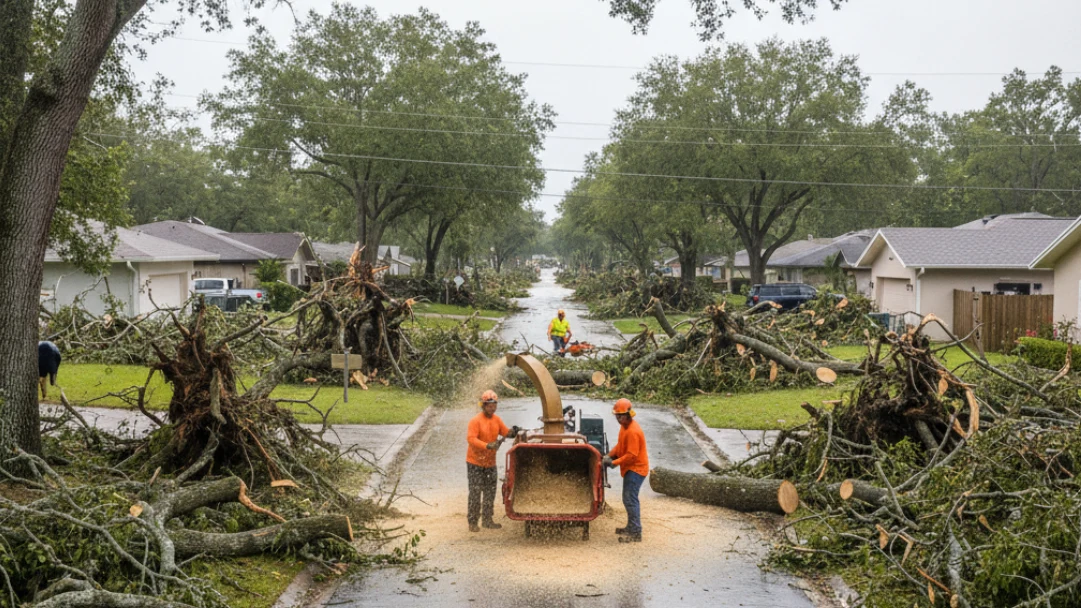
Tree removal crew operating wood chipper on debris-lined Florida street after major hurricane

Red flags — walk away immediately

🚩
Door-to-door solicitation
Legitimate tree companies don't need to knock doors after storms — they're already booked. Storm chasers work neighborhoods immediately with no credentials.
🚩
Cash only, full payment upfront
The #1 post-storm tree removal scam. They take cash, do minimal work or none, and are unreachable the next day. Never pay 100% before completion.
🚩
No insurance certificate
An uninsured tree worker injured on your property can result in a lawsuit against you. No COI = no contract.
🚩
Out-of-state plates, no local number
Storm chasers follow disasters across state lines. No local presence means no accountability when something goes wrong.
🚩
Won't provide written estimate
Any company that insists on verbal-only pricing is hiding the ability to charge more later. Always get it in writing.
🚩
Uses spikes on living trees
Climbing spikes damage living trees and are only appropriate for removal, not trimming. A company that uses spikes on trees you want to keep doesn't know what they're doing.
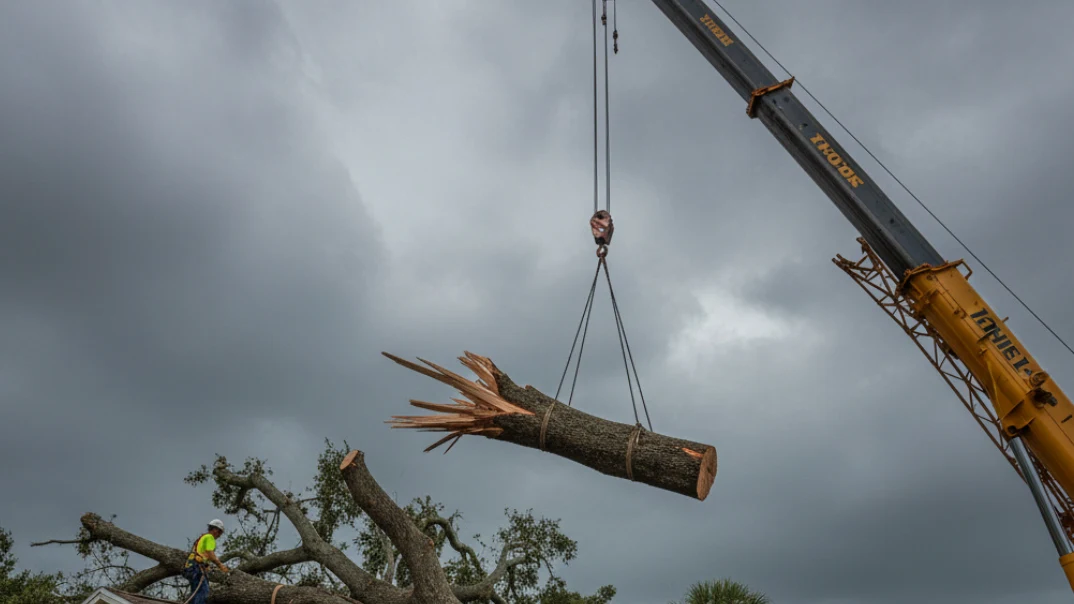
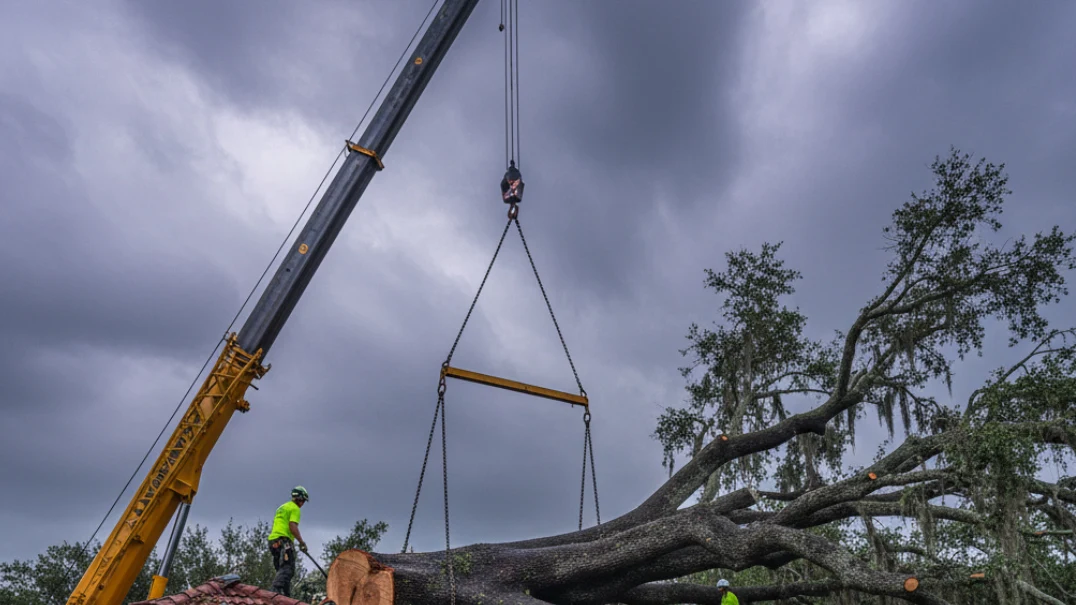
Professional tree removal crew using crane to lift massive oak from tile roof after hurricane

What a tree removal estimate must include

  • Company name, address, phone, and license/insurance information
  • ISA Certified Arborist credential number (if applicable)
  • Certificate of Insurance — liability and workers' compensation
  • Exact trees to be removed — location, size, species if known
  • Whether stump grinding is included or separate
  • Debris disposal — chipped on site, hauled away, or left in sections
  • Cleanup — raking, site restoration after work
  • Any damage protection for lawn, landscaping, driveway
  • Timeline — start date and expected completion
  • Total price with payment schedule
  • What happens if additional trees or damage are found during work
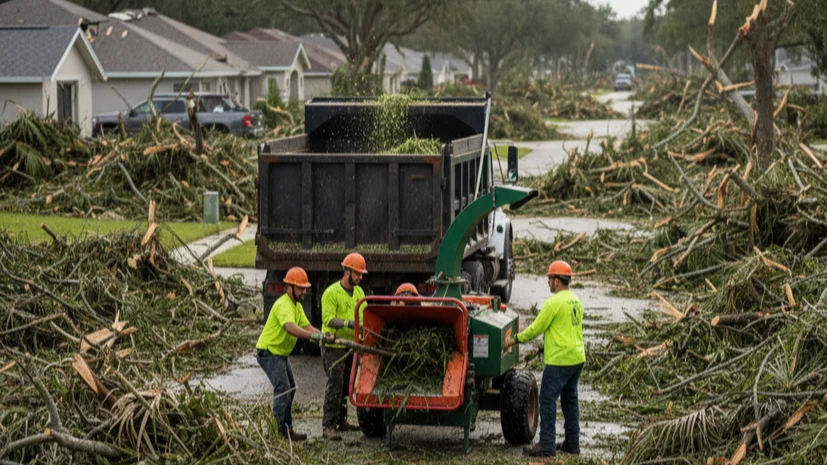
Tree crews chipping debris on storm-damaged Florida street after hurricane

Verify ISA Arborist Credentials

The International Society of Arboriculture maintains a public database of all certified arborists. Takes 30 seconds — worth doing before signing any tree removal contract.

Find ISA Arborist → TCIA Member Directory →
📄
Part 4 — Insurance Coverage
When does your policy pay — and when it doesn't
Massive oak tree crushing roof — an insurance claim situation

The key question: did the tree hit a structure?

✅ Usually covered
  • Tree fell on your house
  • Tree fell on your garage
  • Tree fell on a fence
  • Tree fell on your car (auto policy)
  • Removal to access damaged structure
❌ Usually NOT covered
  • Tree fell in yard only
  • Tree fell on neighbor's property
  • Stump grinding
  • Preventive removal before storm
  • Healthy tree removal

⚠️ Most policies have a tree removal sublimit

Even when a tree falls on a covered structure, most homeowner policies cap tree removal at $500–$1,000 per tree — far less than the actual removal cost of $1,500–$5,000+. Check your declarations page for the specific sublimit. You'll likely pay the difference out of pocket. This is why getting multiple estimates and negotiating matters.

✅ What to do for your insurance claim

Call your insurer within 24 hours. Document everything with photos and video before any work begins. Get written estimates from at least two companies. Keep all receipts. Ask your adjuster specifically about the tree removal sublimit and whether the cost to access damaged areas is covered separately from the removal sublimit.

Frequently Asked Questions
Common questions about post-hurricane tree removal
How do I safely deal with a downed tree after a hurricane?
Never touch a downed tree near a power line — treat every downed line as live. Call 911 if lines are involved. Once power is confirmed off, assess for spring tension: a bent, pinned, or partially rooted tree can spring violently when cut. Small trees (under 8 inches diameter) that are completely down, away from structures, and showing no tension can be DIY-removed with proper safety gear. Anything larger or more complex requires a professional.
Does homeowner insurance cover tree removal after a hurricane?
It depends on where the tree fell. If it hit a covered structure (house, garage, fence), most policies cover removal up to a sublimit — typically $500–$1,000 per tree. If it fell in the yard without hitting a structure, most policies do not cover removal costs. Always call your insurer within 24 hours and document everything with photos before any work starts.
How do I find a legitimate tree removal company?
Look for ISA Certified Arborists (verify at treesaregood.org), TCIA members (tcia.org), and companies with valid liability insurance and workers' compensation. Get at least two written estimates. Never pay 100% upfront. Avoid door-to-door solicitors with out-of-state plates — storm chasers target tree-heavy neighborhoods immediately after every hurricane.
How much does hurricane tree removal cost?
Post-hurricane tree removal typically runs $1,500–$5,000 per large tree depending on size, location, and complexity. Trees on roofs or structures cost more due to rigging requirements. Emergency rates immediately after a storm are 30–50% higher than normal pricing. If you wait a week or two, prices drop significantly as more crews arrive in the area.
What is a "widow maker" and why is it dangerous?
A widow maker is any tree, limb, or debris that is suspended in another tree or structure after a storm. When the supporting tree or structure is disturbed during removal, the suspended material can fall suddenly and without warning in any direction. This is one of the leading causes of tree removal fatalities. Never attempt to free a hung-up tree or limb yourself — always hire a professional with rigging equipment.

Protect Your Home Before the Next Storm

Hurricane shutters protect your windows and doors — your first line of defense. Get a free estimate and see your insurance savings.

Free Shutter Estimate → Roof Tarping Guide →

Tree Removal Safety Gear on Amazon

Everything you need to safely handle small downed trees yourself.

🪚
Gas Chainsaw
16–18" bar for fallen trees
Amazon →
🦺
Safety Chaps
Required chainsaw leg protection
Amazon →
⛑️
Safety Helmet
Hard hat + face shield + ear protection
Amazon →
🧤
Chainsaw Gloves
Cut-resistant hand protection
Amazon →
🔺
Felling Wedges
Prevent bar pinch and control fall
Amazon →
🥾
Logging Boots
Steel toe + ankle support
Amazon →

As an Amazon Associate we earn from qualifying purchases, at no extra cost to you.