By State
🌴 Florida ⭐ Texas 🎷 Louisiana 🌊 Mississippi 🏖️ Alabama 🍑 Georgia 🌴 South Carolina 🏔️ North Carolina 🦅 Virginia 🦀 Maryland 🗽 New Jersey 🌆 New York 🦞 Massachusetts
Shutter Types
🪗 Accordion ⬇️ Roll-Down 🌺 Bahama 🏛️ Colonial 🛡️ Storm Panels 🕸️ Hurricane Screens 🪟 Impact Windows ↔ Accordion vs Roll-Down ↔ Shutters vs Windows
Guides
🧮 Cost Calculator 🤖 AI Pricing 📋 The Process 🔨 DIY Shutters 🪵 Plywood Guide 🔧 Maintenance 🛒 Supplies 🏷️ AirTags & Security 📋 Family Emergency Plan
After the Storm
🆘 Disaster Help Hub 🛡️ Post-Storm Safety 🌡️ Heat Safety 🐾 Pets & Livestock 🏠 Roof Tarping 💧 Water Damage 🌳 Tree Removal Florida Recovery Texas Recovery NC Recovery
Verify Contractor
Florida Texas Georgia North Carolina Virginia New Jersey New York Massachusetts
Free Estimate →
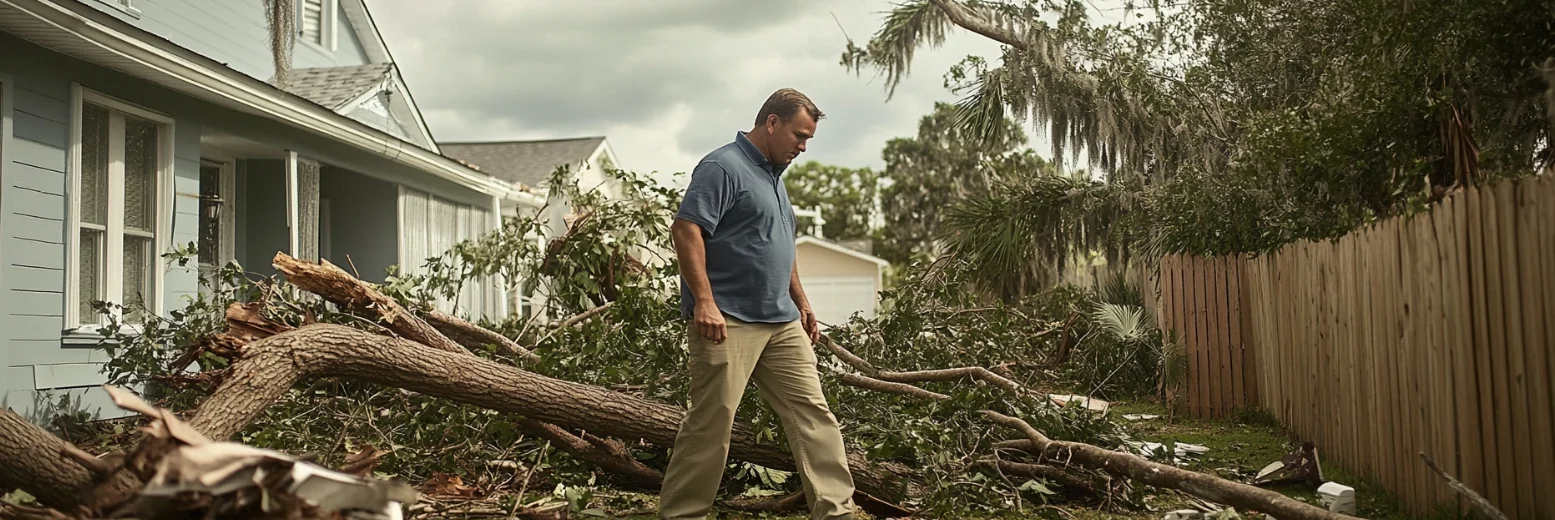
Homeowner assessing storm damage after hurricane
🛡️ Post-Storm Safety · Professional Guidance

When the Grid Goes Down
& Your Neighborhood Looks Like a War Zone

What FEMA, emergency management professionals, and law enforcement actually recommend for staying safe in the hours and days after a major hurricane — when you're on your own.
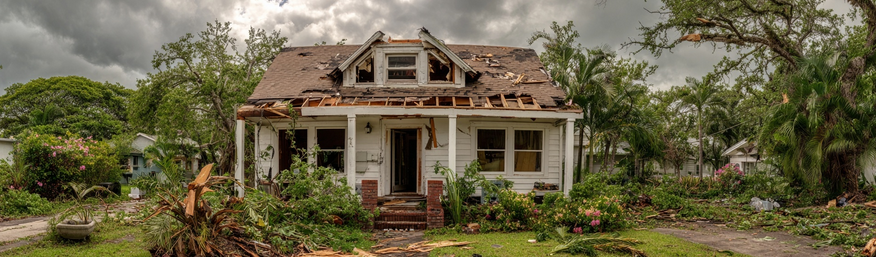
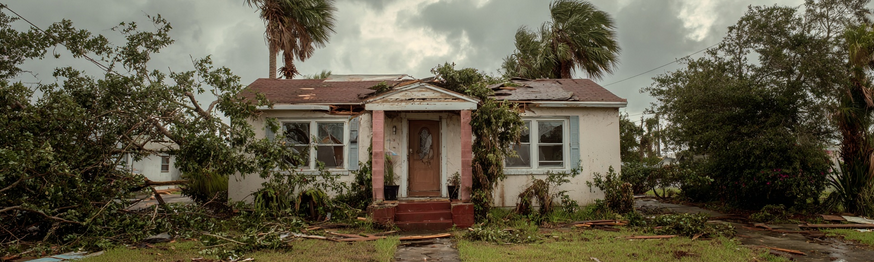
Florida cottage demolished by hurricane
A direct Cat 3+ hit leaves little standing without proper wind protection
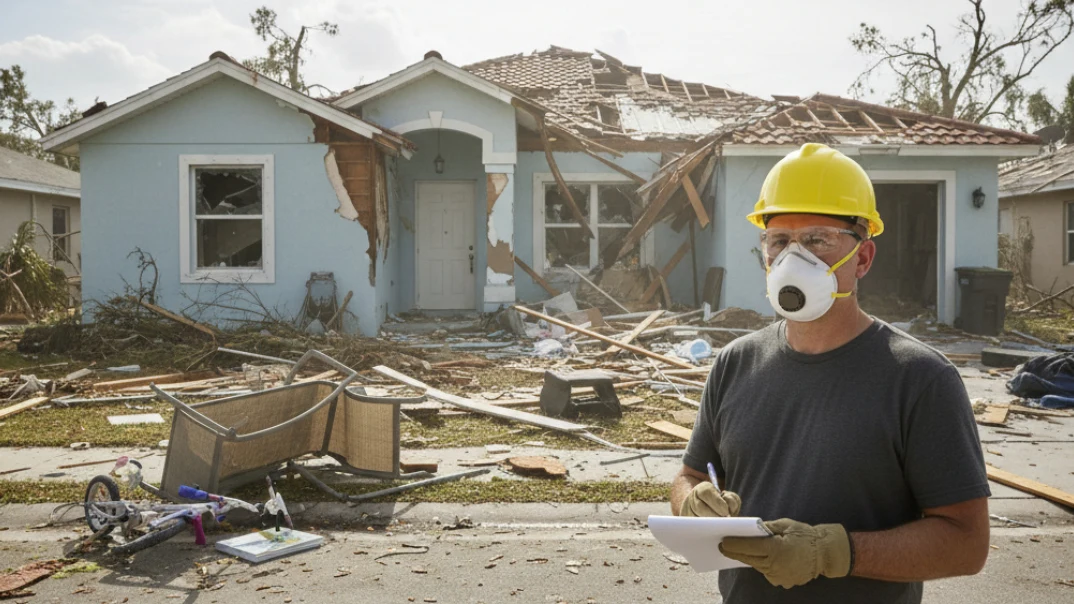
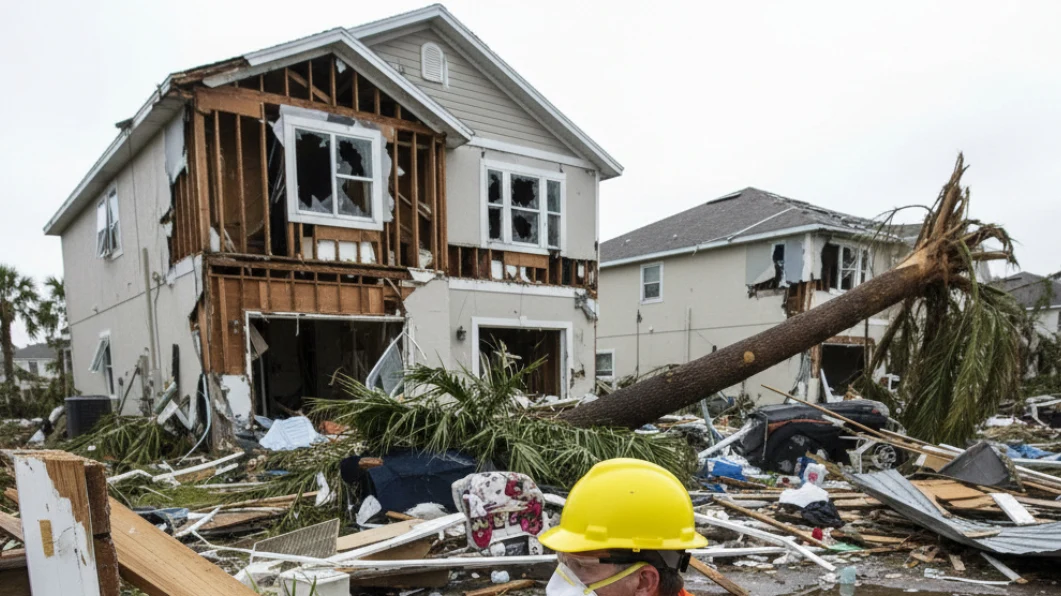
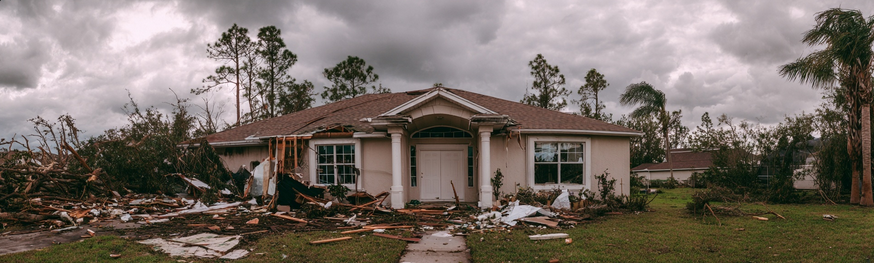
Florida stucco home heavily damaged by hurricane
Even concrete block homes suffer when windows and doors fail
Hurricane damaged Florida home with partial roof loss
Roof failure is the first domino — structural collapse often follows
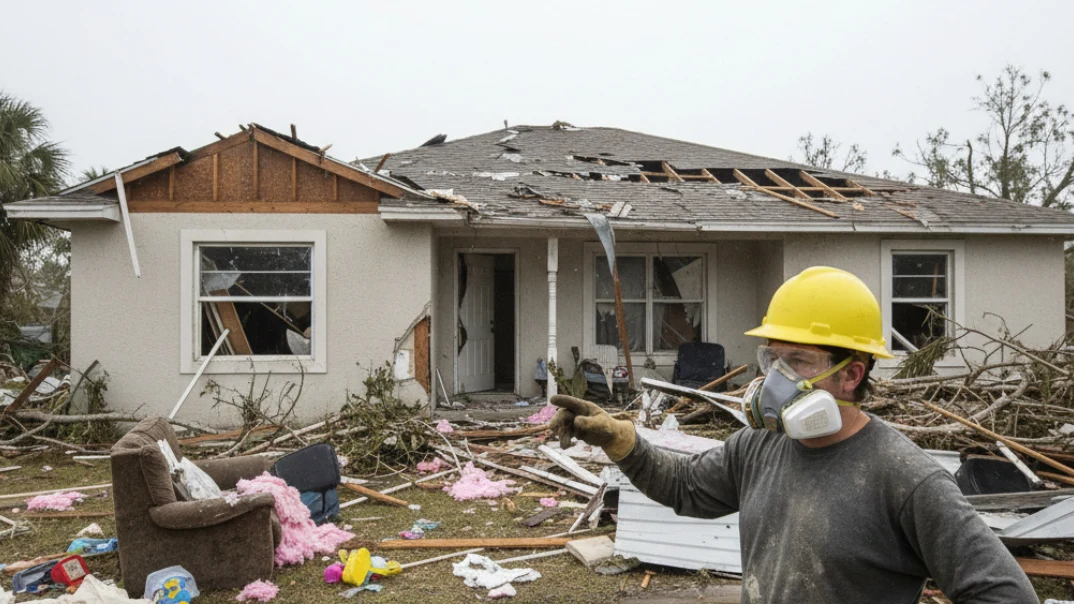
Homeowner in full PPE hard hat respirator mask gloves assessing hurricane damage in front of destroyed Florida home
🌀
The Reality Nobody Prepares You For
What the first 24–72 hours actually looks like

You are going to be on your own

After a major hurricane, emergency services are overwhelmed. Police are responding to life-safety calls only. Fire departments are handling structure fires and entrapments. EMS is triaging mass casualty situations. The utility crews won't reach your street for days — sometimes weeks. Roads are blocked. Cell towers are down or overloaded.

This is not a criticism of first responders — it is simply the math of a catastrophic event. Every experienced emergency manager will tell you the same thing: the first 72 hours after a major hurricane, you are your own first responder. The people who do best are those who prepared for this reality before the storm.

⚠️ Recommended by FEMA and emergency management professionals

FEMA's official guidance emphasizes community self-reliance for the first 72 hours after a disaster. The Red Cross, National Weather Service, and state emergency management agencies all echo this: prepare to be completely self-sufficient for a minimum of 72 hours — and ideally 7–14 days — after a major hurricane makes landfall.

🏚️
Structural Hazards
The most common cause of post-storm injuries and deaths
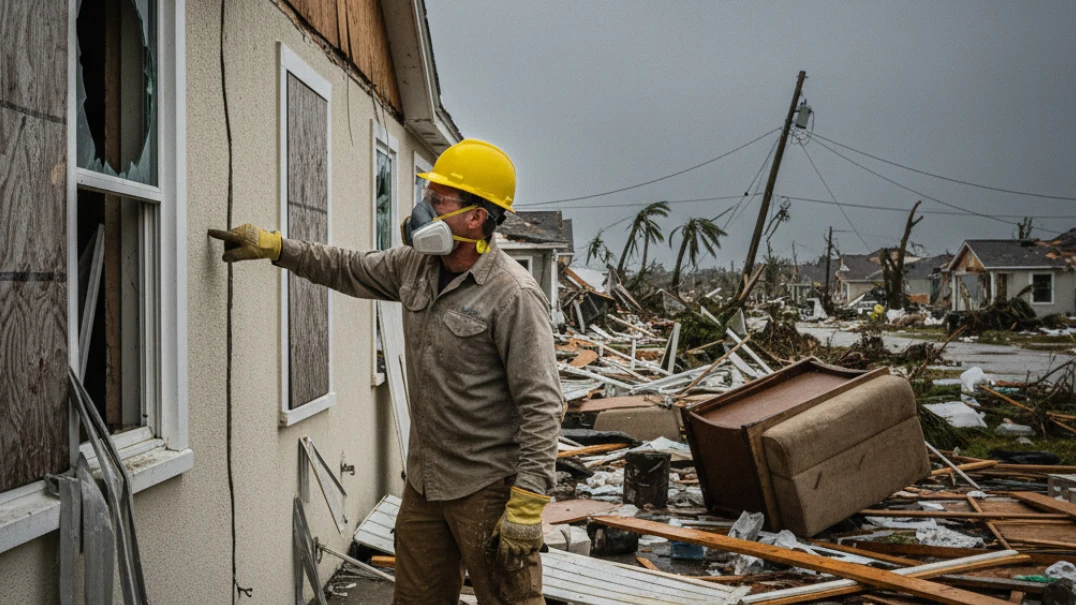
Homeowner in hard hat respirator and safety glasses carefully inspecting hurricane damaged home exterior

🚫 Never enter a structurally compromised building

More people die in post-hurricane structural collapses than from the storm winds themselves. A building that appears standing can have compromised load-bearing walls, a weakened roof about to collapse, a flooded foundation undermining its footings, or waterlogged upper floors that have shifted the structural load beyond what the damaged frame can support.

Signs of structural danger: doors or windows that won't close (frame has shifted), visible cracks in masonry, walls that are no longer plumb, roof that sags or has large sections missing, any smell of gas inside.

1

Do a full exterior walk before entering your home

Check the foundation for cracks or shifts. Look at the roofline — is it sagging or visibly asymmetric? Check all four corners of the structure. Look for walls that are bowing or leaning. Check that the chimney (if any) is intact. If anything looks wrong — stay out and call a structural engineer before entering.

2

Open the front door slowly and smell before entering

Natural gas and propane are heavier than air and accumulate at floor level inside damaged structures. Before entering, crack the door and let it stand for 30 seconds. Any smell of rotten eggs — back away and call your gas company and 911 from a safe distance. Never use a lighter, match, or switch inside until gas is cleared.

3

Move carefully — floors may be compromised

Test each floor section by pressing firmly with one foot before putting full weight on it. Water-saturated subfloor can look intact while being structurally failed underneath. Avoid jumping, running, or dropping heavy items. Stay near walls and load-bearing elements. If a floor feels spongy or springy — exit immediately.

4

Watch for hanging hazards above you

Ceiling fans, light fixtures, compromised drywall, and sections of roof sheathing can fall without warning in the hours after a storm. Look up before moving into any room. Wear a hard hat when working around damaged structures — head injuries are the leading cause of post-hurricane fatality among cleanup workers.

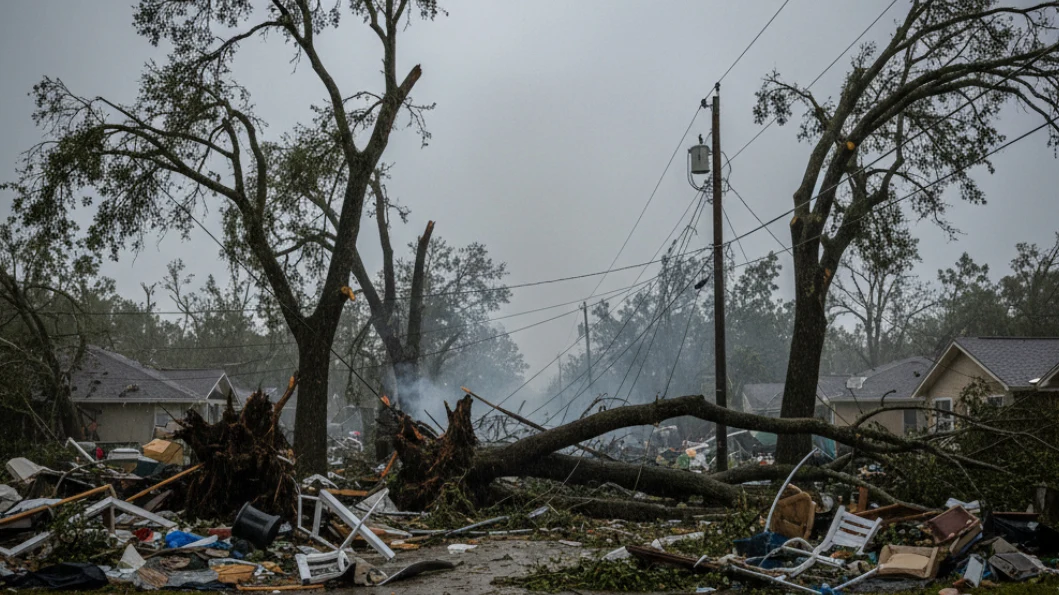
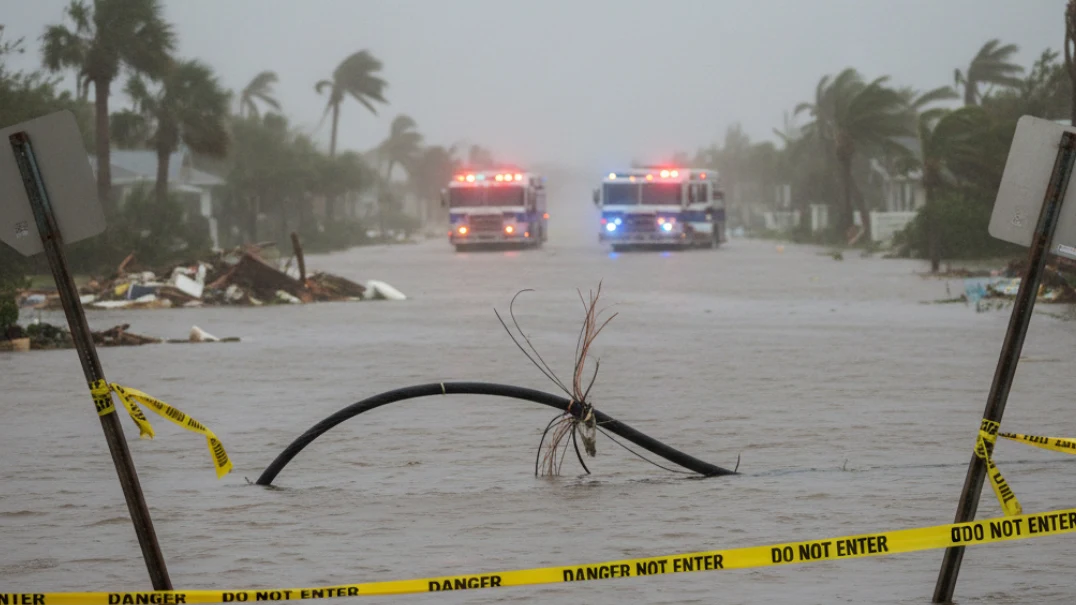
Florida street completely blocked by downed trees and smoking debris after major hurricane
Utility Hazards
Power lines, gas, and water — assume the worst until confirmed safe
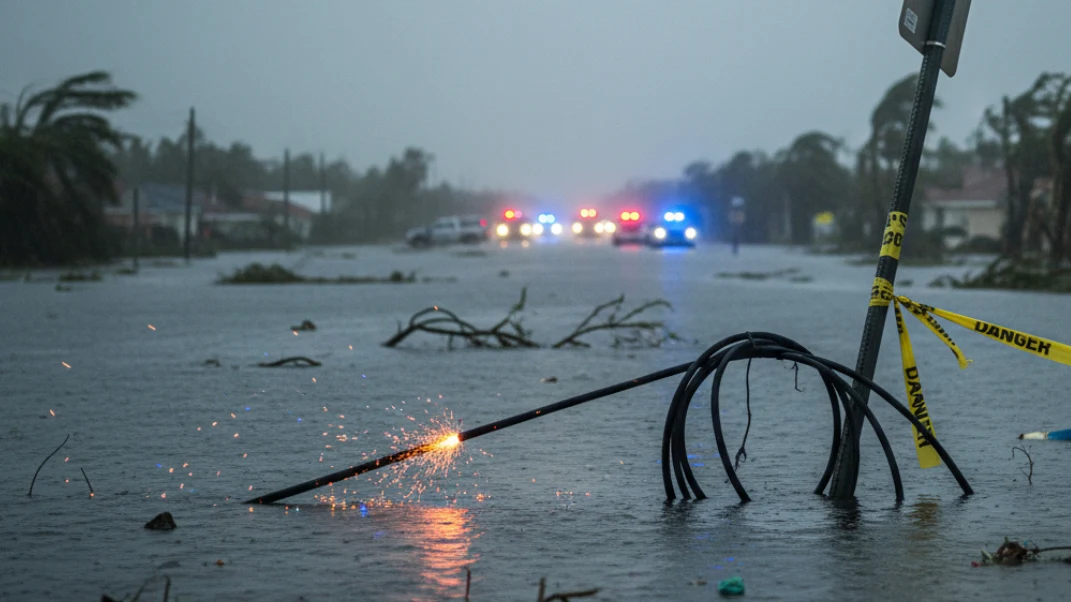
Downed power line in flooded Florida street with danger tape and emergency vehicles in background

⚡ Downed power lines

Treat every downed line as live. Never drive over a downed line. Electricity travels through standing water up to 30 feet from a line. If your car touches a live line while driving — stay inside, call 911, warn others away. Only exit if the car catches fire, and if so — jump clear without touching the car and ground simultaneously.

🔥 Gas leaks

Smell gas? Leave immediately, don't touch any switch or light, don't use your phone until you're outside and clear. Call your gas company and 911 from a safe distance. Do not re-enter until the gas company physically clears the property. Propane tanks can also leak — check outdoor grills and propane appliances.

Live sparking power line in flooded street with danger tape, fire trucks responding in distance

💧 Water contamination

Assume all tap water is contaminated until your water utility issues a "boil water" clearance. Flood water contains sewage, bacteria, chemicals, and fuel. Never drink flood water. Don't let children wade in flood water. Wash any skin contact with soap and clean water immediately.

🌡️ Carbon monoxide

CO from generators kills every hurricane season. Never run a generator, grill, camp stove, or any fuel-burning device inside — including the garage. Keep CO detectors working with fresh batteries. If your alarm sounds — evacuate immediately and call 911.

Worker in full PPE hard hat respirator gloves hi-vis vest clearing hurricane debris from destroyed Florida home
🦺
Personal Safety Gear — Wear It Every Time
What professionals wear moving through post-storm debris

Every first responder, utility worker, and FEMA disaster assistance team member wears personal protective equipment when working through post-storm environments. The same hazards that affect them affect you: puncture wounds from nails and metal, lacerations from glass and debris, respiratory hazards from mold and particulates, and head injuries from unstable overhead materials.

Homeowner in hard hat and respirator assessing hurricane structural damage, debris-filled yard behind him
As an Amazon Associate we earn from qualifying purchases, at no extra cost to you.
🐍
Displaced Wildlife
Hurricanes push animals into places they don't belong — including your yard

What you'll encounter — and how to handle it

🐍

Snakes — treat every one as venomous

Flood water pushes snakes into debris piles, structures, and elevated areas. Florida has 6 venomous snake species including the Eastern Diamondback — the largest venomous snake in North America. Never reach into debris piles with bare hands. Wear boots. If you encounter a snake, give it space to move away. Do not attempt to move or kill it — most snake bites occur when people try to handle them. If bitten, call Poison Control at 1-800-222-1222 and get to an ER immediately.

🐊

Alligators — Florida and Gulf Coast specific

Storm surge and flooding move alligators out of their natural waterways and into streets, yards, and even inside structures. Never approach, corner, or provoke an alligator. Give it space — they are faster than they look over short distances. If an alligator is on your property and presents a safety concern, call Florida FWC at 1-866-FWC-GATOR (1-866-392-4286). Do not attempt to move it yourself.

🐜

Fire ants — moved and invisible in debris

Fire ant colonies float as a living raft during flooding and reassemble in debris piles, mulch, and any elevated ground. The first indication is often stepping into an invisible mound — and within seconds receiving dozens of simultaneous stings. Wear closed-toe boots and long pants when walking any debris area. If you step into a fire ant mound, move away quickly and brush ants off with a sweeping motion — do not stand still and swat.

🦟

Mosquitoes — disease risk spikes after hurricanes

Standing water after a hurricane creates massive mosquito breeding environments within days. In the Gulf Coast and Florida, this includes risk of Eastern Equine Encephalitis (EEE), West Nile Virus, and other mosquito-borne illnesses. Apply DEET-based repellent every time you go outside. Cover exposed skin. Drain any standing water on your property within 24 hours — even bottle caps hold enough water for breeding.

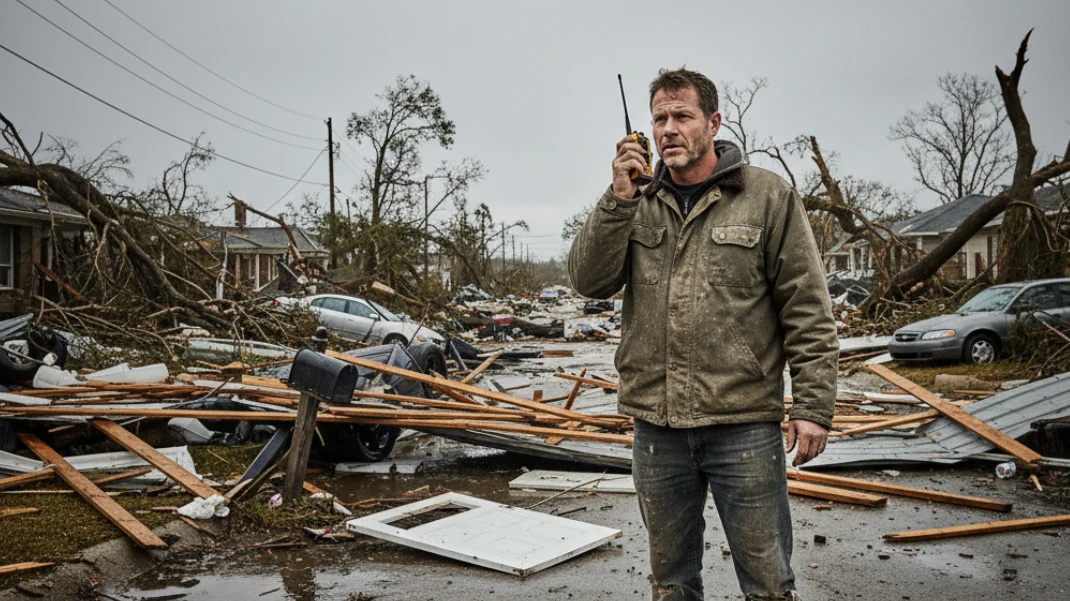
Man using FRS walkie talkie radio to communicate with neighbors in hurricane destroyed neighborhood
📻
Communication When Cell Towers Are Down
How to stay informed and connected when normal channels fail

What actually works when the cell network fails

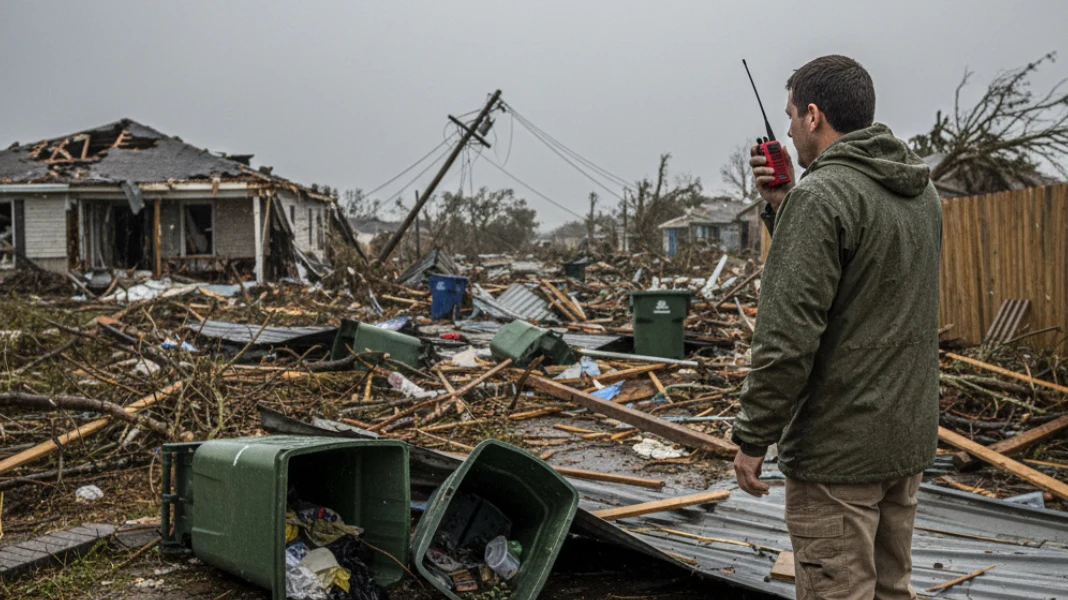
After a major hurricane, cell towers fail, are overloaded, or lose backup power within hours. Voice calls stop working while SMS texts sometimes still get through — the data packets are smaller and find routing paths voice calls cannot. Here is what emergency professionals use and recommend:

Person using red walkie talkie radio in completely destroyed hurricane neighborhood when cell towers are down
1

NOAA Weather Radio — your primary information source

A battery-powered or hand-crank NOAA weather radio receives direct broadcasts from the National Weather Service 24/7 regardless of internet, cell service, or power. After a hurricane it carries storm surge warnings, curfew announcements, shelter information, water boil orders, and utility restoration updates. This is the single most important communication device for post-storm information. Keep it on continuously.

2

FRS/GMRS walkie-talkies — neighborhood communication

Family Radio Service (FRS) walkie-talkies work completely independent of any infrastructure — no cell towers, no internet, no power grid. Range is 1–2 miles in open areas (less in debris-filled neighborhoods). Coordinate with your immediate neighbors before hurricane season to all use the same channel. This is how you check on elderly neighbors, coordinate cleanup efforts, and share safety information when phones aren't working.

3

SMS text messages — often work when voice calls don't

When voice calls are failing due to network overload, try sending SMS text messages instead. Texts use less bandwidth and can queue for delivery when momentary network capacity opens. Keep texts brief — one short message is more likely to get through than a long one. Let family know before the storm that you'll communicate by text if calls aren't working.

4

Wi-Fi calling when cell is down but internet works

After some hurricanes, internet service (cable, fiber, or satellite) comes back before cell service. If you have any working internet connection — including a neighbor's — Wi-Fi calling through your smartphone works normally over internet without cellular service. Also check for Starlink availability in your area — satellite internet is increasingly used by emergency responders and is available to individuals.

As an Amazon Associate we earn from qualifying purchases, at no extra cost to you.
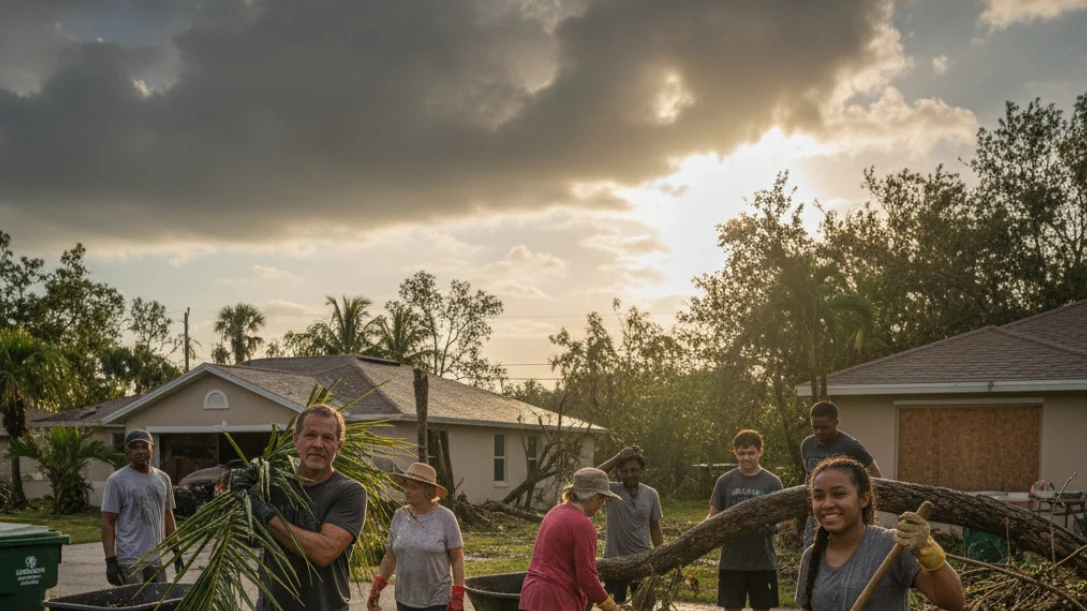
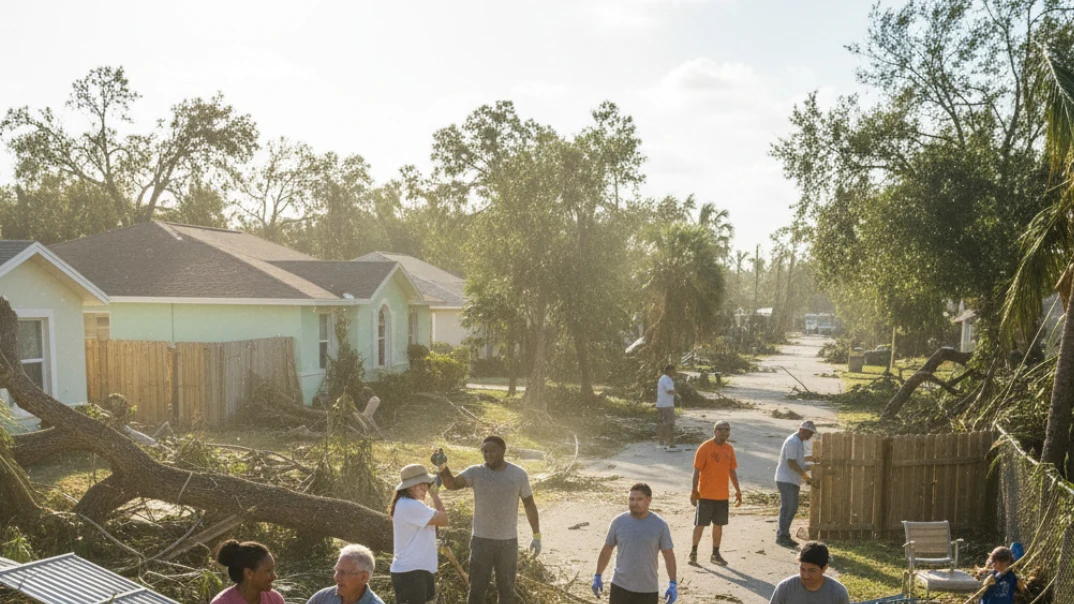
Florida neighbors working together clearing hurricane debris as community in golden evening light
🏘️
Neighborhood Security
What law enforcement professionals actually recommend

The honest reality of post-hurricane security

Law enforcement agencies throughout Florida and the Gulf Coast are transparent about what happens after major hurricanes: police response times extend dramatically, looting occurs in damaged neighborhoods — particularly in unoccupied homes — and opportunistic crime increases in the days following a storm. This is not fearmongering — it is the documented reality after every major hurricane, and law enforcement agencies publish this information to help homeowners prepare.

The most effective security measures according to law enforcement professionals are also the most straightforward: stay home when possible, connect with neighbors, and respect the curfew.

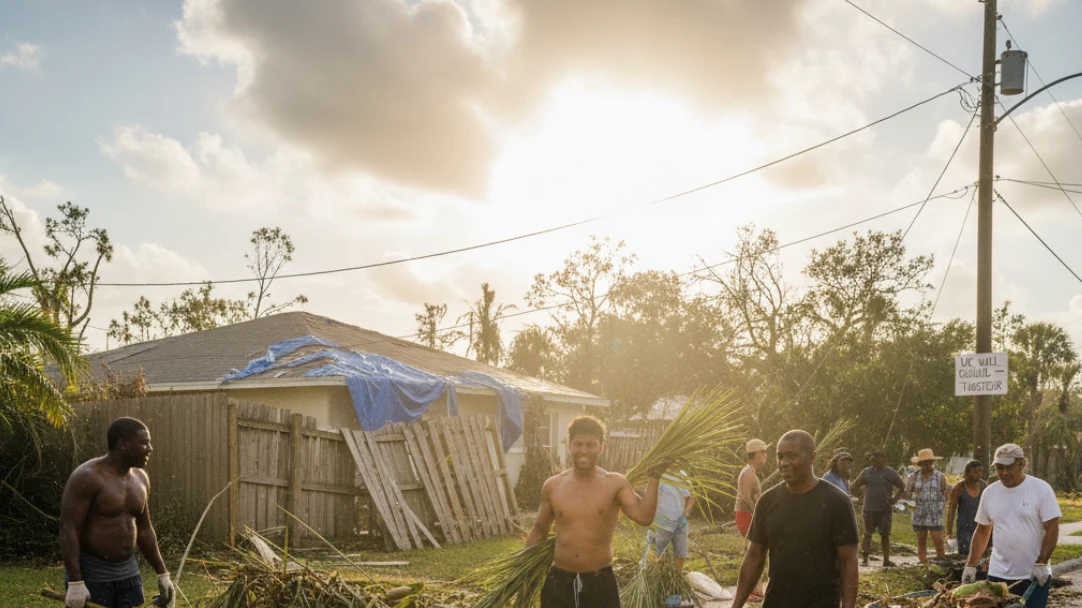
Community members with wheelbarrows clearing hurricane debris from Florida neighborhood street

✅ Stay home if safely possible

An occupied home is dramatically less likely to be targeted than an empty one. If your home is safe to stay in, staying is one of the most effective security measures available. Make your presence visible — lights on, vehicles in the driveway.

✅ Connect with your neighbors

Neighbors watching each other's properties is the single most cited recommendation from law enforcement after disasters. Coordinate with 3–4 immediate neighbors before storm season — share contact info, agree to watch each other's properties, and establish communication protocols.

✅ Respect the curfew

Post-hurricane curfews exist to protect both residents and first responders. People out after curfew are subject to arrest — and legitimately so, as curfew violations make it impossible for police to distinguish residents from looters. Know your curfew and follow it.

⚠️ Document and photograph everything

Before cleanup begins, photograph all damage thoroughly — this is your insurance claim and your record for any future incidents. Mark undamaged property clearly. Keep valuables inside and secure — do not leave items in open view of damaged entry points.

⚠️ Don't advertise your supplies

After extended power outages, food, water, fuel, and generator access become valuable. Don't broadcast what supplies you have. Share with neighbors you know and trust — but discretion protects both you and them.

⚠️ Keep your vehicle fueled and ready

Gas stations fail, run out of fuel, or lose power after major hurricanes. Keep your vehicle above half a tank through all of hurricane season. If evacuation becomes necessary post-storm — for safety or medical reasons — you need to be able to leave without searching for fuel.

✅ What to do if you witness looting

Call 911 and report what you see — location, description of individuals and vehicles, direction of travel. Do not intervene directly. Document from a safe distance if possible. Law enforcement agencies ask residents to be their eyes and ears after hurricanes — your call may be acted on when the immediate emergency calls clear. Also report to your local non-emergency police line if 911 is overloaded.

Wide view of Florida neighborhood community cleanup crew working together after hurricane
🚗
When to Leave — Knowing When Enough Is Enough
Pride costs more than a hotel room

Leave immediately if any of these apply

  • You smell gas and cannot locate or stop the source
  • Structural damage makes your home unsafe to occupy
  • You have no safe drinking water and cannot get any within 24 hours
  • An elderly or medically vulnerable family member is declining from heat, dehydration, or inability to use medical equipment
  • Local authorities issue a mandatory post-storm evacuation order
  • Your neighborhood feels genuinely unsafe and you have somewhere to go
  • A family member has a medical emergency and EMS response is unavailable
  • You are running out of medication with no way to get more
  • Your mental or physical health is declining and you have the option to leave

🚨 The pride factor — and why it kills people

Emergency managers consistently report that the most preventable post-hurricane deaths involve people who refused to leave unsafe conditions out of stubbornness, a sense of duty to their property, or unwillingness to impose on family. A hotel room or a relative's couch is always the right call over a structurally compromised home, a dangerously hot house, or a situation that is deteriorating. Things can be replaced. People cannot.

📋
Prepare Before the Storm — Not After
The safety measures that have to be in place before the wind starts
  • Exchange contact info with 3–4 immediate neighbors and agree on a check-in plan
  • Establish a family communication plan — where to meet, who to contact out of state as a relay
  • Identify and locate your nearest cooling center — look it up now, not after the storm
  • Register elderly or medically dependent family on your county Special Needs Registry
  • Keep all vehicles above half a tank throughout hurricane season
  • Know your curfew zone and curfew notification source (local radio, government website)
  • Have all PPE (boots, gloves, N95, hard hat, eye protection) stored and accessible
  • Have a NOAA radio and walkie-talkies charged and ready
  • Have a 3–7 day supply of water, food, medications, and fuel
  • Know your structural exit plan if your home becomes unsafe
  • Have a destination — family, friend, hotel — you can reach with the fuel in your tank
  • Know Poison Control: 1-800-222-1222 and Florida FWC: 1-866-392-4286
Frequently Asked Questions
Post-hurricane safety questions answered by professionals
Is it safe to walk around after a hurricane?
Only after daylight and only with proper protective gear — puncture-resistant boots, gloves, N95 respirator, and eye protection. Avoid all downed power lines and treat every line as live. Watch for displaced wildlife including snakes in debris piles. Never enter a building showing structural damage without professional clearance. Move slowly and deliberately — rushing through debris is when injuries happen.
How do I protect my home after a hurricane?
Stay home when safely possible — an occupied home is far less likely to be targeted. Connect with neighbors to establish informal watches. Keep lights on using your generator. Secure any breached entry points as quickly as possible. Respect curfews — they make it easier for police to identify people who don't belong in your neighborhood. Document all damage immediately with photos and video.
How do I communicate when cell towers are down?
Battery or hand-crank NOAA weather radio for official information. FRS/GMRS walkie-talkies for neighborhood communication with no infrastructure required. SMS texts often get through when voice calls cannot. Wi-Fi calling works if any internet connection is available. A satellite communicator (Garmin inReach) works when everything else fails.
What should I do about snakes and alligators after a hurricane?
Treat every snake as venomous — never reach into debris with bare hands, always wear boots. Give any snake space to move away. For alligators in Florida, call FWC at 1-866-392-4286 — never approach or attempt to move one. Fire ants reassemble in debris piles — wear closed-toe boots and long pants in all debris areas.
When should I leave my home after a hurricane?
Leave immediately if: you smell gas, structural damage makes the home unsafe, you have no safe water, an elderly or medically vulnerable person is declining, authorities issue a post-storm evacuation order, or your situation is deteriorating in any way. A hotel or relative's home is always better than an unsafe structure. The pride of staying can cost your life or the life of a family member.

Protect Your Home Before the Storm Hits

Hurricane shutters are your first line of defense — protecting windows, keeping the structure intact, and reducing the damage that creates post-storm hazards. Get your free estimate.

Free Shutter Estimate → Full Supply Checklist →