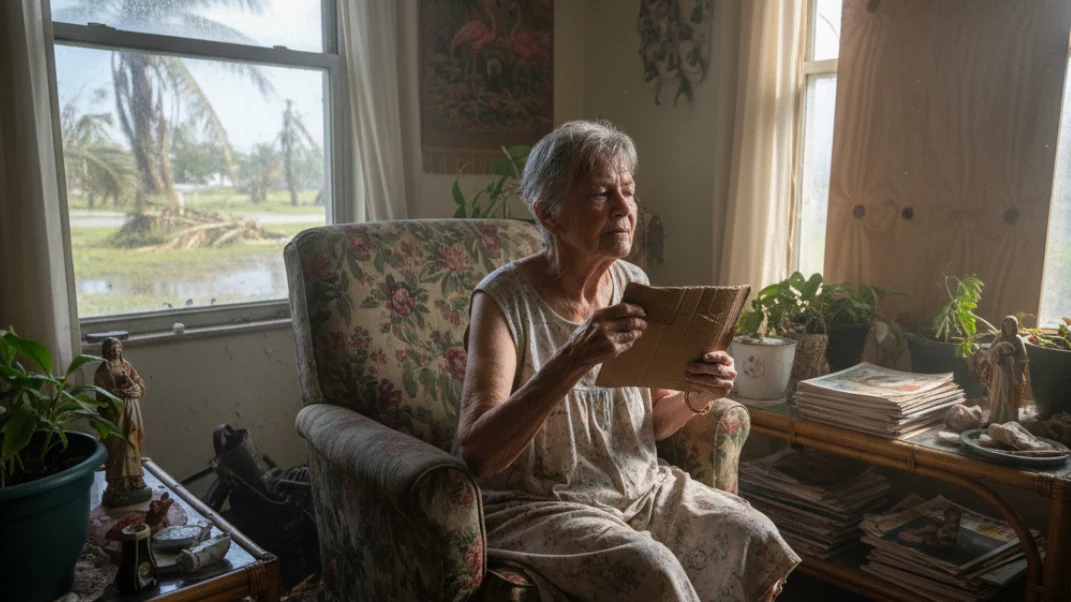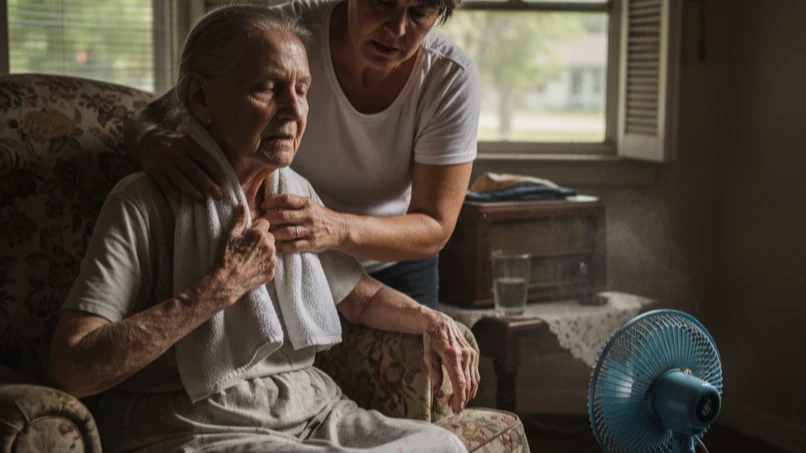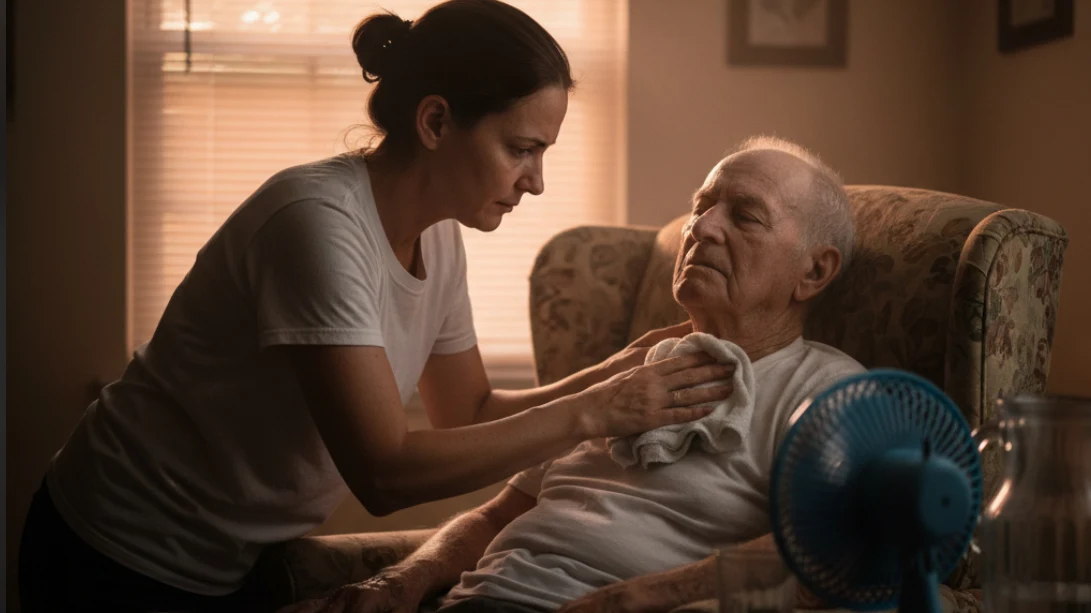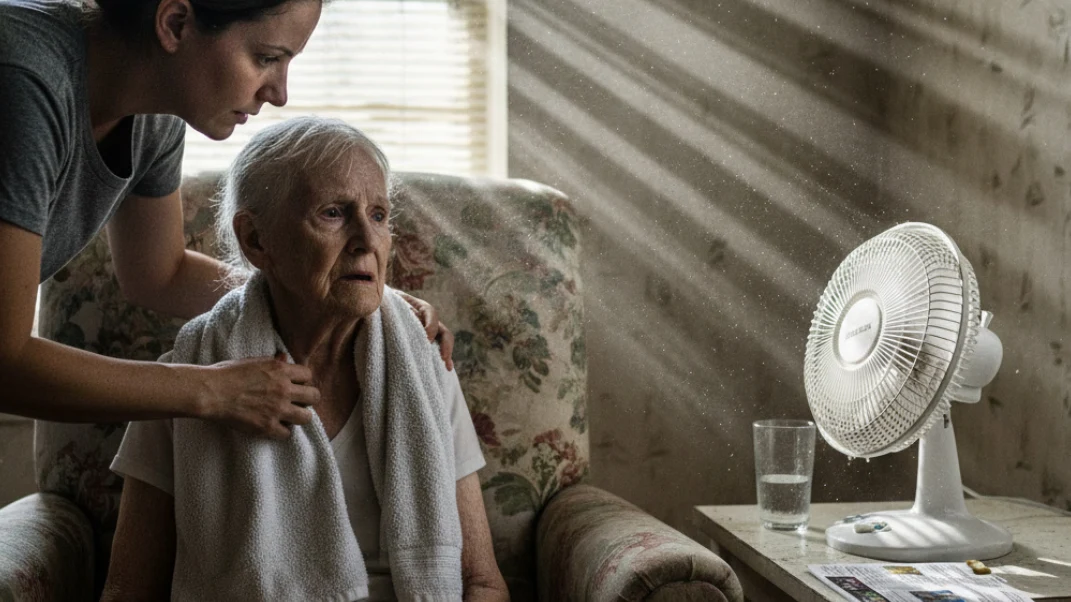
After a hurricane knocks out power in a Florida summer, your home becomes dangerous within hours. This guide covers cooling solutions, CPAP backup power, medical equipment, and where to go if your home is no longer safe.
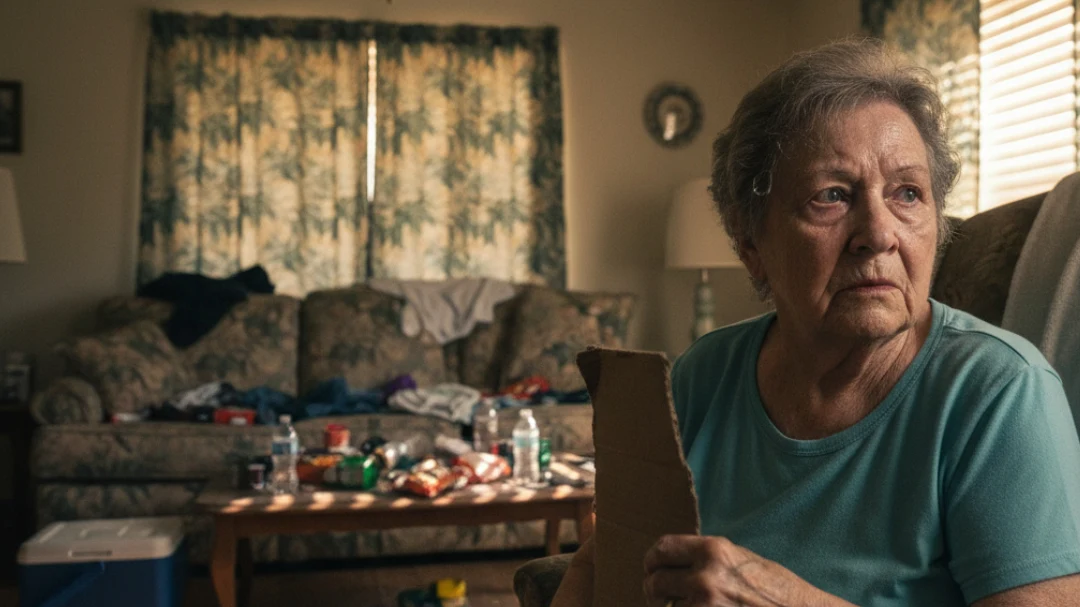
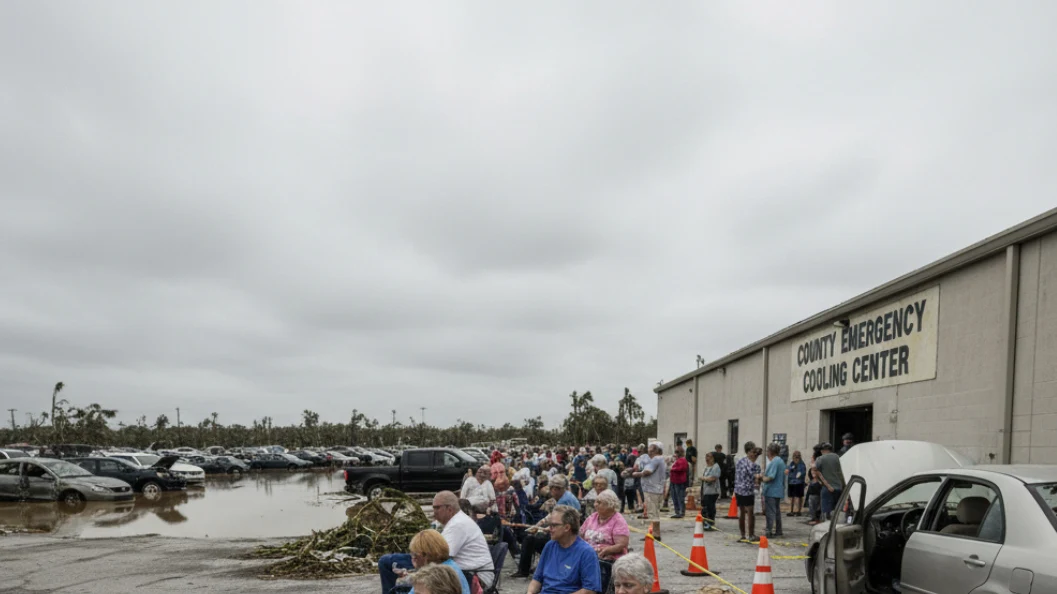
Twelve elderly residents died at the Rehabilitation Center at Hollywood Hills when their air conditioning failed after Hurricane Irma knocked out power. The nursing home was 200 feet from a hospital. Their deaths were entirely preventable.
Heat is the #1 weather-related killer in the United States every year — killing more people than hurricanes, tornadoes, and floods combined. After a hurricane, extended power outages turn this from a statistic into an immediate threat for every elderly person in the affected area.
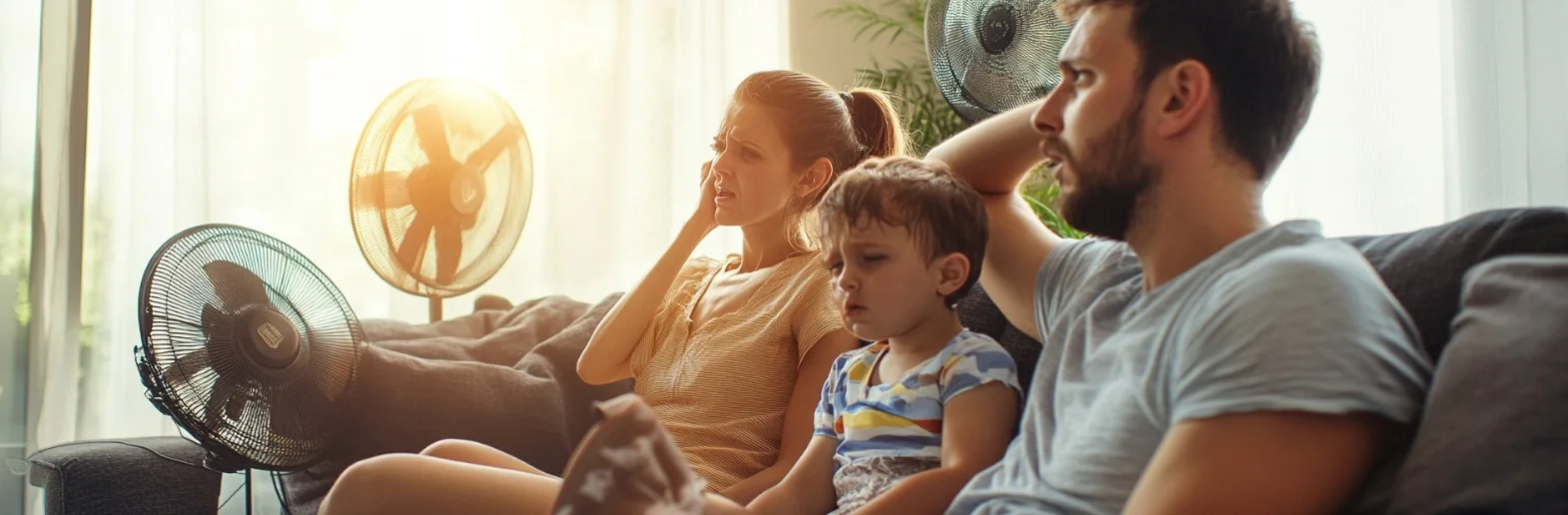
In Florida summer conditions — outdoor temperature 92°F, humidity 85% — here is what happens inside an un-air-conditioned home:
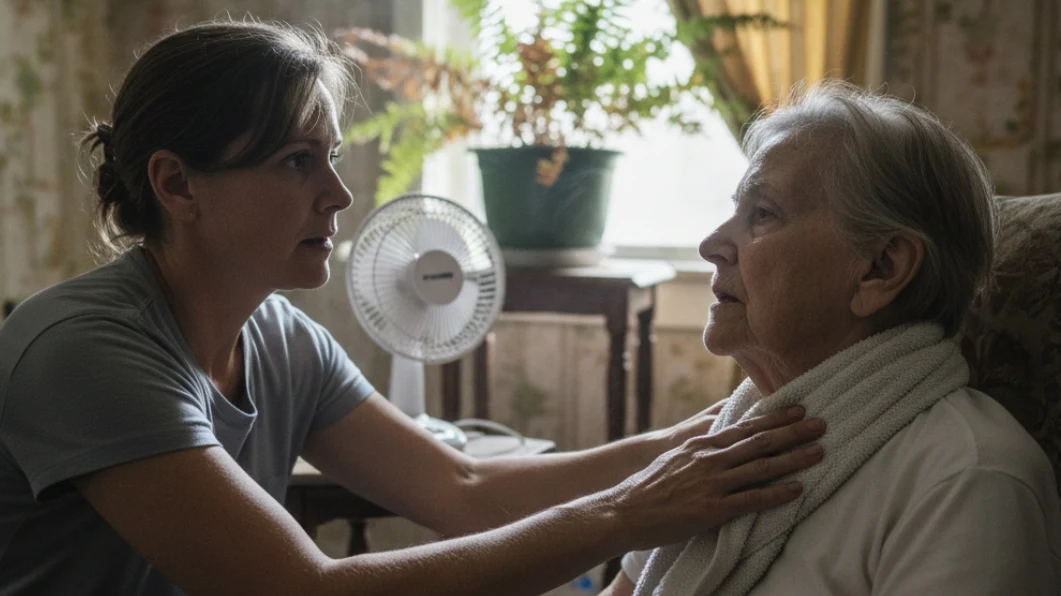
For a healthy adult this is miserable. For an elderly person — especially one taking common medications — this is a life-threatening situation that can develop in hours, not days.
Many common medications impair the body's ability to regulate heat. If an elderly family member takes any of these, heat safety is especially critical: diuretics (water pills) — accelerate dehydration; beta-blockers and calcium channel blockers — reduce the heart's ability to respond to heat stress; antihistamines and anticholinergics — reduce sweating; antipsychotics and tricyclic antidepressants — impair temperature regulation. Discuss a heat emergency plan with their doctor before hurricane season — not during a storm.

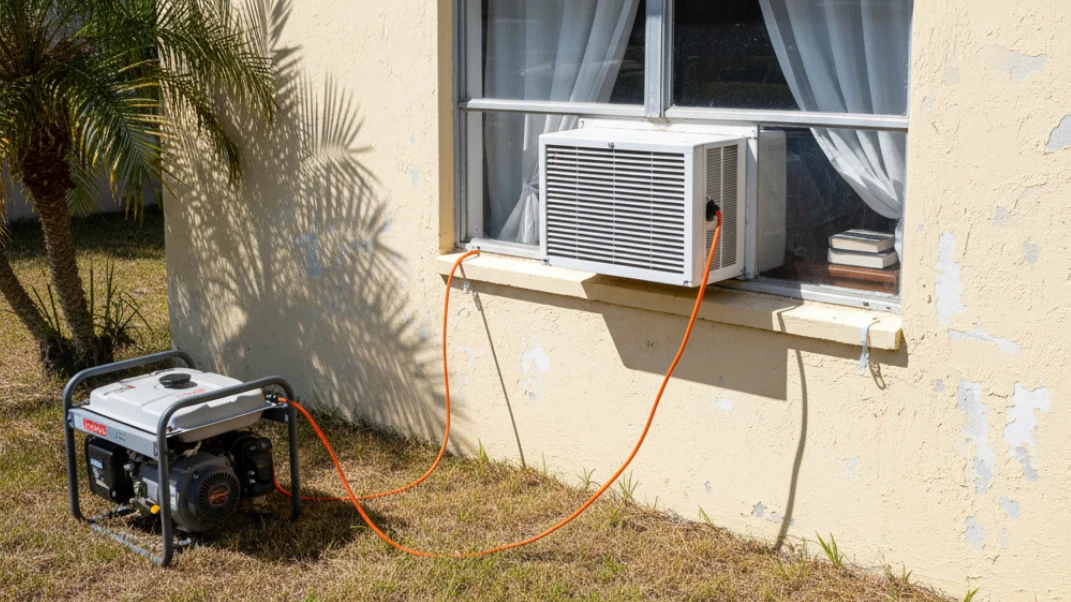
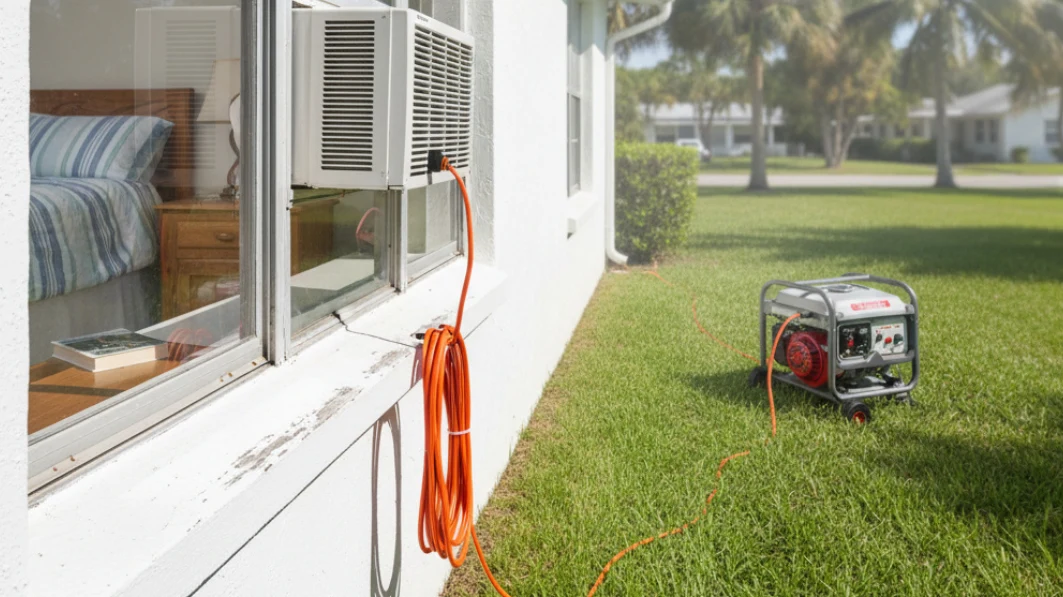
A window air conditioner connected to a generator is the single most effective heat protection for an elderly person during a post-hurricane power outage. One bedroom kept cool — even to 78°F — gives the body a critical recovery period during sleep. Without it, heat stress accumulates 24 hours a day with no recovery.
A 5,000–8,000 BTU window unit uses 500–750 watts — well within the capacity of most portable generators. Set it up in the bedroom used by the most vulnerable family member.
You don't need to cool the whole house. Pick the room where the elderly person sleeps, seal it as well as possible (close doors, hang a blanket over the doorway if needed), and run a window AC unit connected to your generator in that room only. Keeping one room at 78°F is achievable with a 5,000 BTU unit and a 2,000W generator. This strategy has saved lives in every major Florida hurricane.
CPAP machines treat sleep apnea — a condition where breathing repeatedly stops during sleep. Without the CPAP, oxygen levels drop, heart stress increases, and sleep quality collapses. In Florida's post-hurricane heat, an elderly person dealing with heat stress AND untreated sleep apnea simultaneously faces compounded cardiac risk. This is not a comfort issue — it is a medical one.
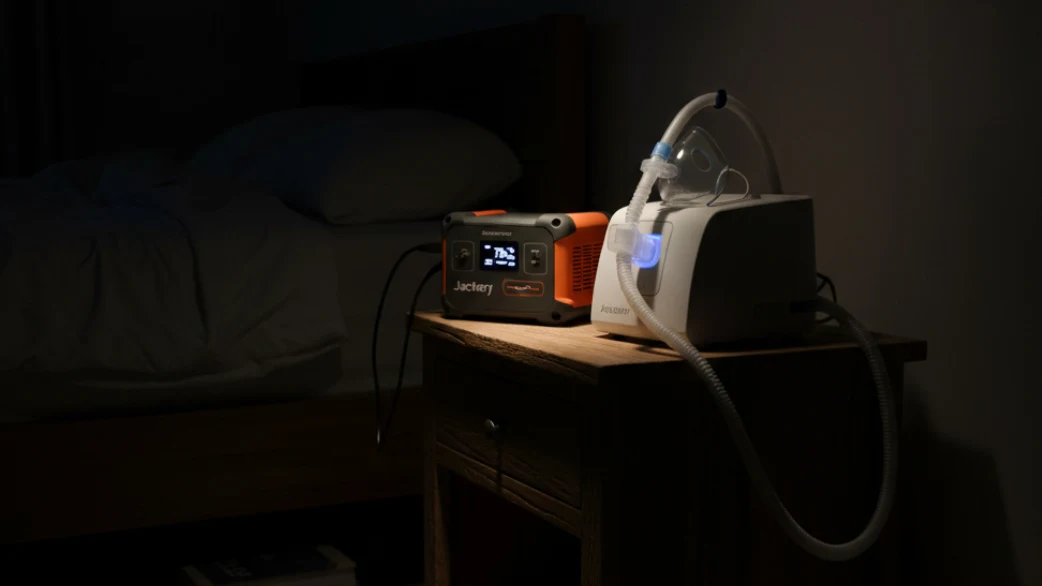
Most CPAP machines use 30–60 watts — very manageable with any of the backup solutions below. The solution should be purchased and tested before hurricane season, not while a storm is approaching.
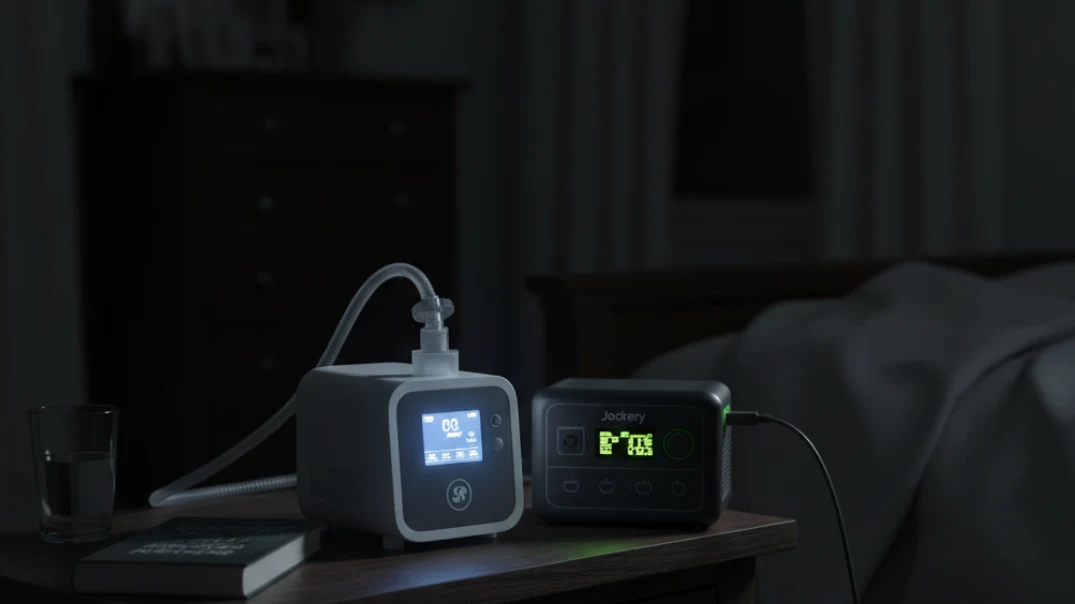
A 500Wh portable power station (like Jackery 500, EcoFlow RIVER, or Goal Zero Yeti) runs a standard CPAP machine for 2–3 nights per charge without a humidifier, or 1–2 nights with humidifier. Recharges from your car, a solar panel, or generator. Completely silent — no fuel, no fumes. Can also charge phones, run a fan, and power lights simultaneously.
Shop Portable Power Stations →Brands like Medistrom, ResMed (for AirSense machines), and Pilot-24 Lite make battery packs designed specifically for CPAP use. They connect directly to your machine's DC port for maximum efficiency — running 1–3 nights per charge depending on machine and settings. More compact than a power station but limited to CPAP use only.
Shop CPAP Battery Packs →Most CPAP machines have a DC input port (12V or 24V). A car adapter cable connects your CPAP directly to your vehicle's 12V outlet or a car battery with clips. Runs all night from a car battery without starting the engine — though you should run the engine for 30 minutes periodically to prevent a dead battery. Check your specific CPAP model for the correct DC adapter.
Shop DC Car Adapters →The ResMed AirMini and similar travel CPAPs use significantly less power than full-size machines — making battery backup easier. If your doctor approves, having a travel CPAP as an emergency backup gives you the most flexibility during extended outages. Discuss this option with your sleep specialist before hurricane season.
Shop Travel CPAPs →
The heated humidifier on a CPAP machine typically uses 2–3x more power than the machine itself. Disabling the humidifier (or setting it to minimum) dramatically extends battery runtime — often doubling it. Most sleep specialists consider humidifier-free CPAP acceptable for short-term emergency use. Ask your doctor now, before storm season.
Contact your CPAP supplier and ask: (1) What is the DC input voltage for my machine? (2) Is there a battery pack recommended for my model? (3) Can I safely use my machine without the humidifier temporarily? (4) Does my insurance cover a backup battery unit? Many Medicare and insurance plans cover CPAP accessories including backup batteries when prescribed for emergency preparedness.
Insulin must be kept below 77°F or it degrades and loses effectiveness. Without power, a standard refrigerator stays cold for 4–6 hours. Use a medicine cooler with ice packs — insulin stays effective for 28 days at room temperature if kept below 77°F. Ask your pharmacist about your specific insulin's room-temperature stability. Contact your county emergency management office — some provide priority power restoration for insulin-dependent residents on a special medical needs registry.
Home oxygen concentrators require continuous power — they cannot run on battery alone for extended periods without a very large power station. If an elderly family member uses a concentrator, contact your oxygen supplier before hurricane season. Most medical oxygen companies have emergency protocols and can provide portable oxygen tanks for outages. Also register with your county's Special Needs Registry — utilities prioritize power restoration for oxygen-dependent residents.
Nebulizers for asthma and COPD use 60–100 watts and can run from a portable power station. Stock extra medication — pharmacies often run out of asthma medications in the days after a major hurricane when air quality worsens from mold, debris, and generator exhaust. Ask your doctor for a 90-day supply before hurricane season.
Power mobility devices need to be fully charged before a storm. Most charge from standard 110V outlets — keep a car inverter (300W+) in your vehicle to recharge from your car battery if home power is out for extended periods. Contact your county emergency management office about transportation assistance for mobility-impaired residents during evacuations.
Every Florida county and most coastal county emergency management offices maintain a Special Needs Registry for residents who require assistance during evacuations or power outages — including elderly people, CPAP users, oxygen-dependent residents, and people with mobility limitations. Registration is free and can result in priority power restoration and evacuation assistance. Search "[your county] special needs registry" or call your county emergency management office to register before hurricane season starts June 1.
Hurricane shutters keep the storm out. Cooling gear and backup power keep your family safe after it passes. Get your free shutter estimate today.
Free Shutter Estimate → Full Supply Checklist →