By State
🌴 Florida ⭐ Texas 🎷 Louisiana 🌊 Mississippi 🏖️ Alabama 🍑 Georgia 🌴 South Carolina 🏔️ North Carolina 🦅 Virginia 🦀 Maryland 🗽 New Jersey 🌆 New York 🦞 Massachusetts
Shutter Types
🪗 Accordion ⬇️ Roll-Down 🌺 Bahama 🏛️ Colonial 🛡️ Storm Panels 🕸️ Hurricane Screens 🪟 Impact Windows ↔ Accordion vs Roll-Down ↔ Shutters vs Windows
Guides
🧮 Cost Calculator 🤖 AI Pricing 📋 The Process 🔨 DIY Shutters 🪵 Plywood Guide 🔧 Maintenance 🛒 Supplies 🏷️ AirTags & Security 📋 Family Emergency Plan
After the Storm
🆘 Disaster Help Hub 🛡️ Post-Storm Safety 🌡️ Heat Safety 🐾 Pets & Livestock 🏠 Roof Tarping 💧 Water Damage 🌳 Tree Removal Florida Recovery Texas Recovery NC Recovery
Verify Contractor
Florida Texas Georgia North Carolina Virginia New Jersey New York Massachusetts
Free Estimate →
🏠 Post-Storm Recovery · Roof Protection

Emergency Roof Tarping
After a Hurricane

DIY materials list and how-to, what to look for when hiring someone, how to find a roofer — and how to avoid the scammers that follow every storm.
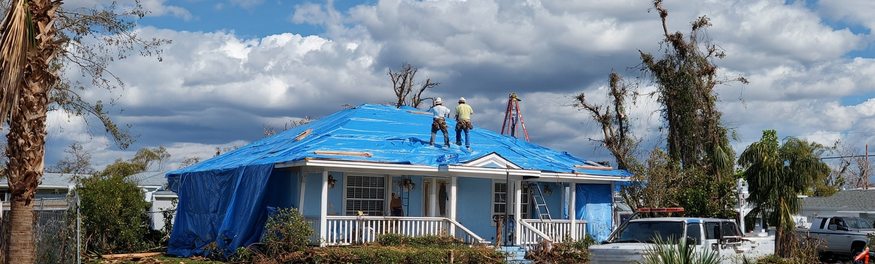
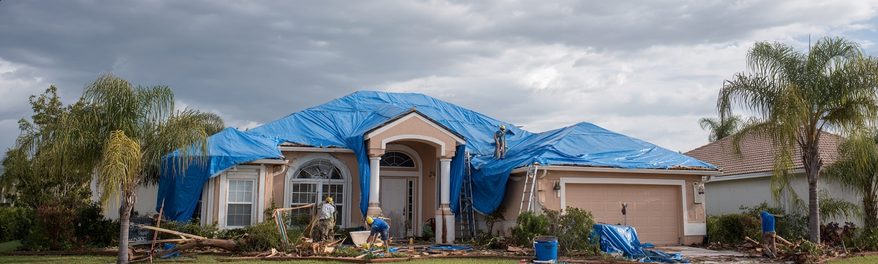
Workers installing blue FEMA tarp on hurricane damaged roof
Emergency roof tarping must happen within hours — every hour means more water damage inside
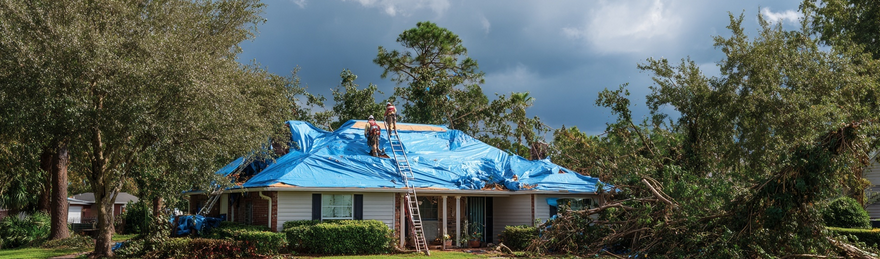
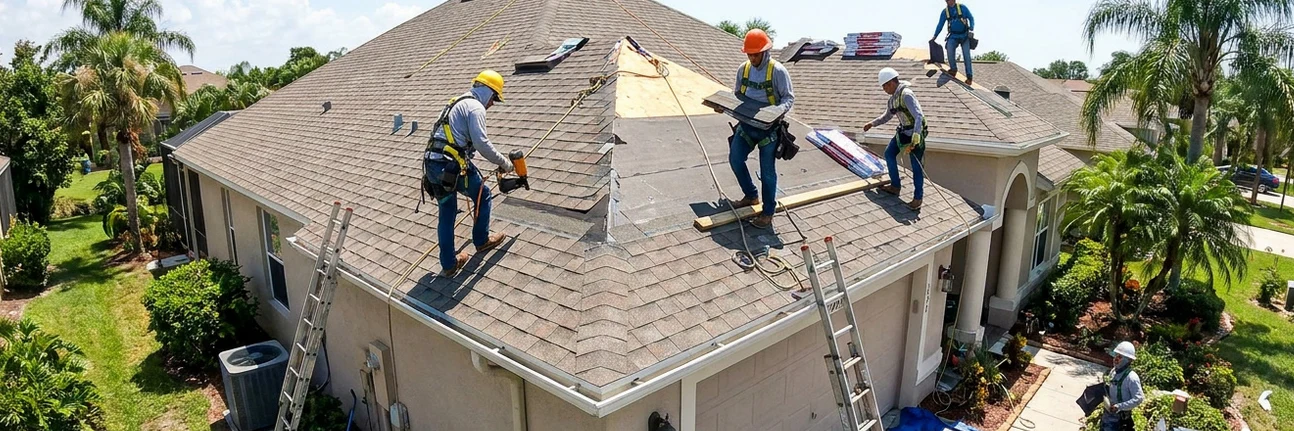
Roof tarping crew on large hurricane damaged Florida home
A full tarp job takes 2–4 hours with a professional crew
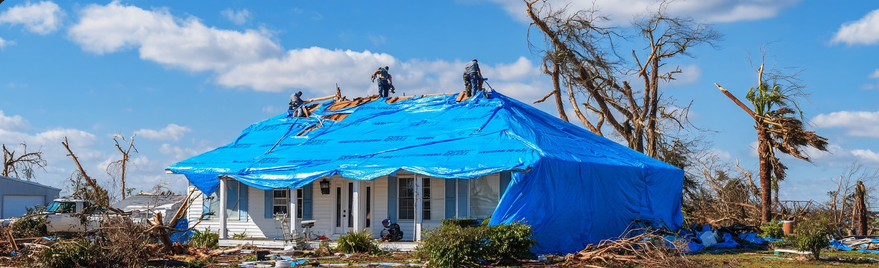
Blue tarp covering Florida stucco home after hurricane
FEMA blue tarps are 6-mil polyethylene — temporary until permanent repair
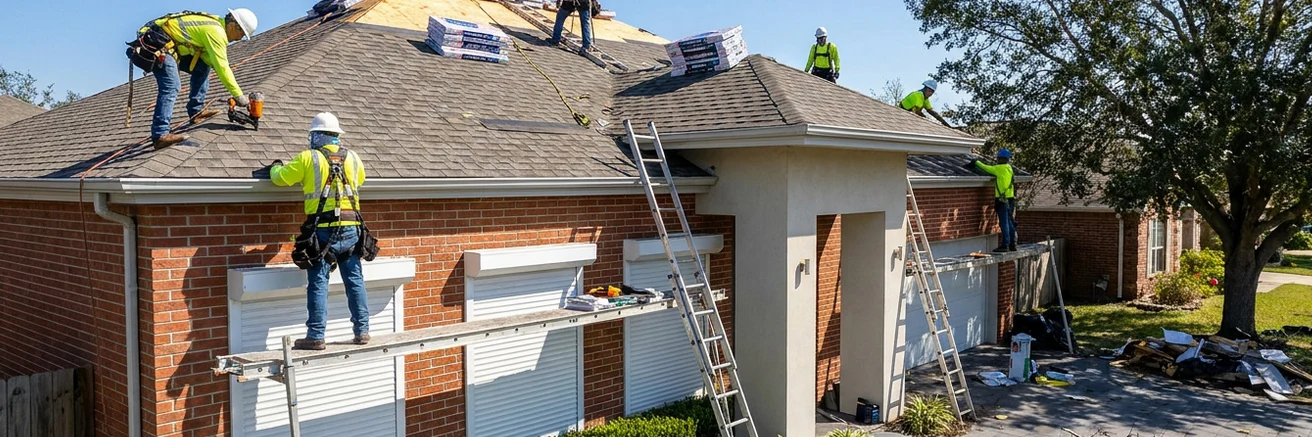
Workers tarping brick home roof after hurricane
Always use licensed, insured roofers — contractor fraud surges after every hurricane
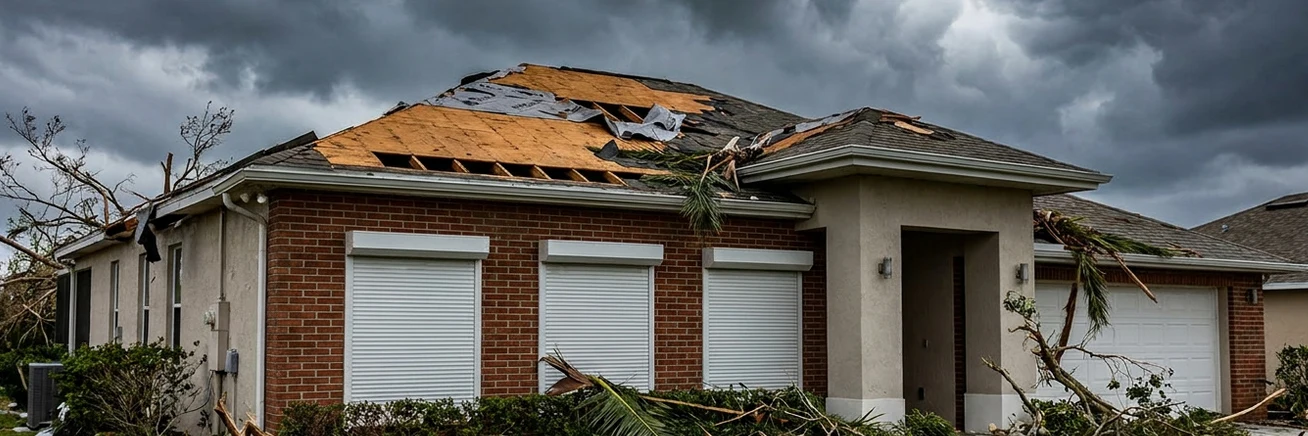
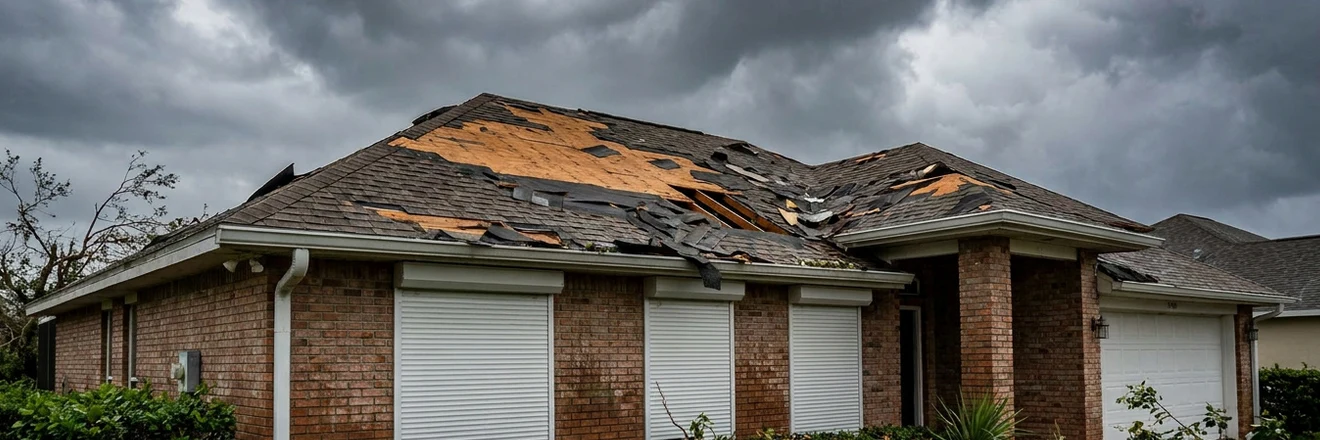
Florida home with severe hurricane roof damage
🔨
Part 1 — DIY Roof Tarping
What you need and how to use it

🚫 Safety first — know when NOT to go on your roof

Never get on a damaged roof alone, in the rain, or after dark. If the roof structure feels soft or spongy underfoot, get off immediately — the decking may be compromised. If you have a steep pitch (over 6/12) or the damage is near the ridge, hire a professional. No amount of water damage is worth a fall. Always wear a safety harness anchored to a structural point, not just nailed into damaged decking.

Storm damaged home roof after hurricane

What You Need — Complete Materials List

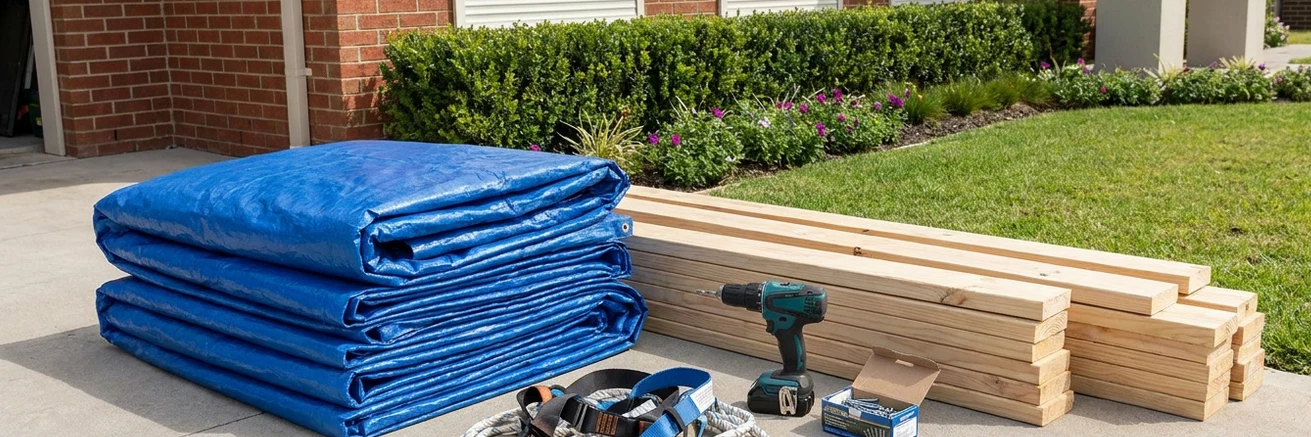
Emergency roof tarping supplies: tarp, lumber, drill, safety harness and gloves
🏕️

Heavy-duty polyethylene tarp — 10 mil minimum

This is your most important purchase. 6-mil tarps are sold at hardware stores but degrade in days under Florida's UV and wind. Go 10-mil or thicker. Size up generously — you need 4 feet of overhang on every side of the damaged area. A 20×30 ft tarp covers most residential roof sections.

🛒 Shop Amazon
1–2 tarps
🪵

2×4 lumber — 8 ft lengths

Used to sandwich and anchor the tarp edges to the roof deck. Fold the tarp edge over a 2×4, lay a second 2×4 on top, and screw or nail through both boards and the tarp into the roof deck every 12 inches. This creates a sealed edge that resists wind lift far better than nailing through the tarp alone, which always tears.

🛒 Shop Amazon
6–10 boards
🔩

Roofing screws or ring-shank nails (3 inch)

Roofing screws hold better than nails in wind — once in, they don't back out. Use 3-inch screws to penetrate through the 2×4 sandwich, tarp, and into the roof deck below. Ring-shank nails are the nail equivalent and hold better than smooth-shank. A screw gun or impact driver drives them fast. Place fasteners every 12 inches along each 2×4 board.

🛒 Shop Amazon
1 box (100+)
🔧

Cordless drill or impact driver

You'll drive 50–100 screws through lumber into a roof deck while balancing on a pitched surface. A cordless impact driver is the right tool — more torque, less wrist fatigue, and no cord to trip over. Keep two batteries charged so you're never stopped waiting for a charge mid-job. A standard drill will work but takes longer and tires you out faster.

🛒 Shop Amazon
1 + 2 batteries
🪜

Extension ladder (24 ft minimum)

A 24-foot fiberglass extension ladder reaches a standard single-story Florida home safely. For two-story homes, use a 32-foot ladder. Fiberglass is essential — aluminum conducts electricity and downed power lines are common after storms. Set the ladder at a 75-degree angle (one foot out for every four feet of height), secure the feet, and have someone hold the base while you climb.

🛒 Shop Amazon
1 unit
🦺

Safety harness and roof anchor

A roof safety harness is not optional — it's the difference between a bad day and a fatal one. You're working on a wet, possibly damaged surface while tired, stressed, and distracted. A construction fall harness anchors to a structural ridge strap or anchor point and stops a fall before it becomes fatal. OSHA requires fall protection for anyone working at heights over 6 feet — and your roof is significantly higher than that.

🛒 Shop Amazon
1 kit
🥾

Non-slip rubber sole boots

Wet asphalt shingles are extremely slippery, and wet tile is worse. Rubber-soled work boots with a lug sole grip the roof surface far better than sneakers or smooth-soled shoes. Many roofers use dedicated roofing boots with a soft rubber sole that conforms to shingles. At minimum, wear clean rubber-soled work boots. Never go on a roof in sandals, flip-flops, or slick-soled shoes.

🛒 Shop Amazon
1 pair
🧤

Heavy-duty work gloves

Tarp edges are sharp and can cut — the folded polyethylene edge has enough tension to slice skin as it's being pulled into place. Roofing nails, exposed metal flashing, and broken shingle tabs all cause lacerations. Leather palm work gloves protect against cuts while still allowing enough grip to handle tools and lumber on a pitched surface.

🛒 Shop Amazon
1–2 pairs
📏

Measuring tape and chalk line

Measure the damaged area before buying tarps so you purchase the right size. A chalk line helps you mark straight lines on the roof deck for consistent board placement and ensures the tarp edge boards are parallel — a tarp installed crooked lifts and flaps in wind, eventually failing at the seams. Measure twice, cut once applies to tarping too.

🛒 Shop Amazon
1 each
🔦

Headlamp (bright, hands-free)

Power will likely be out. You may need to assess damage at dawn, dusk, or in a shaded attic. A hands-free headlamp keeps both hands on tools and the ladder. 300+ lumens handles most conditions. Keep it charged with fresh batteries before every storm season. A phone flashlight is not a substitute — you need both hands free when working at height.

🛒 Shop Amazon
1 unit
As an Amazon Associate we earn from qualifying purchases, at no extra cost to you.

How to Tarp Your Roof — Step by Step

1

Document the damage before touching anything

Walk around the exterior and photograph every damaged section from the ground. If you can safely access the roof, take close-up video of the damage area. This documentation is your insurance claim foundation — get it before anything is moved, covered, or changed. Email the photos to yourself immediately so they're timestamped and backed up to the cloud.

2

Measure the damage and cut your tarp to size

Measure the damaged area. Add 4 feet on all sides for overhang — the tarp must extend 4 feet past the edge of all damage in every direction. If damage runs to the ridge, the tarp should go 4 feet over the ridge onto the other side. Cut the tarp on the ground before going up — handling an uncut 20×30 ft tarp on a roof in any wind is dangerous.

3

Lay 2×4 boards and fold the tarp edges

Lay a 2×4 along the top (ridge-side) edge of where the tarp will sit. Drape the tarp over it so 12–18 inches folds back over the board. Place a second 2×4 on top of the folded edge, creating a sandwich. This is the anchor point — the tarp cannot pull out from between two boards the way it can pull through nails alone.

4

Screw through the sandwich into the roof deck

Drive 3-inch screws through the top 2×4, through the folded tarp, through the bottom 2×4, and into the roof deck below — every 12 inches along the board. Then unroll the tarp down the slope, pull it taut, and repeat the sandwich and screw process at the bottom edge and both sides. Pull the tarp tight before screwing each side — a loose tarp flaps, tears, and fails in wind.

5

Seal the edges and check for gaps

Walk the perimeter of the tarped area and check for any gaps, lifted edges, or sections where the tarp isn't fully covering the damaged area. Look from below inside the attic if possible — light coming through indicates a gap. Smooth any wrinkles that could collect water. A properly installed tarp lies flat, is drum-tight, and has no visible gaps at any edge.

6

Check it after the first rain and every 2 weeks

Inspect your tarp after every rain event. Wind and UV degrade polyethylene quickly in Florida. Look for holes, tears at the board edges, lifted corners, and pooled water. A pooled section means the tarp has sagged — the weight of standing water can collapse a weakened section and re-expose the damage. Replace any tarp showing UV fading or cracking immediately — don't wait until it fails during a storm.

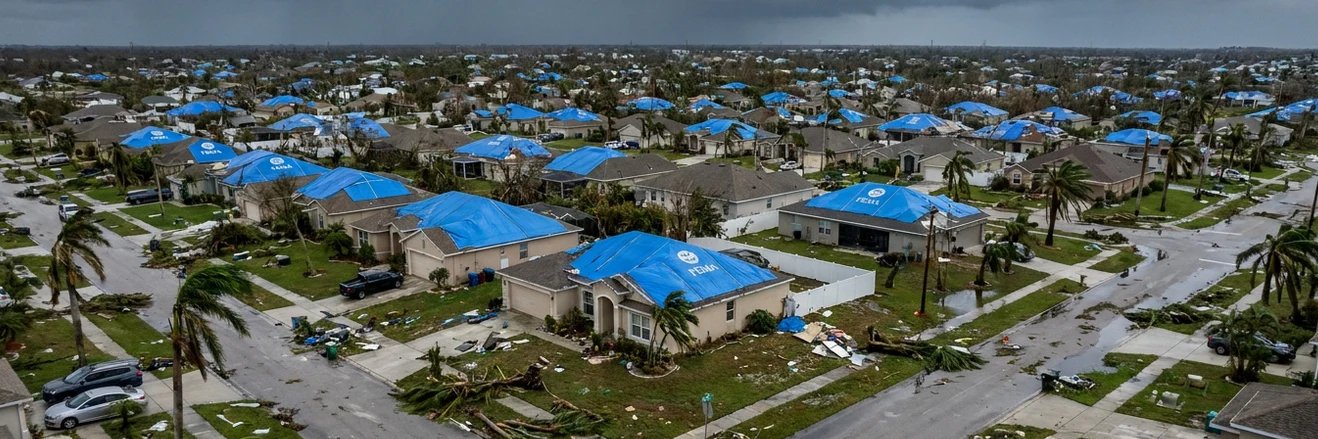
Aerial view of Florida neighborhood with FEMA blue tarps on every roof after hurricane

✅ FEMA Blue Roof Program — free tarping after declared disasters

After a presidential disaster declaration, FEMA's Operation Blue Roof installs free temporary blue plastic sheeting on damaged roofs for eligible homeowners. Register at DisasterAssistance.gov or call 1-888-766-3258. You must own and occupy the home as your primary residence. The program is available while supplies and personnel last — register immediately after a declaration, not weeks later.

👷
Part 2 — Hiring Someone to Tarp
What to look for before you hand over any money

Why hiring tarping help is often the right call

Steep roofs, two-story homes, significant structural damage, elderly homeowners, or anyone working alone should hire professional tarpers rather than attempting it themselves. The post-storm tarping market moves fast — prices are highest in the first 48 hours after a storm and drop significantly after day 3 as more crews arrive in the area.

Tarping is also one of the most scam-prone post-storm services. Knowing what legitimate tarpers look like — and what red flags to watch for — is the most important thing you can do before calling anyone.

What to look for in a legitimate tarping company

Written estimate before work begins
Any legitimate company gives you a written estimate with a line-item price before starting work. Get it in writing — not a verbal quote.
Licensed and insured in your state
Ask for their contractor license number and verify it on your state's contractor licensing board website before they start. In Florida: myfloridalicense.com.
Local address or established regional company
Companies with a permanent address — not just a cell phone number — have accountability. Check Google Maps and verify the address is real.
Payment after work is completed
Legitimate tarpers accept payment after the job is done and you've inspected it. Florida law limits deposits to 10% or $1,000 before work starts, whichever is less.
Provides a receipt you can submit to insurance
A legitimate company provides an itemized receipt on company letterhead that you can submit with your insurance claim. Emergency tarping is a covered expense.
Uses proper 10-mil+ tarps and 2×4 anchoring
Ask what materials they use. Thin blue tarps stapled directly to the roof without lumber anchoring fail within days. Quality work uses 10-mil+ tarps sandwiched with 2×4 boards.
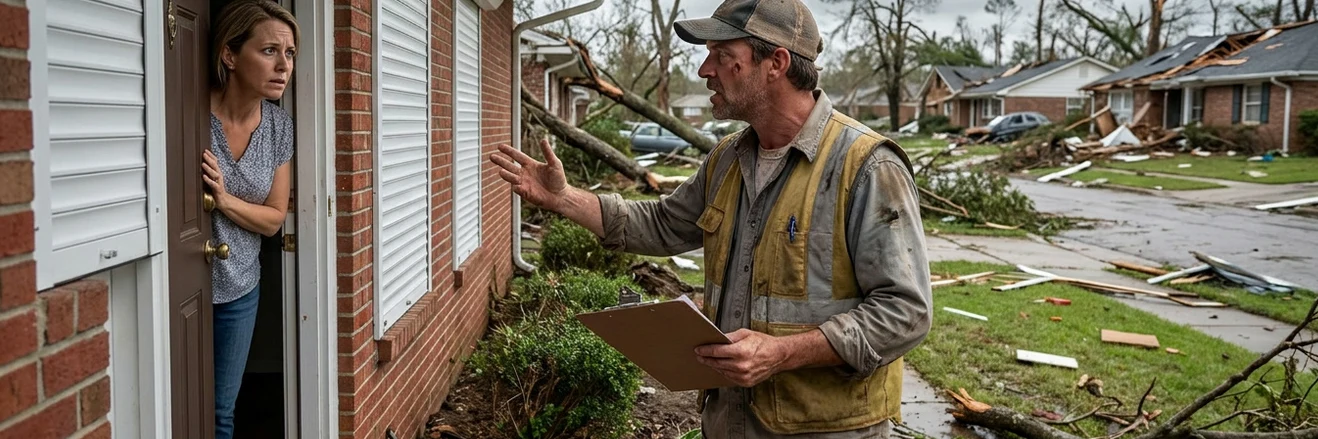
Suspicious door-to-door contractor soliciting homeowners after a hurricane

Red flags — walk away immediately

🚩
Demands full payment upfront
The single most common post-storm scam. They take the money, do a poor job or nothing, and you can't reach them. Never pay 100% before work begins.
🚩
Door-to-door solicitation with urgency pressure
"We're in the neighborhood and can start right now" with no ability to verify who they are. Legitimate companies don't need to knock on doors after storms — they have more work than they can handle.
🚩
Offers to waive your insurance deductible
This is insurance fraud in Florida and most states. If a contractor offers to eat your deductible in exchange for signing paperwork, walk away and report them to your state insurance commissioner.
🚩
Asks you to sign an Assignment of Benefits (AOB)
An AOB transfers your insurance rights to the contractor, giving them direct control of your claim. This has been used extensively to inflate claims in Florida. Never sign an AOB without your attorney reviewing it.
🚩
Out-of-state plates, no local address
Storm chasers follow disasters across state lines. No local presence means no accountability. If something goes wrong, they're already in the next disaster zone.
🚩
Can't produce a contractor license number
Unlicensed contractors have no bond and no accountability. Their work may not pass inspection, voiding your insurance claim. Always verify the license number before any work starts.
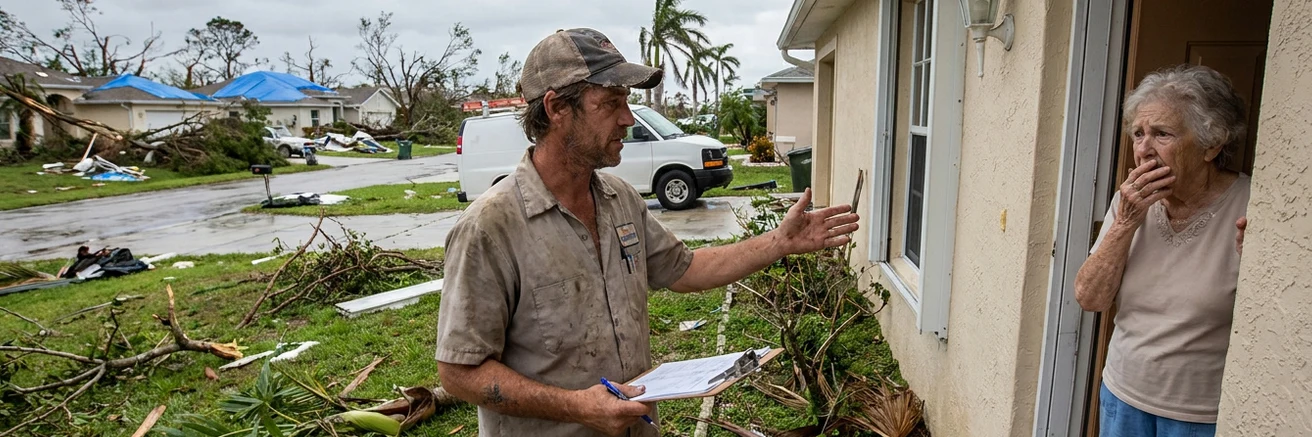
Florida neighborhood after hurricane with storm chasers soliciting elderly homeowners

⚠️ What to do if you've already been scammed

Contact your state's contractor licensing board immediately. In Florida: file a complaint at myfloridalicense.com and contact the Department of Agriculture and Consumer Services at 1-800-435-7352. Also contact your insurance company — they've seen these scams and can advise on next steps. File a police report if money was taken without work performed.

🏠
Part 3 — Finding a Legitimate Roofer
How to hire right when every roofer is booked solid
Hurricane damaged roof with missing shingles and exposed decking

The post-hurricane roofing reality

After a major storm, wait times for licensed roofing contractors in Florida run 3 to 9 months. The demand surge is immediate and the licensed contractor supply is fixed. This is the environment scammers thrive in — homeowners desperate for help, supply constrained, and standard verification steps skipped under pressure.

Your tarp buys you time. Use it to find the right roofer rather than the first one who shows up at your door.

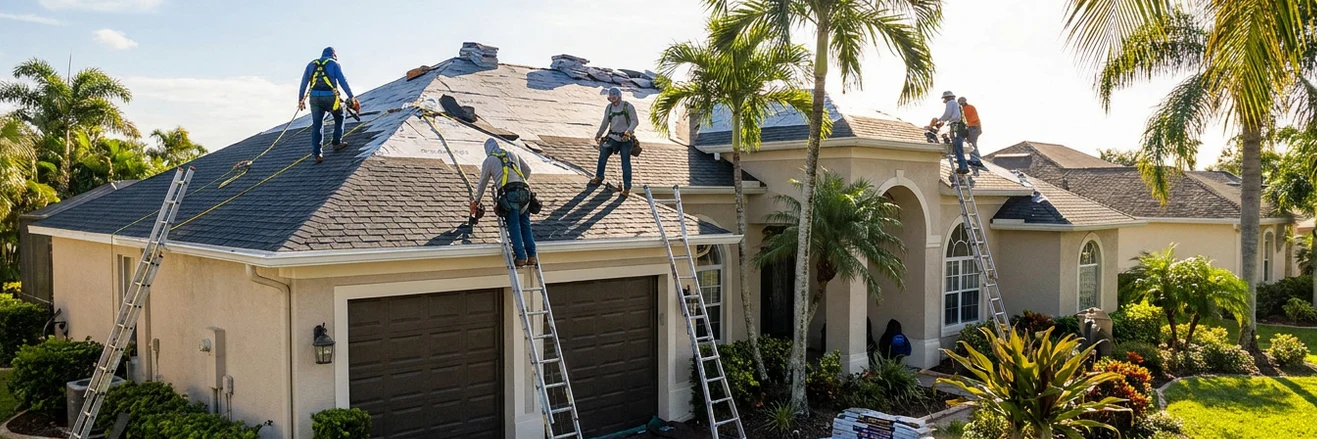
Licensed professional roofing crew in safety gear replacing roof after hurricane

Find Licensed Local Roofers

Search pre-screened, licensed roofing contractors in your area. Angi verifies licenses and checks reviews before listing contractors — a far safer starting point than a door-to-door solicitor or a random Google ad.

Find Roofers on Angi → HomeAdvisor Roofers →
Licensed roofing crew with safety harnesses on Florida home after storm damage

How to vet a roofing contractor properly

1

Verify their state contractor license

In Florida, roofing contractors must hold a state-issued Roofing Contractor license (RC). Look up any contractor at myfloridalicense.com before agreeing to anything. Verify the license is active, not expired, and has no disciplinary actions against it. An unlicensed contractor's work cannot be permitted or inspected — which voids your insurance coverage for that repair.

2

Confirm they carry liability insurance and workers' comp

Ask for a Certificate of Insurance naming you as an additional insured for the duration of the job. If a worker falls on your property and the contractor has no workers' compensation, you may be liable for their medical bills. Call the insurance company on the certificate to verify the policy is current — certificates can be falsified.

3

Get three written estimates

Even if every roofer has a 6-month backlog, get three estimates before committing. Estimates reveal the scope of work planned, materials being used, and payment terms — differences between estimates tell you a lot. The lowest bid isn't always the best, and a contractor who can start immediately post-storm while everyone else is booked 6 months out deserves extra scrutiny, not fast trust.

4

Understand the payment schedule before signing

Florida law limits advance payments on residential contracts to 10% of the total or $1,000, whichever is less, before work begins. A typical legitimate structure: 10% deposit, 40% at material delivery, 40% at substantial completion, 10% at final inspection and punch list sign-off. Never pay the final 10% until you have inspected the finished work and it passes inspection.

5

Pull your own permit

In most Florida jurisdictions, roofing replacement requires a permit. The contractor should pull this permit — if they suggest skipping it to save money or time, walk away. Unpermitted roofing work fails at resale inspection and may not be covered by your insurance. As the property owner, you can verify a permit was pulled by searching your county's building department online.

6

Never sign an Assignment of Benefits

An AOB is a document that transfers your insurance claim rights to the contractor. Once signed, the contractor negotiates directly with your insurer, controls the settlement, and you lose visibility into what's being claimed on your behalf. Florida law restricts AOBs, but they're still used. If a contractor makes signing an AOB a condition of doing the work, find a different contractor.

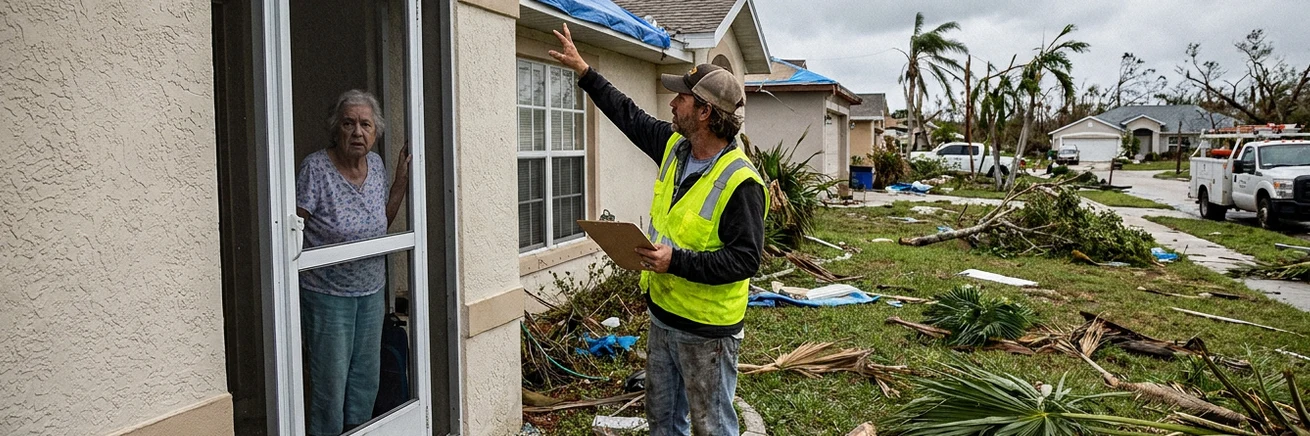
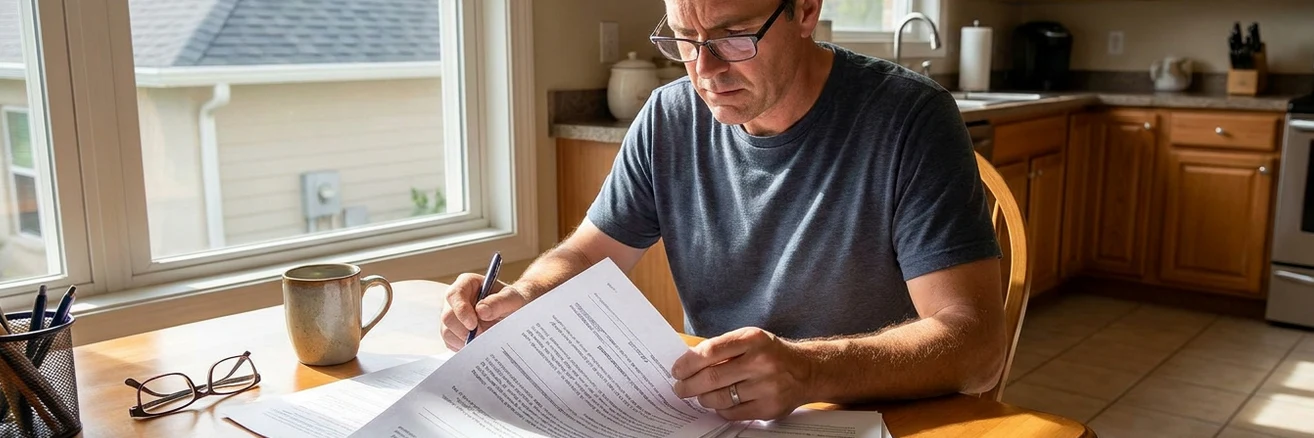
Contractor with clipboard discussing roofing work with Florida homeowner after hurricane Homeowner carefully reviewing roofing agreement and contract before signing

What a roofing estimate should include

  • Contractor's full legal name, license number, and insurance information
  • Complete address of the property being repaired
  • Detailed scope of work — what is being repaired vs replaced
  • Specific materials being used — brand, type, and warranty
  • Shingle manufacturer warranty and workmanship warranty periods
  • Estimated start date and projected completion date
  • Total price with line-item breakdown
  • Payment schedule — amounts and milestones
  • Permit responsibility — who pulls it and who pays for it
  • Cleanup and debris removal — what happens to old materials
  • What happens if additional damage is found during work
  • Contractor signature and date

✅ Check the Florida Roofing and Sheet Metal Contractors Association

FRSA (frsa.org) maintains a directory of member contractors who have agreed to a professional code of conduct. Membership doesn't guarantee quality, but it's a meaningful filter — scam operations don't join trade associations. Also check the Better Business Bureau (bbb.org) for complaints filed after previous storm events in your area.

Professional roofing crew completing hurricane roof repair on Florida home

Search Licensed Roofers Near You

Compare licensed, insured roofing contractors with verified reviews before committing to anyone. Takes 2 minutes and could save you from a 4-figure mistake.

Search Angi Roofers → Search Thumbtack →
Frequently Asked Questions
Common questions about emergency roof tarping and repair
How do you tarp a roof after a hurricane?
You need heavy-duty 10-mil polyethylene tarps, 2×4 lumber, 3-inch screws, a cordless drill, a safety harness, and an extension ladder. Lay the tarp over the damage with 4 feet of overlap on all sides, fold the edges over 2×4 boards, and screw through the sandwich into the roof deck every 12 inches. Never go on a wet roof alone or without fall protection.
How much does emergency roof tarping cost?
DIY tarping costs $50–$200 in materials. Professional tarping runs $200–$1,500 depending on roof size and damage. FEMA's Operation Blue Roof provides free tarping to eligible homeowners after presidential disaster declarations — register immediately at DisasterAssistance.gov.
Does homeowner insurance cover emergency tarping?
Yes. Emergency tarping is a protective measure to prevent further damage and is covered under most homeowner policies. Document damage before tarping, keep all receipts, and submit tarping costs with your main insurance claim. Call your insurer within 24–48 hours of the storm — don't wait.
What are the biggest roof repair scams after a hurricane?
The top scams: demanding full payment upfront, offering to waive your deductible (insurance fraud), pressuring you to sign an Assignment of Benefits, using door-to-door solicitation with urgency pressure, and unlicensed contractors disappearing after taking payment. Florida law limits advance payments to 10% or $1,000 before work begins. Verify every contractor's license at myfloridalicense.com before signing anything.
How long does a roof tarp last?
A properly installed 10-mil tarp lasts 30–90 days in Florida's conditions. UV exposure and wind degrade tarps quickly. Inspect after every rain and replace any tarp showing fading, holes, or lifted edges. Don't count on a tarp lasting through an entire storm season — get a permanent repair scheduled as soon as a licensed contractor is available.

Protect Your Home Before the Next Storm

Hurricane shutters prevent the roof damage that leads to tarping emergencies. Get a free estimate and see your insurance savings.

Free Shutter Estimate → Water Damage Cleanup Guide →